3000+ Pumps & Parts
Pumps On Sale!
Fast Dispatch
If you pump water from a bore, dam, river or channel, the filter you choose matters more than the pump you bolt it to. Most water filters Australia buyers see online are kitchen tap kits. This guide is about the other kind: the screen, brush and self-cleaning filters that stop sand, silt, algae and scale from wrecking drippers, sprinklers, nozzles, pump seals and process gear. Get the choice right and your system runs for years. This is the side of water filters Australia that nobody writes a buying guide about. Get it wrong and you are pulling a filter apart every second week, or replacing a pump you should not have had to touch.

There are two completely different markets sharing one search term. One is household drinking water: under-sink cartridges, reverse osmosis, benchtop jugs, whole-house units for taste and chlorine. That is a plumbing purchase, and it is not what this page covers, even though it swallows almost every search for water filters Australia. The other is protection filtration, and that is where the money and the machinery sit. Growers, contractors, councils, mine sites and process plants need water filters Australia wide that handle raw supply at volume, not a 10 litre a minute tap.
The dividing line is simple. If you are drinking it, you want a cartridge or membrane system rated to Australian Drinking Water Guidelines. If you are pumping it onto a crop, through a pivot, into a cooling tower or across a dust suppression line, you want a screen or brush filter rated in cubic metres per hour and bar pressure. Pumptastic supplies the second kind, from Filtaworx and Helix Hydro, with every flow rate, pressure rating and connection type published on the page.
That distinction matters because sizing logic is opposite in each market. Household filters are chosen by contaminant. Irrigation and industrial water filters Australia wide are chosen by flow rate, particle size and how much manual cleaning you are willing to do. Nobody sizing a 150mm self-cleaning filter cares about chlorine taste. Work out which side of that line you sit on first and the rest of the water filters Australia decision gets simple.
A manual filter is the cheapest way to protect a pump or a drip block. Water passes through a stainless SS304 screen, debris collects on the element, and you flush or pull it out and rinse it. Helix Hydro manual filters use epoxy-coated mild steel bodies rated to 8 bar, in inline or 90 degree layouts, with BSP threaded or flanged Table D connections in sizes from 50mm to 200mm. They suit smaller lines, cleaner water and sites where someone is around to check the filter, and they remain the most common entry point into water filters Australia wide. Browse the Helix Hydro manual filter range if that describes your setup.
The catch is discipline. A manual filter that nobody flushes becomes a restriction, then a blockage, then a starved pump. If your bore sits 40 kilometres from the shed, a manual filter is false economy.
Semi-automatic filters solve the labour problem without the electronics bill. You clean the element by turning a handle or opening a flush valve, with no strip-down and no tools. Brush versions sweep debris off the screen with rotating brushes, which handles heavier and dirtier water than a plain screen. These are the practical middle ground for medium flows, silty bore water and farms that want less hassle without a full automatic system. For most mid-sized blocks, this tier of water filters Australia suppliers stock is the sweet spot on price and effort. Compare the Helix Hydro semi-automatic brush filters and the semi-automatic screen filters side by side.
This is the workhorse tier. A self-cleaning filter watches the pressure drop across the screen and backflushes itself when the differential climbs past a set point. Flow never stops. Nobody has to be on site. Filtaworx units use a suction-scanning backflush, are assembled and tested in Australia under an ISO 9001:2015 quality management system, and run from small 50mm units up to 400mm electric-drive systems handling over 1,100 cubic metres an hour at 10 bar.
If your water carries algae, sand or scale, and the supply cannot stop, this is the range to look at. It is standard equipment on town water intakes, cooling towers, mine process water and large irrigation schemes, and it is the top tier of water filters Australia industry relies on. See the Filtaworx self-cleaning screen filters and the Filtaworx automatic brush filters.
Some water is too dirty to filter downstream. A self-cleaning suction strainer sits at the intake and takes the worst of it first, using a spinning basket that keeps the screen clear of algae and coarse solids. Helix Hydro strainers in 100mm and 150mm handle up to 165 cubic metres an hour with a PVC body and a 2.4mm SS304 screen. If you draw off a dam or river that turns green every summer, this is the part most people leave out and later wish they had fitted, and it is the least understood category in water filters Australia wide.
Filters are rated by the smallest particle they catch, measured in microns or by mesh count. Lower micron means finer filtration. Higher mesh means finer too, because mesh counts openings per inch. A human hair is roughly 75 microns across, which is a useful yardstick when a spec sheet quotes 120 mesh and means nothing to you. Every serious conversation about water filters Australia growers buy comes back to this number.
Here is the rule that saves the most money: match the filter to the smallest opening in your system, not to the water. Drip and micro irrigation usually needs around 120 to 130 mesh because emitters block at almost nothing. Sprinklers, impacts and larger nozzles run happily on coarser screens, and fitting a fine screen there just means more cleaning for no benefit. Centre pivots sit in between and depend on nozzle package.
Over-filtering is the most common mistake we see after under-sizing. A screen finer than your system needs will blind faster, flush more often, waste more water on backflush and drop more pressure. Tell our team your emitter or nozzle size on (08) 6384 5884 and we will point you at the right screen instead of the finest one. That advice alone separates good water filters Australia suppliers from order-takers.
Sizing starts with three numbers: your flow rate in cubic metres per hour, your line size, and your working pressure in bar. Pick a filter rated at or above your peak flow so it does not choke the pump. A filter running at the very top of its range will clog quickly and cost you pressure, so leave headroom, especially if your water quality swings after rain. Undersizing is the number one reason water filters Australia wide get blamed for problems they did not cause.
Connection type is the detail that ruins weekends. Our filters come in BSP threaded, flanged Table D and flanged Table E in common sizes, which means the filter bolts up to the pipework you already have instead of forcing a rebuild. Every product page on Pumptastic lists size, bar rating, flow band and connection so you can check the fit before you buy, which is rare among water filters Australia retailers. If you are unsure, send us your pump model and flow and we will match it through the contact page.
Australian water is rough on equipment in ways imported spec sheets rarely anticipate. Bore water carries iron and fine sand that polishes seals into scrap. Dam and river water goes from clear to thick with algae within days of rain. Recycled and effluent supply is loaded with organics that blind a plain screen fast. The water filters Australia growers actually need are chosen around those three problems, not around chlorine taste.
Pumptastic is based in Western Australia, which shapes what we stock and what advice we give. Perth market gardens run on scheme and bore supply with fine sand. Wheatbelt broadacre farms deal with saline bores and long runs to stock troughs. Great Southern vineyards need fine filtration for drip. Gascoyne and Carnarvon horticulture pulls from the river and the borefield. Goldfields and Pilbara mine sites run process and dust suppression water that would destroy an undersized filter in a season.
We ship the full range Australia-wide through Australia Post, with free shipping on orders over $100, so a filter can be moving toward a remote site the same week you order. Regional buyers get the same published price as metro buyers, which is not true everywhere in the water filters Australia market.
Try pricing an irrigation filter online in Australia and you will hit the same wall repeatedly: "request a quote", "call for latest pricing", "enquire now". It is standard practice across the sector, and it costs you days on a job that should take ten minutes. Pumptastic publishes the price on every filter, from around $585 for a 50mm plastic semi-automatic screen filter through to large Filtaworx electric-drive systems in the tens of thousands. Published pricing on water filters Australia wide should be the default, not the exception.
Cheapest to buy is not cheapest to own, and that is worth saying plainly. A manual filter has a low sticker price, but someone has to flush it, and one missed clean can starve a pump or split a dripline. A fully automatic self-cleaning filter costs more upfront and then earns it back in labour, uptime and gear that lasts longer. For a small block near the shed, manual or semi-automatic is the sensible call. For a remote pump running stock or crop water, or a plant that cannot stop, automatic is usually cheaper by year two.
A filter is half a system. The point of filtration is protecting the expensive parts downstream: the pump, the controller, the nozzles, and the crop or process that depends on steady flow. That is why we sell filters next to the gear they protect rather than in isolation.
In one order you can match a Filtaworx or Helix Hydro filter with a submersible bore pump, a pressure tank and a pump controller, from a supplier that knows how they fit together. We stock Grundfos, Davey, Onga, Tsurumi and Ebara alongside the filtration, with over 3,000 pumps and parts in the catalogue. Filters catch sand, silt and algae. Pump seals, bearings and glands are what you are saving. That is the whole business case for water filters Australia operators keep relearning the hard way.
Plenty of sites sell irrigation and industrial filters. Fewer show you the price, the spec and the stock in one place, then back it with people who know pumps as well as filters. Browse the full water filtration range to compare Filtaworx and Helix Hydro side by side, with real prices and full specifications on every page.
Not sure what suits your bore, dam or plant? Call (08) 6384 5884 Monday to Friday with your flow rate, line size and water source, and we will size it for you. For large or fully automatic systems, send the details through and we will spec the job properly. Free shipping on orders over $100, fast dispatch, Australia-wide delivery on water filters Australia growers, contractors and plants actually use.
For bore water carrying iron and fine sand, a screen filter with a stainless SS304 element is the standard choice. Use a manual or semi-automatic screen filter on smaller lines, and a fully automatic self-cleaning screen filter for higher flows or unattended pumps. Match the micron rating to your finest emitter or nozzle, not to the water itself.
A screen filter traps particles on a fine mesh and handles silt and sand well. A brush filter uses rotating brushes to sweep debris off the screen, which copes better with heavy organics and dirtier water. A disc filter stacks grooved rings to catch fine solids across a deeper filtration path. For most Australian irrigation and surface water, screen and brush filters cover the job.
Drip and micro irrigation typically needs around 120 to 130 mesh, because emitters block at very small particle sizes. Sprinklers and larger nozzles can run coarser screens without issue. The rule is to match the filter to the smallest opening in your system. Going finer than necessary just means more frequent flushing and more pressure loss.
Buy manual if the filter is close to hand, the flow is modest and someone will actually flush it. Buy fully automatic if the pump is remote, the supply cannot stop, or labour is the expensive part. Automatic filters backflush themselves on pressure differential, so they hold flow steady without anyone on site.
Start with peak flow in cubic metres per hour, then line size, then working pressure in bar. Choose a filter rated at or above peak flow so it does not restrict the pump, and leave headroom for dirty periods after rain. Then confirm the connection type matches your pipework.
Yes. The range covers BSP threaded, flanged Table D and flanged Table E connections in common sizes from 50mm to 400mm, so a filter bolts up to what you already have. Connection type is listed on every product page.
Yes. Brush filters and self-cleaning screen filters are built for surface water carrying algae, sand and organics, including dam, river, channel, effluent and recycled supply. For heavy algae straight off an intake, a self-cleaning suction strainer ahead of the main filter is the stronger setup.
No. Drinking water filters use cartridges, carbon or reverse osmosis membranes to improve taste and remove chemical contaminants at low flow. Irrigation and industrial filters remove physical particles at high flow to protect equipment. Different sizing logic, different ratings, different job entirely, which is why searches for water filters Australia return two unrelated product worlds.
Yes. We ship Australia-wide through Australia Post with free shipping on orders over $100. Based in Western Australia, we regularly send filters to farms, vineyards, mine sites and industrial plants across WA and interstate, including remote locations.
Because the filter protects the pump. Sand, silt and algae wear pump seals and bearings, block drippers and nozzles, and cause uneven watering or shutdowns. A filter is the cheap part that saves the expensive part, and it usually pays for itself in avoided breakdowns within a season or two.
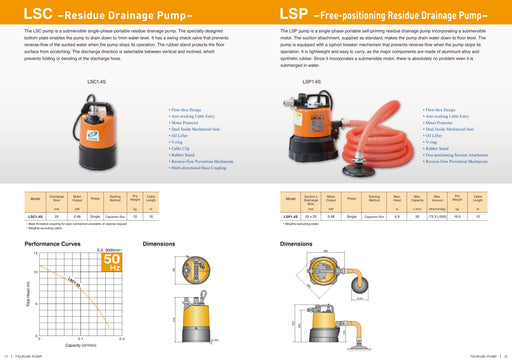
The Tsurumi LSC1.4S is a single-phase submersible portable residue drainage pump designed for ultra low-level water removal down to approximately 1...
View full detailsComplete maintenance kit for ASM D-Series diaphragm pumps, containing essential wear components to restore pump performance and reliability. Design...
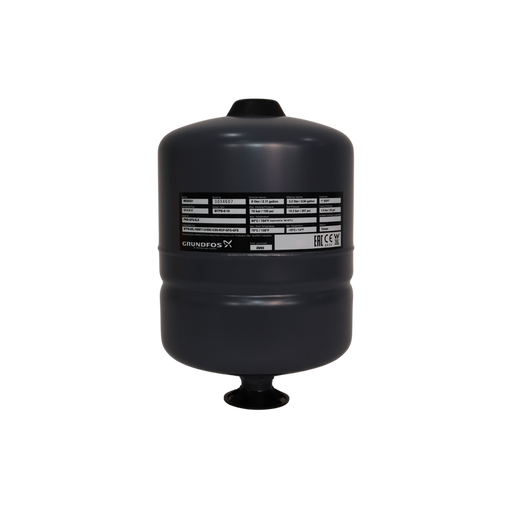
View full detailsThe Grundfos GT-H-18 PN10 G1 V is a compact steel pressure tank designed for drinking water applications. It features a non-toxic butyl rubber d...
View full detailsThe Davey Dynapond 8000 is a submersible centrifugal pond pump designed for continuous operation (24/7) in fountains, pond recirculation, wate...
View full detailsThe Tsurumi LSP1.4S is a single-phase portable self‑priming residue drainage pump incorporating a submersible motor, designed for fast removal of s...
View full details