3000+ Pumps & Parts
Pumps On Sale!
Fast Dispatch
Picking the wrong electric transfer pump costs you twice. First when you buy it, then again when it burns out halfway through filling a tank. This guide shows you how to size an electric transfer pump properly, what it should cost in Australia, and which models handle Western Australian conditions like Pilbara heat, Wheatbelt dust and bore water that eats cheap impellers. Pumptastic has supplied pumps and parts across WA from our Perth base, and the advice below is what we tell customers on the phone every day.

An electric transfer pump moves water from one place to another using a mains-powered motor instead of a petrol or diesel engine. Think tank to tank, dam to trough, bore to header tank, or pool top-ups. Unlike a pressure pump, which holds steady pressure for taps and showers, an electric transfer pump is built for volume. You want litres per minute, not bar.
Most units sold in Australia are single-stage centrifugal or self-priming centrifugal designs. Brands like Davey, Onga, Grundfos, Ebara and Tsurumi all build them. The motor sits on a shaft, spins an impeller, and throws water out the discharge port. Simple, and that simplicity is why a good electric transfer pump lasts a decade with almost no attention.
One point of confusion worth clearing up. Search "electric transfer pump" and you will get two very different products. One is a 240V water pump. The other is a 12V diesel or fuel transfer pump for drums and utes. This guide covers water. If you need fuel, you want a different category entirely.
If you have mains power at the pump site, electric wins on almost every measure. An electric transfer pump starts instantly, runs quietly, needs no fuel runs, produces no exhaust, and has maybe a tenth of the moving parts of a Honda-powered unit. There is no carburettor to gum up over a Wheatbelt summer.
Petrol still makes sense when you are genuinely off-grid or need to walk the pump to a creek. Diesel makes sense for high-hour firefighting and irrigation duty. But for a fixed installation with a power point nearby, an electric transfer pump is cheaper to run and far cheaper to own over five years.
For remote WA properties without reliable grid power, the smarter path is often a solar-ready submersible bore pump rather than a petrol unit. You get the reliability of electric with power independence.
This is where most buyers go wrong. They shop by horsepower. Horsepower tells you almost nothing on its own. You need three numbers before you buy any electric transfer pump.
Flow rate. How many litres per minute do you actually need? Filling a 10,000 litre tank in under an hour needs roughly 170 L/min. Topping up stock troughs might need 60 L/min. Write the number down.
Total dynamic head. This is vertical lift plus friction loss in your pipe. A pump lifting water 12 metres up a hill through 80 metres of 25mm poly is fighting far more than 12 metres of head. As a rough guide, add about 20 to 30 percent to your vertical lift for friction on a typical run, then check the pump curve. An electric transfer pump that delivers 200 L/min at zero head might deliver 90 L/min at 20 metres.
Power supply. Single phase 240V covers most domestic and small farm jobs up to about 2.2kW. Above that, three phase 415V is usually more efficient and cheaper to run. Most Perth homes are single phase. Many rural sheds and all mine sites have three phase available.
Get those three right and the electric transfer pump you choose will run near its best efficiency point, which is exactly where seals and bearings last longest.
A self-priming electric transfer pump sits above the water and pulls it up. This is the classic setup for a tank, dam or creek where you want the motor dry and easy to reach. Self-priming units hold water in the casing so they can re-prime themselves after the suction line loses water. Suction lift is limited by physics to about 7 to 8 metres in practice, and less as you go inland and up in altitude.
A submersible electric transfer pump sits in the water. It cannot lose prime, runs cooler, and is much quieter because the water absorbs the noise. Tsurumi and Grundfos submersibles handle pits, flooded areas and deep tanks where a surface pump would struggle. Our Tsurumi range and Grundfos Unilift models both suit this work.
Rule of thumb: if you can get within 5 metres of the water surface, use a self-priming electric transfer pump for easy servicing. If the water is deep, dirty or in a pit, go submersible.
Perth metro homes. Most people want tank-to-garden transfer or a rainwater top-up. A 0.75kW to 1.1kW single phase electric transfer pump handles this easily. Remember Perth's two-day-a-week sprinkler roster and the winter sprinkler switch-off from 1 June to 31 August, which applies to garden bores as well as scheme water. Size for the days you can actually water.
Wheatbelt, Great Southern and South West farms. Stock water, trough filling and dam transfer. Look for cast iron or stainless construction and a mechanical seal rated for warm water. Dust is the enemy of any motor, so a TEFC (totally enclosed fan cooled) motor on your electric transfer pump is worth the extra money. Davey and Onga are the two names most WA farmers already trust.
Pilbara, Kimberley and Goldfields. Heat and hard, mineralised water. Ambient temperatures above 40°C derate motors, so do not run an electric transfer pump at the very top of its curve. Stainless steel wetted parts resist the salinity you get around Kalgoorlie and Karratha. For heavier industrial duty, Grundfos vertical multistage units handle high head transfer without complaint.
Entry-level domestic units start around $250 to $400. A quality mid-range 1.1kW to 1.5kW electric transfer pump from Davey, Onga or Grundfos usually lands between $450 and $900. Industrial three-phase and submersible drainage models run from roughly $700 to $2,500 and up.
The cheap end is tempting and it is usually a mistake. A $250 electric transfer pump often uses a plastic impeller, an aluminium body and a motor with no thermal cut-out. When it fails in February with a paddock full of thirsty stock, the savings evaporate. Spend once on a branded unit with parts availability in Australia.
Pumptastic ships Australia-wide with free shipping over $100 and holds over 3,000 pumps and parts, including capacitors, camlock fittings and stainless BSP fittings so you can install the day it arrives. See delivery and shipping for regional WA timeframes.
Any hardwired electric transfer pump must be connected by a licensed electrician in WA. Plug-in units on a standard 10A outlet should be on an RCD-protected circuit. Outdoor installations need a weatherproof enclosure, and the pump should sit on a level, solid base to stop vibration from wrecking the seal.
Keep suction pipe as short, straight and large as possible. Undersized suction line is the most common cause of poor performance and cavitation. Fit a foot valve and strainer on dam and creek installs so your electric transfer pump does not swallow gravel.
If the pump will run unattended, add a pump controller or pressure manager with dry-run protection. Running dry destroys a mechanical seal in minutes, and it is the single most common warranty claim we see.
Not sure which electric transfer pump fits your job? Call our team on (08) 6384 5884 with three numbers: how many litres per minute you need, how high you are lifting, and how far the pipe run is. We will match you to the right model in one call, not three emails. Contact us here or browse the full pump range online.
What is an electric transfer pump used for?
Moving large volumes of water between two points. Tank to tank, dam to trough, bore to storage, pool filling and flood clean-up. It prioritises flow rate over pressure.
How many litres per minute do I need?
Divide the volume you need to move by the minutes you are willing to wait. A 5,000 litre tank in 30 minutes needs about 165 L/min. Then check that figure against the pump curve at your actual head, not at zero head.
Is an electric transfer pump better than a petrol one?
If you have power at the site, yes. It is quieter, cheaper to run, starts instantly and has far fewer parts to fail. Petrol only wins when you are genuinely off-grid or need portability.
Can an electric transfer pump handle dirty water?
Standard clean-water models cannot. For muddy dam water, silt or debris you need a drainage or trash pump with a vortex impeller, such as a Tsurumi submersible.
How high can it lift water?
Total lift depends on the model. A self-priming electric transfer pump is limited to roughly 7 to 8 metres of suction lift, but can push water much higher on the discharge side. Check the pump curve for both.
Do I need single phase or three phase?
Most Perth homes and small farms are single phase 240V, which covers pumps up to about 2.2kW. Three phase 415V is more efficient above that and is standard on industrial and mine sites.
Will it run on solar?
Some models will, with an appropriate inverter and battery bank. For genuine off-grid duty, a purpose-built solar submersible is usually the better answer than converting a mains electric transfer pump.
How long does one last?
A quality branded unit installed correctly commonly runs 8 to 15 years. Cheap imported units often fail inside two. Dry running and cavitation are what kill them early, not age.
Do you deliver to regional WA?
Yes. We dispatch Australia-wide from Perth, including Bunbury, Geraldton, Albany, Karratha, Port Hedland, Kalgoorlie and Broome. Free shipping applies on orders over $100.
What warranty applies?
All pumps carry the manufacturer's Australian warranty. Coverage varies by brand and model, and correct installation is required. Keep your proof of purchase and do not disassemble a faulty unit before assessment.
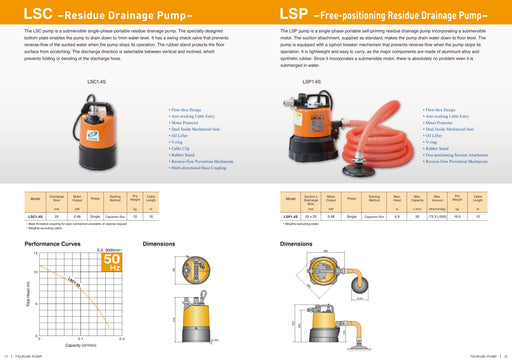
The Tsurumi LSC1.4S is a single-phase submersible portable residue drainage pump designed for ultra low-level water removal down to approximately 1...
View full detailsComplete maintenance kit for ASM D-Series diaphragm pumps, containing essential wear components to restore pump performance and reliability. Design...
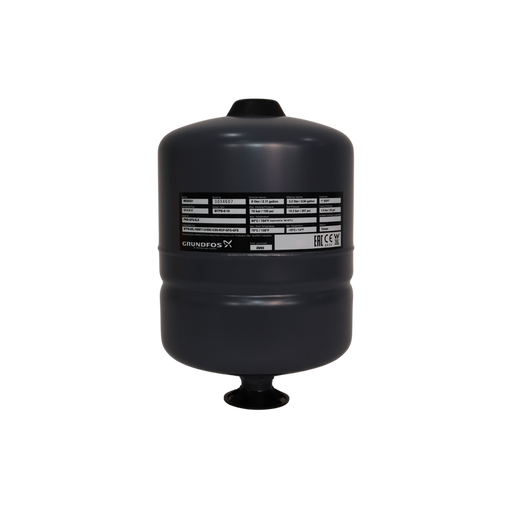
View full detailsThe Grundfos GT-H-18 PN10 G1 V is a compact steel pressure tank designed for drinking water applications. It features a non-toxic butyl rubber d...
View full detailsThe Davey Dynapond 8000 is a submersible centrifugal pond pump designed for continuous operation (24/7) in fountains, pond recirculation, wate...
View full detailsThe Tsurumi LSP1.4S is a single-phase portable self‑priming residue drainage pump incorporating a submersible motor, designed for fast removal of s...
View full details