3000+ Pumps & Parts
Pumps On Sale!
Fast Dispatch
Most people go looking for pump parts on the worst possible day. The bore has stopped. The shower has dropped to a trickle. The pool is turning green in 38 degree heat and the reticulation controller is clicking over to a zone that will never get water. In Western Australia that is not a minor inconvenience. Bore water across the Swan Coastal Plain is loaded with iron and calcium, our summers run long and hot, and a single failed seal can turn into a seized motor inside a few hours of dry running. This guide walks through the pump parts that fail first in WA, how to identify the exact component you need without guessing, and how to get it delivered to Perth, Mandurah, Bunbury, Geraldton, Kalgoorlie or the Pilbara without paying for the wrong item twice.

Pumps do not usually die all at once. They die at one point, and that point is almost always the cheapest component in the assembly. The mechanical seal goes first in most cases. It is a two-face carbon and ceramic (or silicon carbide) sandwich that keeps water out of the motor, and it is designed to be sacrificial. When a seal weeps, water tracks down the shaft, gets into the bearings, and the motor fails within weeks. Replacing the seal early costs a fraction of replacing the pump. Ignoring it usually means buying a whole new unit. This is the single most common reason people end up searching for pump parts after the damage is already done.
Impellers are next. In Perth bore systems, sand carryover is normal. Fine silica passing through a closed impeller acts like a slow sandblaster, opening the clearance between the impeller and the wear ring until the pump loses head. Owners often describe this as "the pump still runs but the pressure is gone," and they replace the pressure switch, then the tank, then the controller, before anyone checks the impeller. The other WA-specific killer is iron. Groundwater drawn from the Gnangara Mound and similar aquifers carries dissolved iron that oxidises on contact with air, forming ochre. Ochre builds up on impeller vanes, diffuser passages and non-return valves. It also stains everything orange, which is how most homeowners first notice. Iron fouling changes which pump parts you should be stocking, because a rubber-faced non-return valve and a standard NBR seal will not last as long here as they would in Melbourne.
Then there are the electrical components. Run capacitors are the highest-volume failure item in Australian single-phase 240V pumps, and they are the cheapest fix on the list. A capacitor that has dropped out of tolerance will cause a pump to hum without starting, trip a breaker, or start only after you spin the shaft by hand. Values from 12uF up to 56uF cover most domestic pool pumps, bore pumps and pressure pumps, and stocking one capacitor is far cheaper than a callout. Pressure switches and transducers are the other electrical wear item. WA reticulation systems cycle hard under the watering roster, and a switch rated for a few hundred thousand cycles will reach end of life faster on a property running six zones than on a suburban block running two. Diaphragms in pressure tanks also perish, and a waterlogged tank makes the pump short-cycle, which then destroys the switch and the seal. One failure cascades into three, which is why matching the right pump parts to the actual root cause matters more than swapping components until something works.
The fastest path to the correct part is the nameplate, not the search bar. Every pump sold in Australia carries a rating plate with the model code, serial number, kW rating, voltage, phase and frequency. Photograph it before you touch anything else. A Grundfos SQE, a Davey Torrium2 HS series and an Onga LeisureTime pool pump all use completely different internals, and the model code is what separates a five minute order from a two week back-and-forth. If the plate is unreadable, which is common on bore pumps pulled after a decade underground, the next best identifiers are the discharge size (25mm, 32mm, 40mm, 50mm BSP are the common domestic sizes), the number of stages visible on a multistage unit, and the shaft diameter measured with a vernier.
For seals, three measurements decide everything: shaft diameter, seal outer diameter and overall height. A "Type 12" seal on a 12mm shaft is not interchangeable with a cartridge seal even where the shaft matches, because the face material and spring design differ. For capacitors, you need the microfarad value and the voltage rating, both printed on the old unit. Never fit a capacitor with a lower voltage rating than the original, and never guess the uF value, because an incorrect capacitor will run the motor hot and shorten its life even if it starts. For pressure transducers and controllers, the pressure range and output signal must match the pump's control board.
There is a shortcut most WA owners miss. Take three photographs before you order any pump parts: the nameplate, the failed component beside a tape measure, and the whole installation showing the pipework and fittings. Send those through and a technician can usually confirm the part in a single reply. Pumptastic's team takes exactly these on the phone at (08) 6384 5884, which is a Perth number answered by people who work on WA systems, not an interstate call centre reading from a catalogue. This is also the point to check whether you have a pump problem or a plumbing problem. Low pressure caused by a partially closed ball valve, a blocked strainer or a leaking camlock coupling looks identical to a worn impeller from inside the house.
The genuine versus aftermarket argument gets framed as a quality question when it is usually a warranty and criticality question. Genuine pump parts from Grundfos, Davey, Onga, Tsurumi or Ebara are manufactured to the original tolerances, come with documented material specifications, and preserve your warranty position if the pump is still inside its coverage period. On a pump under warranty, or on any commercial or agricultural installation where downtime costs real money, genuine is the correct answer and the argument ends there.
Aftermarket parts earn their place on out-of-warranty domestic equipment, on older units where the manufacturer has discontinued support, and on high-turnover consumables like capacitors, O-rings and gaskets where the specification is simple and verifiable. A quality aftermarket seal from a reputable supplier will often outlast the original in WA bore water, because the aftermarket range includes upgraded face materials that the OEM did not fit as standard. Silicon carbide against silicon carbide handles abrasive sand far better than the carbon-ceramic pairing shipped on most domestic pumps. Viton and EPDM elastomers handle chlorinated pool water and dosing chemicals better than standard NBR. Choosing an upgrade rather than a like-for-like replacement is the single highest-return decision available when buying pump parts, and almost nobody offers this advice on their product pages.
Where aftermarket becomes a false economy is in hydraulics. Impellers, diffusers and wear rings are precision components, and a copy machined to loose tolerances will cost you efficiency permanently. On a three-phase 415V transfer pump running continuously on a farm or a mine site, a few percent of lost efficiency is a bigger number over a year than the entire price gap between genuine and copy. The rule that holds up: buy genuine for anything that moves water, buy the best available for anything that seals or switches, and never buy the cheapest listing you can find on a marketplace with no technical support behind it. Sourcing pump parts from a supplier who stocks the complete pump alongside the components means someone can tell you when a repair no longer makes financial sense.
Freight is the hidden cost that catches out regional buyers. A $28 capacitor is not a $28 problem when it sits in an eastern states warehouse and takes nine days to reach Karratha. Western Australia is roughly a third of the continent, and a supplier without WA stock is quietly transferring a week of downtime onto you. Pumptastic operates from Western Australia with over 3000 pumps and parts held in stock, ships free on orders over $100 Australia-wide through Australia Post, and dispatches most orders within one to two business days. For metro Perth that typically means next day. For Geraldton, Kalgoorlie, Albany, Esperance, Broome and Port Hedland it means your part is on the way the same week rather than the same month.
Different WA regions break pumps in different ways, and stocking accordingly is worth doing. Perth metro and Mandurah are dominated by bore and reticulation systems, so seals, capacitors and pressure control components move fastest. The Wheatbelt and the South West run tank and transfer systems where float switches and level controls fail more often, usually from UV degradation on the cable. The Pilbara, Kimberley and Goldfields punish everything through heat and dust, and three-phase industrial gear there needs controllers and thermal protection more than it needs hydraulics. Coastal properties from Bunbury to Broome should be specifying 316 stainless steel fittings rather than brass, because salt air will find galvanic weak points within a season.
For trade buyers, plumbers, irrigation contractors, pool technicians and facility managers, the calculation is different again. Your cost is not the part, it is the second trip. Carrying a small van kit of the pump parts that fail most often, a spread of capacitors, two or three common seal sizes, a spare pressure switch and a gasket assortment, converts most callouts into one visit. That is the entire margin difference on a domestic service job. If you are running fleet maintenance across multiple sites, phone the team and set up a standing parts list against your installed equipment rather than reordering reactively.
If you are unsure whether you need a repair or a replacement, the honest test is cost. When the parts bill passes about half the price of a new pump, and the unit is over eight years old, replacement is usually the better buy. Browse submersible bore pumps, pool pumps or the full Grundfos WA range to compare, or call (08) 6384 5884 and describe the symptom. Ordering the right pump parts the first time is always cheaper than ordering twice.
What are the most commonly replaced pump parts in Western Australia?
Mechanical seals, run capacitors, pressure switches, impellers and pressure tank diaphragms account for the large majority of replacements. In WA specifically, iron fouling from bore water and fine sand ingress push seal and impeller failures higher than the national average.
How do I know which pump parts fit my pump?
Start with the nameplate. The model code, serial number, kW rating and voltage identify the pump exactly. If the plate is unreadable, measure the shaft diameter, discharge size and the failed component itself, then send photographs to a supplier for confirmation before ordering.
Why is my pump running but producing no pressure?
The usual causes are a worn impeller, a blocked strainer or foot valve, air entering the suction line, or a waterlogged pressure tank. Check the tank pre-charge and the suction side before replacing hydraulic components, since a suction air leak mimics impeller wear closely.
My pump hums but will not start. What is it?
That symptom points to a failed run capacitor in most single-phase pumps. It can also indicate a seized shaft or a locked impeller. A capacitor is inexpensive to replace and should be the first thing tested. Electrical work must be carried out by a licensed electrician.
Are aftermarket pump parts as good as genuine?
For consumables such as capacitors, O-rings and gaskets, quality aftermarket is comparable and often better value. For hydraulic components such as impellers and diffusers, genuine is worth the extra because machining tolerances directly affect efficiency. If the pump is under warranty, use genuine.
How long should a mechanical seal last?
Five to eight years in clean water under normal duty. In Perth bore water carrying iron and sand, three to five years is more realistic. Dry running will destroy a seal in minutes, which is why fitting a dry-run protection device pays for itself.
Do you ship pump parts to regional WA?
Yes. Orders ship Australia-wide through Australia Post with free shipping on orders over $100. Most orders are dispatched within one to two business days, with delivery typically three to seven days depending on location. Express shipping is available at checkout.
Can I fit pump parts myself?
Mechanical replacements such as seals, impellers, gaskets and O-rings are within reach of a competent DIY owner with the right tools. Any work involving wiring, capacitors, control panels or three-phase equipment must be done by a licensed electrician under Australian regulations.
Do pump parts come with a warranty?
Genuine components carry the manufacturer's warranty, which varies by brand and product type. Keep your invoice and the old component, as warranty assessment often requires the failed part to be returned for inspection.
When should I stop repairing and just replace the pump?
When the parts and labour bill approaches half the cost of a new unit, or when the pump is more than eight to ten years old and a second major component has failed. Newer pumps also draw significantly less power, so the running cost saving often closes the gap faster than expected.
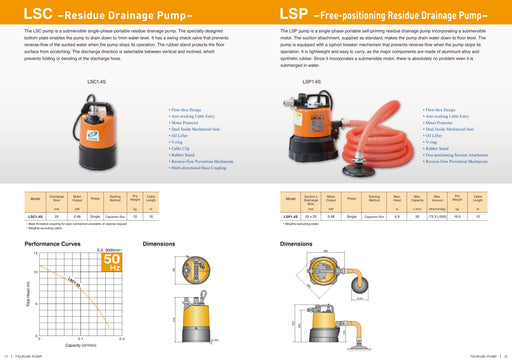
The Tsurumi LSC1.4S is a single-phase submersible portable residue drainage pump designed for ultra low-level water removal down to approximately 1...
View full detailsComplete maintenance kit for ASM D-Series diaphragm pumps, containing essential wear components to restore pump performance and reliability. Design...
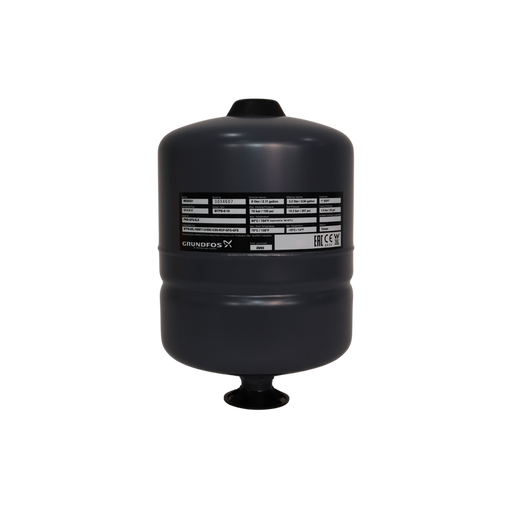
View full detailsThe Grundfos GT-H-18 PN10 G1 V is a compact steel pressure tank designed for drinking water applications. It features a non-toxic butyl rubber d...
View full detailsThe Davey Dynapond 8000 is a submersible centrifugal pond pump designed for continuous operation (24/7) in fountains, pond recirculation, wate...
View full detailsThe Tsurumi LSP1.4S is a single-phase portable self‑priming residue drainage pump incorporating a submersible motor, designed for fast removal of s...
View full details