3000+ Pumps & Parts
Pumps On Sale!
Fast Dispatch
A solar electric water pump gives farms, stations, rural homes and commercial sites a practical way to move water without relying on grid power or diesel. In Western Australia, where long pipe runs, remote bores and hot summers are common, the right system can supply stock troughs, irrigation zones, tanks and site water with less attention. A solar electric water pump uses photovoltaic panels to generate electricity, a controller to regulate that power, and a pump to move water from a bore, dam, creek or storage tank. Most modern systems use an efficient DC motor or an AC pump connected through a solar inverter. Many use an MPPT controller, which helps draw useful power as sunlight changes through the day. The best setup often pumps during daylight and stores water in a tank later, avoiding a large battery bank. Perth averages about 4.4 kWh of solar generation per day for each 1 kW of correctly installed panels, although output changes with season, panel angle, shade and site conditions. Across regional WA, that solar resource can make solar pumping a strong option. The mistake is thinking every pump will suit every job. A cheap kit may work for shallow transfer but fail on a deep bore or long run. Before buying, confirm the source, daily volume, lift, pipe run, pressure and sunlight. Pumptastic can then match the pump, controller and accessories to the real duty point instead of relying on the maximum advertised flow. Browse our submersible bore pumps, Grundfos SQ and SQE pumps, and pump controllers to compare suitable equipment. A correctly selected solar electric water pump can reduce fuel runs, cut operating costs and give remote sites a more dependable water plan.

Sizing starts with flow and total dynamic head, not motor horsepower. Flow is the volume of water needed within a set period, usually litres per minute, cubic metres per hour or litres per day. Total dynamic head combines static lift, discharge pressure and friction loss through pipe, fittings, valves and filters. A long, narrow pipe run with a large lift can add major resistance. A solar electric water pump that delivers strong flow at low head may deliver only a fraction at the real site head, which is why pump curves matter. For a bore, record the diameter, standing water level, pumping water level, total depth and safe yield. For a dam or tank, record suction conditions, lift and dry run risk. For livestock, calculate peak daily demand in hot weather and add storage margin. For irrigation, calculate the flow and pressure required by the largest zone, then include filter loss and pipe friction. Commercial projects should allow for future demand, duty cycle and redundancy. Panel capacity must match the pump. Too little solar capacity causes slow starts, weak winter output and poor performance. The controller should provide dry run, overvoltage, overload and automatic restart protection, with inputs for tank or source level sensors. A float switch can stop the pump when the tank is full, while a low level probe protects the source from over-pumping. A correctly selected pressure tank can reduce cycling and stabilise pressure. Remote monitoring can report pump status, tank level and delivered volume. Do not choose a solar electric water pump by price alone. Compare rated flow at the required head, motor efficiency, construction material, controller quality, spare parts, warranty and local support. A stainless steel submersible pump may suit a deep bore, while a surface centrifugal pump may suit high volume transfer from a dam. A positive displacement pump may be better where flow is modest but head is high. Pumptastic stocks Grundfos pumps and other systems for domestic, agricultural, commercial and industrial work, with data that helps buyers compare flow, head, voltage, phase and motor power.
A solar electric water pump has a higher upfront cost than a basic electric pump, but purchase price is only one part of the decision. A grid pump can be economical when power is nearby, but extending mains power can be expensive. A diesel pump can deliver strong output anytime, but it brings fuel transport, servicing, oil changes, noise, theft risk and price volatility. A windmill can work well in the right location, but output depends on wind and maintenance can involve working at height. Solar pumping shifts more of the cost to the start of the project, then uses daylight as the energy source. It also pairs well with water storage. Instead of storing electricity in batteries, the system can fill a tank while the sun is available and use gravity or a separate pressure pump later. This suits stock watering, bore transfer, remote tanks, irrigation, orchards and mine support. It is not automatically the best answer for every site. A process that must run at full output overnight may need batteries, generator backup, grid support or a hybrid controller. A shaded valley, poor bore yield or undersized tank can also limit results. The commercial case improves when fuel travel, labour, maintenance and lost production are included. Grundfos promotes solar pumping for agricultural water supply and offers remote monitoring options. LORENTZ publishes Australian installations across varied head and flow duties, showing that design changes sharply between sites. A solar electric water pump is an engineered system made from a pump, motor, solar array, controller, sensors, pipework, valves, filtration and storage. A capable supplier should ask for site data before recommending equipment. Pumptastic narrows the choice by application, flow, head, voltage and pump type. For WA farms, businesses and contractors, the value is fewer fuel runs, better water visibility, simpler automation and reliable operation where grid access is poor.
The fastest way to waste money is to order a solar electric water pump before confirming the duty point. Send Pumptastic the water source, location, bore details, daily volume, vertical lift, pipe length, pipe diameter, outlet pressure and whether the system must operate after sunset. Site photos can prevent wrong assumptions. B2B buyers should include control, standby and site requirements. Pumptastic can help identify whether you need a direct solar bore pump, a solar compatible AC pump and inverter, a surface transfer pump, a pressure boosting stage or a hybrid system. Start with the submersible bore pump range, compare the Grundfos SP borehole range, select protection through the pump controller collection, and add a pressure tank where stable pressure is required. A solar electric water pump should be selected from measured site data, not a guess based on bore depth alone. Call Pumptastic on (08) 6384 5884 for sizing support before buying. That conversation can prevent an undersized array, oversized motor, poor pipe selection or a pump that never reaches the required flow. Pumptastic ships Australia wide and supports homeowners, farmers, contractors, councils, facility managers and industrial buyers. Buy the right solar electric water pump once, install it correctly and build a system that performs reliably in harsh Western Australian conditions.
What is a solar electric water pump?
It uses electricity generated by photovoltaic panels to move water from a bore, dam, tank or other source.
How does a solar electric water pump work?
Solar panels feed a controller, which regulates power before operating the motor and pump.
Does a solar electric water pump need batteries?
Not always. Many systems pump during daylight and store water in a tank later.
What size solar electric water pump do I need?
Size depends on daily demand, total dynamic head, pipe friction, outlet pressure, source conditions and available sunlight.
Can a solar electric water pump run a deep bore?
Yes, when the pump, controller and solar array are selected for the pumping water level, safe yield, head and required flow.
Will a solar electric water pump work on cloudy days?
It can operate at reduced output, depending on array size, controller design, cloud cover and pump duty.
Is solar pumping better than diesel?
It can reduce fuel use and maintenance for remote daytime pumping, but diesel or hybrid backup may suit continuous duty.
Can solar pumping supply irrigation?
Yes, when the system meets the flow and pressure required by the irrigation zone, filter and pipe network.
What protection should the pump have?
Look for dry run, overload, overvoltage, low voltage and automatic restart protection, plus source and tank level controls.
Where can I buy a solar electric water pump in Australia?
Pumptastic supplies pumps, controllers and accessories Australia wide and provides sizing help for WA farms, rural properties and commercial sites.
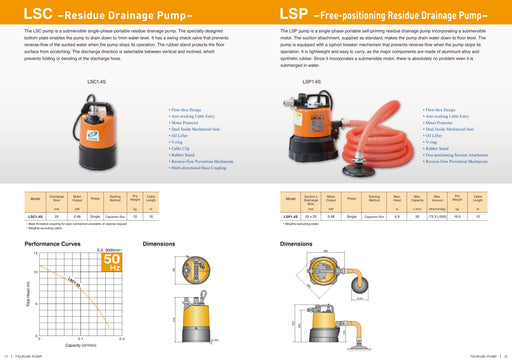
The Tsurumi LSC1.4S is a single-phase submersible portable residue drainage pump designed for ultra low-level water removal down to approximately 1...
View full detailsComplete maintenance kit for ASM D-Series diaphragm pumps, containing essential wear components to restore pump performance and reliability. Design...
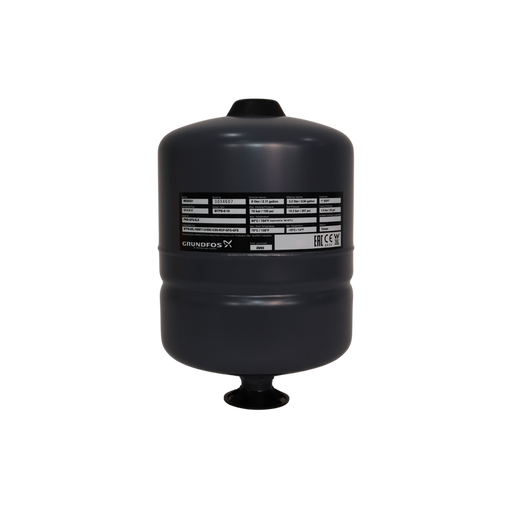
View full detailsThe Grundfos GT-H-18 PN10 G1 V is a compact steel pressure tank designed for drinking water applications. It features a non-toxic butyl rubber d...
View full detailsThe Davey Dynapond 8000 is a submersible centrifugal pond pump designed for continuous operation (24/7) in fountains, pond recirculation, wate...
View full detailsThe Tsurumi LSP1.4S is a single-phase portable self‑priming residue drainage pump incorporating a submersible motor, designed for fast removal of s...
View full details