3000+ Pumps & Parts
Pumps On Sale!
Fast Dispatch
If you need a centrifugal pump for a Perth bore, a Wheatbelt irrigation line, a Pilbara wash bay or a suburban pressure system, the hard part is not the buying. It is knowing which centrifugal pump actually matches your duty point before you spend the money. Most people get sold on horsepower and end up with a pump that cavitates, trips the overload, or burns through mechanical seals every eighteen months. This guide fixes that.
Pumptastic ships pumps and parts Australia wide from Western Australia, and we talk to WA growers, plumbers, pool techs and site supervisors every day. What follows is the same advice our team gives on the phone, written down.

A centrifugal pump moves water using a spinning impeller inside a volute casing. The impeller flings water outward, velocity converts to pressure in the casing, and the water leaves through the discharge. That is the whole idea. Everything else, from a Grundfos CM to a Davey Dynaflo to an Ebara CDXM, is a variation on it.
This matters because a centrifugal pump is not positive displacement. A positive displacement pump pushes a fixed volume per revolution no matter what. A centrifugal pump trades flow for head, and it does so along a curve. Push it against too much resistance and flow collapses. Give it too little resistance and it runs out to the far right of the curve, draws more amps than the motor plate allows, and cooks itself.
So the single most useful thing you can learn about a centrifugal pump is how to read its performance curve.
Your duty point is one flow rate paired with one total head. Flow is litres per minute or litres per second. Total head is vertical lift plus friction loss in the pipe plus any pressure you need at the outlet, all expressed in metres. Get those two numbers and centrifugal pump selection stops being guesswork.
Here is the WA version. A Gnangara Mound bore at 25 metres standing water level, feeding a retic system 60 metres away through 40mm poly, needing 300 kPa at the sprinklers, is roughly 25m lift plus about 4m friction plus 30m pressure head. That is 59 metres total head. Now you shop by curve, not by kilowatts.
Every centrifugal pump has a best efficiency point, usually near the middle of its curve. Run near it and the pump is quiet, the bearings last, and the power bill stays sensible. Run 40% to the left or right of it and you get recirculation, vibration, shaft deflection and shortened seal life. This is the difference between a centrifugal pump that lasts twelve years and one that lasts three.
Single stage end suction is the workhorse. One impeller, high flow, moderate head. This is your transfer pump, your dam pump, your flood irrigation pump. An Onga 187 or an Ebara 3M sits here.
Multistage centrifugal pump designs stack impellers in series. Each stage adds head without adding much flow. That is why a vertical multistage centrifugal pump like the Grundfos CR range dominates pressure boosting in apartment blocks, mine camps and commercial buildings, and why a horizontal multistage centrifugal pump such as the Davey HS or Grundfos CM range runs most domestic pressure systems.
Self priming centrifugal pump models hold water in the casing so they can re-prime after the suction line loses water. If your suction is above the water level, which describes most dam and tank draw setups in regional WA, self priming is not optional.
Submersible centrifugal pump units put the impeller stack down the hole. Bore pumps like the Grundfos SP and SQE are centrifugal pump assemblies with the motor attached, which is why they can lift 100 metres or more where a surface centrifugal pump physically cannot suck past about 7 metres.
Pool pumps are also centrifugal pumps, just with a hair and lint basket and a corrosion resistant wet end. And drainage and sewage pumps such as the Tsurumi range use vortex or channel impellers so a centrifugal pump can pass solids without choking.
Cast iron is cheap, strong and fine on scheme water. It is a poor choice on Perth bore water, which is frequently high in dissolved iron and slightly acidic. That water will stain, scale and eat a cast iron centrifugal pump wet end.
Choose 304 or 316 stainless for bore water, high iron water and anything near the coast from Mandurah to Geraldton. Choose bronze or 316 for saline and marine duty around Esperance, Exmouth and Karratha. Choose technopolymer for grey water and effluent. A centrifugal pump specified on material rather than price is the one you only buy once.
Seals matter just as much. Carbon ceramic is standard. Silicon carbide is what you want for abrasive bore water carrying fine sand, which is common across the Swan Coastal Plain.
Net positive suction head available must exceed what the centrifugal pump requires. If it does not, water flashes to vapour at the impeller eye, the bubbles collapse, and the metal erodes. It sounds like the pump is passing marbles.
In practice, this is a suction side problem. Suction line too long, too narrow, too many elbows, or a foot valve half blocked. Heat makes it worse, so a 42 degree February day in Kalgoorlie will cavitate a centrifugal pump that ran fine in July. Oversize the suction pipe one size above the pump inlet and keep the run short. That one habit prevents most failures we see.
Under about 2.2kW, single phase is fine. Above that, three phase is more efficient, cheaper to run and easier on the motor. Many Wheatbelt and Great Southern properties only have single phase at the shed, so check your supply before ordering a three phase centrifugal pump.
If you are on solar or a hybrid system, a variable speed drive or pump controller on a centrifugal pump is worth the outlay. Because of the affinity laws, dropping speed 20% cuts power draw close to 50%. On a bore that runs eight hours a day through a Wheatbelt summer, that pays for itself in a season.
A small domestic transfer or pressure centrifugal pump runs roughly 300 to 900 dollars. A quality single stage cast iron or stainless irrigation centrifugal pump sits around 900 to 2,500 dollars. Multistage pressure systems and larger three phase units run 1,500 to 6,000 dollars. Industrial end suction and specialty units go well beyond that.
The cheapest centrifugal pump is almost never the cheapest option. A 600 dollar unit that fails in two years and needs a call out costs more than a 1,400 dollar unit that runs for a decade on a stocked spare parts line. Browse current centrifugal pump pricing and stock here.
We hold over 3,000 pumps and parts, and we stock the parts, not just the pumps. When a capacitor fails at 5pm on a Friday in Bunbury, the pump brand matters less than whether anyone in the country has the part on a shelf.
We carry Grundfos, Davey, Onga, Tsurumi, Ebara and ITC, plus pressure tanks and fittings. Free shipping on orders over $100, Australia wide, fast dispatch, and a phone line on (08) 6384 5884 answered by people who size pumps for a living. Send us your lift, your distance, your pipe size and your required pressure, and we will name the centrifugal pump that fits, not the one with the best margin.
How do I choose the right centrifugal pump size?
Work out your total head in metres and your required flow in litres per minute, then match a centrifugal pump whose curve crosses those two numbers near its best efficiency point. Kilowatts are the result, not the starting point.
What is the difference between a centrifugal pump and a positive displacement pump?
A centrifugal pump varies its flow as system pressure changes. A positive displacement pump delivers near constant flow regardless of pressure. Centrifugal is right for water and thin liquids at high flow. Positive displacement suits thick, viscous or precisely dosed fluids.
How deep can a surface centrifugal pump suck water from?
About 7 metres at sea level, less at altitude and less again on hot days. Beyond that you need a submersible or a jet assisted system.
Why is my centrifugal pump losing prime?
Usually an air leak on the suction side, a failed foot valve, or a suction lift beyond the pump's capability. Check every suction joint and the foot valve seal first.
Can a centrifugal pump run dry?
Only briefly. Running dry destroys the mechanical seal within minutes because the seal faces rely on pumped water for lubrication and cooling. Fit a run dry protection controller if the supply is unreliable.
What is the best centrifugal pump for Perth bore water?
Stainless steel wet end, silicon carbide seals and a curve suited to your bore's standing water level. High iron content bore water eats cast iron.
Do I need a pressure tank with a centrifugal pump?
If the pump is on a pressure switch, yes. A tank stops rapid cycling and extends motor life. If you run an electronic controller like a Torrium or Press Control, a small tank is still recommended.
How long should a centrifugal pump last?
Ten to fifteen years for a correctly sized quality unit on clean water. Three to five if it is oversized, undersized, running dry or handling abrasive water.
Can I use a pool pump as an irrigation centrifugal pump?
Not ideally. Pool pumps are built for low head, high flow, closed loop duty. Irrigation needs higher head and continuous rating.
Do you deliver centrifugal pumps to regional Western Australia?
Yes. We dispatch from WA Australia wide via Australia Post, with free shipping over $100, to the Wheatbelt, Great Southern, Mid West, Goldfields, Pilbara and Kimberley.
Guessing costs more than asking. Shop centrifugal pumps now or call (08) 6384 5884 and tell us the job. We will size it.
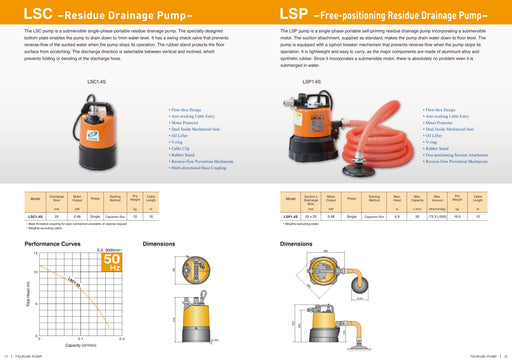
The Tsurumi LSC1.4S is a single-phase submersible portable residue drainage pump designed for ultra low-level water removal down to approximately 1...
View full detailsComplete maintenance kit for ASM D-Series diaphragm pumps, containing essential wear components to restore pump performance and reliability. Design...
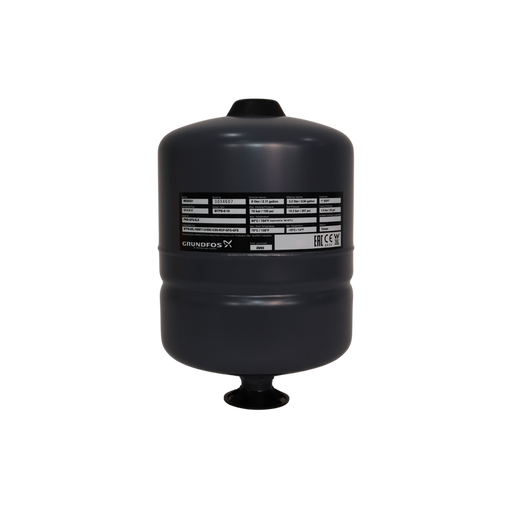
View full detailsThe Grundfos GT-H-18 PN10 G1 V is a compact steel pressure tank designed for drinking water applications. It features a non-toxic butyl rubber d...
View full detailsThe Davey Dynapond 8000 is a submersible centrifugal pond pump designed for continuous operation (24/7) in fountains, pond recirculation, wate...
View full detailsThe Tsurumi LSP1.4S is a single-phase portable self‑priming residue drainage pump incorporating a submersible motor, designed for fast removal of s...
View full details