3000+ Pumps & Parts
Pumps On Sale!
Fast Dispatch
A swimming pool in Australia is usable for about three months of the year without help. Heat it, and you can stretch that to eight or nine. In parts of Queensland and WA you can swim nearly all year.
The trouble is that "pool heater" covers three very different machines. They cost different amounts to buy, cost very different amounts to run, and suit different situations. Pick the wrong one and you either freeze in September or open a power bill you did not expect.
This guide explains how each type works in plain terms, what drives the running cost, and how to work out which one fits your pool. It also covers something most heating guides skip: the pump that pushes water through the heater matters just as much as the heater itself.
Every pool heater sold in Australia falls into one of three groups. Solar, heat pump, or gas.
Solar heating is the simplest idea of the three. Black tubing or panels go on your roof. Your pool pump pushes water up through them. The sun warms the water as it passes, and it flows back into the pool a few degrees warmer.
There is no heating element and no gas burner. The only energy you pay for is the electricity to run the pump a bit longer than usual.
What it does well. Running costs are the lowest of any system by a wide margin. The panels have no moving parts, so there is not much to break. A well-installed system lasts a long time.
Where it falls down. It only works when the sun is out. On a run of cold, cloudy days in July, it does very little. You also need enough unshaded roof facing the right way — roughly the same area as the pool surface is the usual rule. If your roof is small, shaded, or facing the wrong direction, solar may not be an option.
Best for: stretching the swimming season from about October to April, on a house with good roof space and sun.
A heat pump does not make heat. It moves it. A fan pulls air across a coil, the system takes warmth out of that air, and passes it into your pool water. It works the same way a fridge does, only backwards.
This is why heat pumps are efficient. They are not converting electricity into heat directly. They are using a small amount of electricity to shift a much larger amount of heat from the air into the water. That is why a heat pump can deliver several times more heat energy than the electrical energy it consumes.
What it does well. It works day or night, and it does not care about cloud. Running costs sit well below gas. For most families who want to swim from spring through to autumn without thinking about it, this is the type that gets chosen.
Where it falls down. Efficiency drops as the air gets colder. On a frosty morning the unit has less warmth in the air to work with, so it takes longer and costs more per degree. Heat pumps are also slow. They raise pool temperature gradually over a day or more, not in an afternoon. And they make noise, because there is a fan running.
Best for: regular swimming across a long season, where you want steady temperature without a big power bill.
A gas heater burns natural gas or LPG to heat water directly as it flows through. It is the same principle as an instant hot water unit, scaled up.
What it does well. Speed. A gas heater can lift a pool several degrees in a few hours regardless of the weather outside. If you want to swim tomorrow and it is cold today, this is the only type that will manage it. It is also the usual choice for spas, where you want heat on demand and the water volume is small.
Where it falls down. Running cost. Gas is by far the most expensive way to keep a pool warm, and the gap gets worse the more you use it. Heating a full-size pool continuously on gas gets very costly. If you are on LPG bottles rather than mains gas, it costs more again.
Best for: spas, occasional use, holiday homes, and anyone who needs heat fast rather than heat cheaply.
People compare heaters on purchase price. Purchase price is the smaller number over the life of the system. Four things drive what you actually pay.
Pool size. Heating is about volume. A large pool holds a lot of water, and every litre has to be warmed. Doubling the pool roughly doubles the energy bill.
Target temperature. Every extra degree costs money, and the cost is not linear. A warmer pool loses heat to the air faster, so holding 30 degrees costs a lot more than holding 27.
How long the season is. Running a heater from September to May costs far more than running it for six weeks around Christmas.
Whether you use a cover. This is the big one, and it is covered below.
Most heat leaves a pool through the surface. Water evaporates, and evaporation carries heat away. It happens all night, every night, whether the heater is on or not.
A cover stops most of that. It is a piece of plastic with no running cost at all, and it will do more for your heating bill than choosing one brand of heat pump over another.
The practical version is simple. If you are not prepared to use a cover, expect any heating system to cost noticeably more to run and to struggle to hold temperature overnight. If you will use one, a smaller and cheaper heater will often do the job.
This is the part most heating guides leave out.
No heater warms your pool on its own. It heats water that is flowing through it. The pump is what creates that flow. Solar heating depends on it completely, because the pump is the only thing lifting water to the roof and back.
Three things follow from that.
The pump usually has to run longer. Once you add heating, the pump is no longer just filtering. It is also circulating water through the heater or the solar panels. That means more running hours, which means more electricity and more wear.
An undersized pump limits the heater. Every heater has a flow rate it needs to work properly. If the pump cannot deliver it, the heater will underperform or shut down on a flow fault. With solar, an underpowered pump may not lift water to the roof at all.
Pump running costs can exceed heater running costs. On a solar system this is guaranteed, because the pump is the only thing using power. Even with a heat pump, a single-speed pump running long hours makes up a serious share of the bill.
This is where a variable or two-speed pump earns its keep. It can run slowly for normal filtering and step up when the heating needs flow. Our pool pump range covers single-speed, two-speed and quiet-running options, including Davey and Onga units.
If your pool has heating and the pump is more than about eight years old, it is worth checking what it costs you to run before you spend money on a bigger heater.
Undersizing is the most common and most expensive error in pool heating.
An undersized heater runs constantly and never quite gets there. You pay to run it and you still do not get a warm pool. Because it never reaches the target, it never switches off, so the bill keeps climbing.
Sizing depends on more than pool volume. An installer works from your surface area, the temperature you want, how long a season you want, whether the pool is exposed to wind, how much sun the area gets, and whether you will use a cover.
Wind matters more than people expect. A pool in an open, windy backyard loses heat far faster than the same pool behind a fence or hedge. If your pool is exposed, say so when you get quotes.
Get at least two quotes and ask each installer to show you their sizing calculation. If someone quotes a model without asking about your pool dimensions and your cover, be careful.
Rough guide, based on what people usually want.
Heating adds load to equipment that was sized for filtering alone. A few things to keep an eye on.
Longer pump hours mean more heat in the motor. Pool pump motors sit in enclosed housings, often in full sun. Heat is what kills the capacitor inside them. If your pump hums but will not start, that is the classic sign. Replacements are in our motor capacitor range, and it is a far cheaper fix than a new motor.
Timers and controls matter more. Once heating is involved, when the pump runs is as important as whether it runs. Our pump controllers and pressure control components cover the switching side.
Flow problems show up as heating problems. A blocked skimmer basket, a dirty filter or a worn impeller all reduce flow. The heater is usually blamed first. Check the simple things before calling anyone out. Seals, impellers and other wear parts are in our spare parts range.
Indoor pools and heated spas often use a separate circulator. If your setup has a dedicated heating loop, see our hot water circulator pumps.
Solar, by a long way, because the only power it uses is the pump. Heat pumps come next. Gas is the most expensive to run, though it is the fastest to heat.
Most people find 26 to 28 degrees comfortable for general swimming. Lap swimmers often prefer it a little cooler. Every degree above that costs noticeably more to hold, so it is worth starting lower and adjusting up.
Longer than most people expect — usually a day or more to bring a cold pool up to swimming temperature, then much less to hold it there. Heat pumps are designed to maintain temperature rather than deliver quick heat. If you need a pool warm by tomorrow, gas is the only option that will do it.
Not always, but you do need to check. Every heater states a minimum flow rate. If your existing pump meets it, you are fine. If it does not, the heater will underperform or fault out. Solar is the most demanding, because the pump has to lift water to roof height. Have a look at our pool pumps if yours is borderline.
Yes. Most of the heat a pool loses goes out through the surface by evaporation, and a cover stops most of that. It has no running cost and it will save you more than choosing a slightly better heater would.
You can run a heat pump from household solar power, and many people do, because the heat pump can run during the day when the panels are producing. That is different from solar pool heating, which uses water panels rather than electrical ones. Both are called solar, which causes a lot of confusion.
Usually flow, not the heater. Check the skimmer basket, the pump basket and the filter first. After that, look at the pump itself — a worn impeller or a failing motor reduces flow without stopping the pump completely. An undersized heater will also run constantly without reaching temperature.
Solar panels often last a long time because there is little to fail. Heat pumps and gas heaters have more moving parts and electronics, so expect a shorter life and some servicing along the way. In all cases, water chemistry matters — badly balanced water damages heater components faster than anything else.
Whichever heater you choose, it only works as well as the water flow feeding it. That part is worth getting right first, because a heater matched to a pump that cannot supply it will disappoint you no matter how much you spent.
If you are unsure whether your current pump can handle a heater, tell us your pool size and pump model and we will tell you honestly whether it will cope. Call (08) 6384 5884 or get in touch. Pumptastic ships pool pumps and parts Australia-wide.
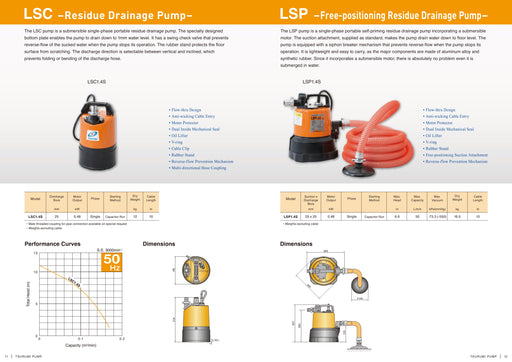
The Tsurumi LSC1.4S is a single-phase submersible portable residue drainage pump designed for ultra low-level water removal down to approximately 1...
View full detailsComplete maintenance kit for ASM D-Series diaphragm pumps, containing essential wear components to restore pump performance and reliability. Design...
View full detailsThe Tsurumi LSP1.4S is a single-phase portable self‑priming residue drainage pump incorporating a submersible motor, designed for fast removal of s...
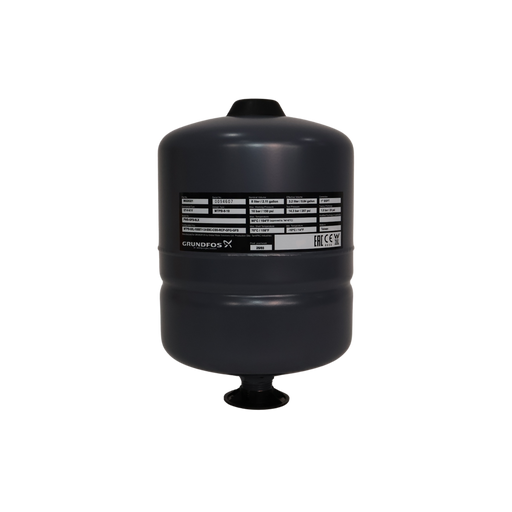
View full detailsThe Grundfos GT-H-18 PN10 G1 V is a compact steel pressure tank designed for drinking water applications. It features a non-toxic butyl rubber d...
View full detailsThis multi-purpose capacitor for a variety of AC applications. It incorporates a plastic housing. Suitable for pool pump, submersible pump, bore pu...
View full details