3000+ Pumps & Parts
Pumps On Sale!
Fast Dispatch
Commercial wastewater is every drop your business sends to the sewer that did not come from a staff toilet or an office kitchen. In Western Australia, that one line decides whether you need a permit, a grease trap, and a pump built for solids. Most owners find out the hard way. A cafe in Northbridge, a wash bay in Welshpool, a mine camp in the Pilbara, and a caravan park near Margaret River all produce commercial wastewater, and Water Corporation treats all four as trade waste. This guide covers what commercial wastewater actually is, what WA law expects, and how to choose equipment that does not quit on a Friday night.

On this page: What counts as commercial wastewater | Commercial wastewater and WA trade waste rules | Choosing a commercial wastewater pump | Commercial wastewater by industry | Regional WA | Commercial wastewater maintenance | Where to buy |
Water Corporation defines trade waste as any wastewater discharged from your business other than waste from office facilities or staff amenities. That definition is deliberately wide. Your commercial wastewater includes dishwater, floor waste, cool room condensate, wash bay runoff, laundry discharge, brewery washdown, and workshop drains. If it did not come from a hand basin or a staff kitchen sink, treat it as commercial wastewater until someone tells you otherwise.
The scale is worth understanding. Water Corporation moves more than 502 million litres of wastewater a day across WA, through roughly 17,280 kilometres of pipe, to 113 treatment plants. About 80 per cent of the state's flow is treated in Perth at Woodman Point, Beenyup at Craigie, and Subiaco. Your commercial wastewater is one small input into a system that is engineered for domestic sewage, not for hot grease, caustic cleaners, or rag-heavy discharge.
That mismatch is the whole problem. Domestic sewage is predictable. Commercial wastewater is not. It arrives hot, greasy, chemically loaded, and full of solids, often in short violent surges at close of trade. A pump that handles a house will not handle a commercial wastewater stream from a busy kitchen for more than a season.
Any business in WA that wants to discharge commercial wastewater to a Water Corporation sewer must apply for a trade waste permit, and it must be in place before discharge starts. The permit sets the conditions: what you can send, at what strength, and what pre-treatment you have to run first. Water Corporation carries out ongoing sampling and inspections to check that your commercial wastewater matches what you declared.
The acceptance criteria cover the usual offenders. Fats, oils, and grease cool and solidify in the sewer, foul level sensors, and jam pump switches. High organic load can upset treatment plants. So commercial kitchens are generally required to run a grease trap, and automotive trades an oil arrestor, before their commercial wastewater ever reaches the main.
Here is the nuance that catches people out. Garbage grinders fitted to sinks and connected to the sewer are not permitted in Western Australia, because shredding food solids into the network loads the system with organic matter. That rule is about sink-mounted food waste units. It does not cover submersible grinder pumps sitting in a pump well, which are a normal and accepted way to move commercial wastewater from a low point up to the sewer. Plenty of suppliers blur those two things. They are not the same.
One more detail worth budgeting for: since 1 July 2025, pro rata refunds on annual trade waste charges are no longer available when a permit is terminated. Plan your commercial wastewater permits around your financial year, not around your fit-out date. Stormwater also has to stay completely separate from commercial wastewater, as roof and yard runoff is not accepted at treatment plants.
Most commercial wastewater failures trace back to one decision: someone sized a pump on price instead of on what the discharge actually contains. Getting this right is cheaper than any emergency callout in Perth on a weekend.
Grinder pumps cut solids before they enter the discharge line, which lets you run small bore pipe over long distances and steep lifts. They suit sites where commercial wastewater has to travel from a low pump well up to a sewer connection, such as basement amenities, retail pads, and remote ablution blocks. The Grundfos SEG range is the benchmark here, with a hardened stainless cutter, cast iron housing, dual mechanical seals, and moisture sensors that warn you before a seal failure turns into a motor failure.
When your commercial wastewater carries rags, wipes, fibres, or stringy food waste, a free-flow vortex impeller is the safer choice. The impeller sits back from the flow path, so solids pass through instead of wrapping. Look at the Grundfos SEV SuperVortex range and the Tsurumi submersible range for commercial wastewater applications where blockages have already cost you downtime.
Not all commercial wastewater is sewage. Wash bay pits, plant rooms, cool room drains, and construction cut-offs need drainage or sump pumps that shift dirty water without choking on grit. If your permit requires pH correction or chemical treatment before discharge, ITC dosing pumps give you controlled, repeatable dosing rather than someone tipping a drum in by eye.
Whatever the duty, install duty and standby pumps on an alternating controller. A single commercial wastewater pump is a single point of failure, and in hospitality that means closing the doors. Pair it with proper level control components, a reliable float switch, and a high-level alarm so you hear about a rising well before your customers smell it.
Hospitality generates the most difficult commercial wastewater per litre. Hot water, emulsified fats, and coffee grounds hit the grease trap in waves. Food processors and breweries add strength and volume, often with pH swings that need dosing before discharge.
Automotive workshops, transport depots, and wash bays produce commercial wastewater loaded with hydrocarbons, detergents, and heavy sediment. Oil arrestors and silt pits do the first job, and the pump only has to move what is left. Mining camps, exploration sites, and remote roadhouses across the Pilbara, Kimberley, and Goldfields usually sit outside reticulated sewer, so their commercial wastewater goes to an on-site treatment system where pump reliability is the entire plan.
Caravan parks, schools, aged care, and health facilities sit in the middle. Their commercial wastewater looks domestic but arrives in peaks that domestic gear cannot absorb, and the consequences of an overflow are far more serious.
In Perth metro, a failed pump is a bad day. In Karratha, Broome, Kalgoorlie, Esperance, or Exmouth, a failed commercial wastewater pump can be a week of closure while freight catches up. Distance is the risk multiplier, and it changes what "the right pump" means.
For regional and remote WA, buy the standby pump at the same time as the duty pump. Keep a spare seal kit, capacitor, and float on site. Choose cast iron and stainless builds over the cheapest plastic option, because heat, salt air, and abrasive water are unforgiving. Specify three phase where site power allows, and confirm voltage before ordering, as swapping a commercial wastewater pump after freight is expensive and slow.
This is also where controls earn their keep. A pump controller with alternation, run-dry protection, and alarm output turns your commercial wastewater system into something a caretaker can manage without a technician on site.
Monthly, test the high-level alarm and confirm both pumps alternate. Quarterly, lift the pumps, clear the impeller and floats, and check the wet well for grease build-up. Service the grease trap or oil arrestor on the schedule in your permit, not when it smells, because permit compliance is judged on records as much as results.
Annually, run an insulation and current draw check on each commercial wastewater pump motor. Rising amps mean wear. Check seals and oil for water ingress. Log everything. If Water Corporation samples your discharge and asks questions, a maintenance log is the difference between a conversation and a penalty.
Keep a written commercial wastewater plan on site: what runs where, who to call, where the isolators are, and which parts you hold. Most emergency callouts we see could have been a ten dollar float replaced on a Tuesday.
Pumptastic is a Western Australian pump specialist supplying commercial wastewater equipment to businesses, plumbers, builders, and councils across Perth and regional WA. We stock genuine Grundfos, Tsurumi, Davey, Onga, and Ebara units with full manufacturer warranty, over 3,000 pumps and parts, and fast dispatch Australia wide.
More useful than the catalogue is the phone number. Tell us your flow rate, lift height, pipe size, solids type, and power supply, and our team will size the commercial wastewater pump properly the first time. That conversation takes ten minutes and routinely saves thousands.
If your commercial wastewater system is failing, undersized, or about to be inspected, call (08) 6384 5884 or contact our team for a same-day recommendation. Browse the full wastewater and sewage pump range or ask us to quote a matched duty and standby package with controls included.
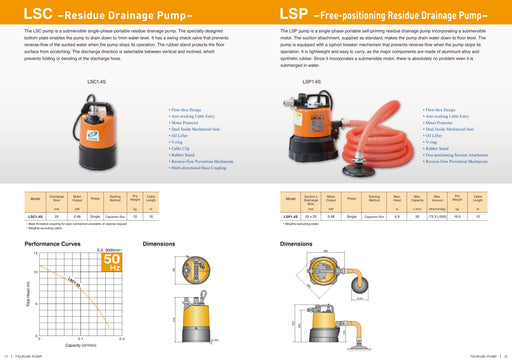
The Tsurumi LSC1.4S is a single-phase submersible portable residue drainage pump designed for ultra low-level water removal down to approximately 1...
View full detailsComplete maintenance kit for ASM D-Series diaphragm pumps, containing essential wear components to restore pump performance and reliability. Design...
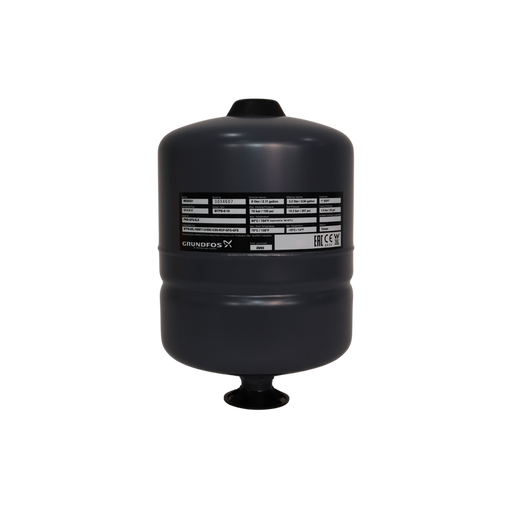
View full detailsThe Grundfos GT-H-18 PN10 G1 V is a compact steel pressure tank designed for drinking water applications. It features a non-toxic butyl rubber d...
View full detailsThe Davey Dynapond 8000 is a submersible centrifugal pond pump designed for continuous operation (24/7) in fountains, pond recirculation, wate...
View full detailsThe Tsurumi LSP1.4S is a single-phase portable self‑priming residue drainage pump incorporating a submersible motor, designed for fast removal of s...
View full details