3000+ Pumps & Parts
Pumps On Sale!
Fast Dispatch
If you pull water from a bore, dam, river or recycled supply, a water filter Australia growers and industry rely on is the cheap part that saves the dear part. Sand, silt, algae and scale wear out pump seals, block drippers and sprinklers, and cause shutdowns that cost real money. The filter sits in front of that gear and keeps the grit out. This guide covers the main types of water filtration used across Australia, how to match one to your water source, and how to size it right the first time. It is written for farms, orchards, vineyards, mine sites and industrial plants, not kitchen taps. This is not a drinking water guide. If you want an under-sink or benchtop system for tap water, that is a different product.

Most water problems on rural and industrial sites are solved by one of four filter styles. Each one traps particles a different way, and each suits a different water quality and flow rate.
A screen filter catches particles on a fine stainless mesh, usually SS304. It is the simplest and most common choice for sand and silt in bore and pressure lines. Screen filters are rated by micron or mesh, so you can run coarse for sprinklers or fine for drip.
A brush filter uses rotating brushes to sweep debris off the screen. This handles dirtier, heavier water and organic matter better than a plain screen, which is why brush filters turn up on dam and river intakes.
A disc filter stacks grooved rings that trap fine solids as water passes through. Disc units are a strong pick for sandy water and fine filtration in irrigation.
A self-cleaning screen filter reads the pressure drop across the screen and backflushes itself when it climbs, using a suction-scanning action that cleans without stopping flow. Suction strainers sit on the intake and use a spinning basket to handle heavy algae and coarse solids straight from surface water. These are the workhorses for high flow and non-stop supply.
The best water filter Australia has to offer is the one that suits your actual water, not the one on special this week.
Bore water often carries iron and fine sand. A screen filter with a stainless SS304 element is the usual pick. For a small line, a manual or semi-automatic screen filter is enough. For higher flow or an unattended pump, choose a self-cleaning screen filter so nobody has to stand by and flush it.
Surface water swings from clear to thick with algae after rain. Brush filters and self-cleaning screen filters cope with this far better than a plain screen. For heavy algae straight off an open intake, a self-cleaning suction strainer is the strong option.
Recycled and effluent supply is loaded with organics. Automatic brush filters and self-cleaning filters are built for it, and they keep working while the system stays on.
A filter is rated by the smallest particle it can catch, measured in microns or by mesh count. Lower microns mean finer filtration. For rough context, a human hair is about 75 microns across. The rule is simple: match the filter to the smallest opening in your system, not to the water. Drip and micro irrigation usually needs a fine screen, often near 120 to 130 mesh, because tiny emitters block easily. Sprinklers and larger nozzles can run a coarser screen. Get this one detail right and your filter runs for years between cleans instead of clogging in a week.
The cheapest filter to buy is not always the cheapest to own. A manual filter has a low upfront price, but someone has to flush it by hand, and a missed clean can starve a pump or split a dripline. A semi-automatic filter lets you clean the element by turning a handle or opening a valve, with no strip-down, which suits medium flows and silty water. A fully automatic self-cleaning filter costs more to buy, then pays it back on labour, uptime and gear that lasts longer. For a remote pump or a plant that cannot stop, automatic is usually the right call. For a small block near the shed, a manual or semi-automatic filter does the job for less.
Water in this country is rarely gentle on equipment, and the problems change from region to region. Pumptastic is based in Western Australia, so we understand regional and remote supply better than a city-only shop. Perth market gardens, Wheatbelt broadacre farms, Great Southern vineyards, and Gascoyne and Carnarvon horticulture all run on water that needs filtering before it reaches a pump or a dripline. Goldfields and Pilbara mine sites push hard, salty or silty water through gear that cannot fail. The right water filter Australia wide has to match both the water and the pressure, which is why our range runs to 8 and 10 Bar with BSP threaded, flanged Table D and flanged Table E connections. That means a filter that bolts up to your existing pipework, not a rebuild. We ship the full range Australia-wide through Australia Post, with free shipping on orders over $100, so a filter can reach a remote site the same week you order.
Sizing a filter starts with your flow rate in cubic metres per hour and your pipe size, then your water quality and finest opening. Pick a filter rated at or above your flow so it does not choke the pump. Getting the size wrong is the most common mistake, and it is the easiest to avoid. This is where buying a water filter Australia wide from a pump specialist pays off. We stock Filtaworx and Helix Hydro side by side, which covers manual, semi-automatic and fully automatic filtration in one place. Filtaworx is an automatic brand, assembled and tested in Australia under an ISO 9001:2015 quality system. Helix Hydro covers manual and semi-automatic options with a strong price-to-spec balance. Every filter is listed with its real price, flow rate, pressure rating and connection type, so you can size, compare and buy without waiting days for a quote.
A filter is only half the job. The real point is to protect the expensive gear downstream, which is why we sell filters right next to the pumps and parts they guard. In one order you can match your filter with a submersible bore pump, a Grundfos, Davey, Onga or Tsurumi pump, a pressure tank and a controller. Browse the full water filter Australia range, compare Filtaworx and Helix Hydro side by side, or call our team on (08) 6384 5884. For large or fully automatic systems, send your flow rate and water details through our contact page and we will spec it for you.
What is the best water filter in Australia for bore water?
For bore water with iron and fine sand, a screen filter with a stainless SS304 element is the usual pick. Choose a manual or semi-automatic screen filter for small lines, or a self-cleaning screen filter for higher flow and unattended pumps. Match the micron rating to your finest emitter or nozzle.
Do I need a water filter if I have a bore pump or rainwater tank?
Yes. A water filter protects the pump and everything after it. Without one, sand, silt and algae wear pump seals and bearings, block drippers and nozzles, and cause uneven watering or shutdowns. The filter is the cheap part that saves the dear part, and it usually pays for itself.
What micron water filter do I need for drip irrigation?
Drip and micro irrigation usually needs a fine screen, often around 120 to 130 mesh, because emitters block easily. Sprinklers and larger nozzles can run coarser. The rule is to match the filter to the smallest opening in your system, not to the water quality.
What is the difference between a screen filter and a brush filter?
A screen filter traps particles on a fine mesh and suits silt and sand. A brush filter uses rotating brushes to sweep debris off the screen, so it handles heavier, dirtier water and organics. For most irrigation and surface water in Australia, screen and brush filters cover the job.
How much does an irrigation or industrial water filter cost in Australia?
Prices range widely by size and type. Small manual and semi-automatic screen filters start in the hundreds of dollars, while large fully automatic self-cleaning systems for high-flow sites run into the tens of thousands. Pumptastic lists the real price on every product page, so a water filter Australia buyers can actually compare before they buy.
Can one water filter handle dam, river or recycled water?
Yes. Brush filters and self-cleaning screen filters are built for surface water with algae, sand and organics, including dam, river, channel, effluent and recycled supply. For heavy algae straight off an intake, a self-cleaning suction strainer is the strong option.
How often do I need to clean or backflush a water filter?
It depends on your water and your filter. A manual filter needs a hand flush whenever the pressure drop climbs. A semi-automatic filter is cleaned by turning a handle. A fully automatic self-cleaning filter backflushes on its own when the pressure difference across the screen rises, so it needs little attention.
Will a water filter reduce my water pressure or flow rate?
A correctly sized filter causes only a small pressure drop. Problems start when a filter is too small for the flow, which chokes the pump, or when a dirty screen is left uncleaned. Pick a filter rated at or above your flow rate in cubic metres per hour, and keep it clean.
Are Filtaworx and Helix Hydro water filters made for Australian conditions?
Yes. Filtaworx automatic filters are assembled and tested in Australia under an ISO 9001:2015 quality system. Helix Hydro covers manual, semi-automatic and self-cleaning filters with stainless SS304 screens and epoxy-coated or polymer bodies. Both are chosen for the water filter Australia farms, mines and industry depend on.
Can I get a water filter delivered to a regional or remote area of Australia?
Yes. Pumptastic is based in Western Australia and ships the full water filter Australia range nationwide through Australia Post, with free shipping on orders over $100. Filters go to farms, mines and industrial sites across the country, including remote areas, often within the same week.
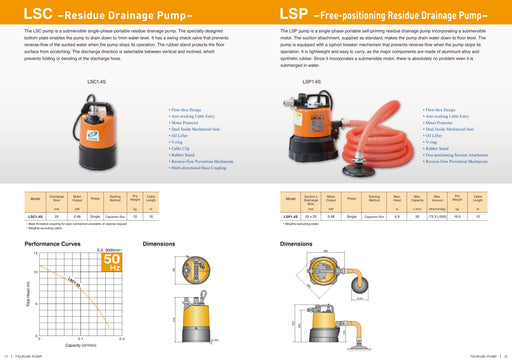
The Tsurumi LSC1.4S is a single-phase submersible portable residue drainage pump designed for ultra low-level water removal down to approximately 1...
View full detailsComplete maintenance kit for ASM D-Series diaphragm pumps, containing essential wear components to restore pump performance and reliability. Design...
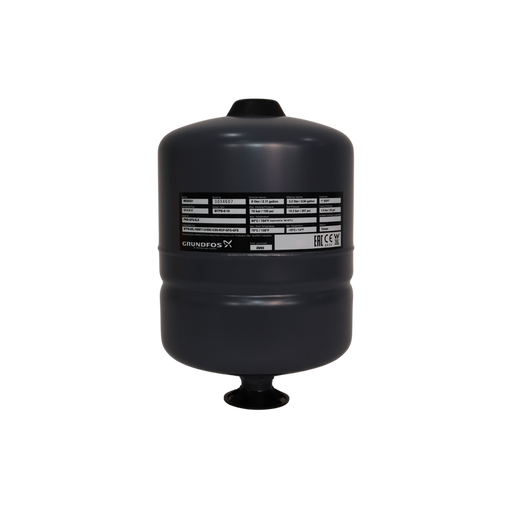
View full detailsThe Grundfos GT-H-18 PN10 G1 V is a compact steel pressure tank designed for drinking water applications. It features a non-toxic butyl rubber d...
View full detailsThe Davey Dynapond 8000 is a submersible centrifugal pond pump designed for continuous operation (24/7) in fountains, pond recirculation, wate...
View full detailsThe Tsurumi LSP1.4S is a single-phase portable self‑priming residue drainage pump incorporating a submersible motor, designed for fast removal of s...
View full details