3000+ Pumps & Parts
Pumps On Sale!
Fast Dispatch
Choosing the right centrifugal pump is not about picking the cheapest model, the biggest motor or the product with the highest flow rate on the label.
That is how buyers waste money.
The right pump depends on your water source, required flow rate, pressure demand, pipe length, vertical lift, application and installation conditions. A centrifugal water pump that works well for garden transfer may be completely wrong for commercial pressure boosting. A standard pump may be enough for simple water movement, but a multistage pump may be needed when higher pressure or longer pipe runs are involved.
If you are still learning the basics, start with our guide: What Is a Centrifugal Pump? A Simple Guide for Australian Homes, Farms & Businesses.
This guide takes the next step: how to choose the correct pump before you buy.
A centrifugal pump only performs properly when it matches the system it is connected to. NSW DPI explains that pump duty is the basis of pump selection, and duty is expressed as the required flow rate and total head. In plain English: you need to know how much water you need to move and how much pressure or lift the system requires.
If you choose poorly, you may end up with:
The ugly truth: most wrong pump purchases happen because the buyer guesses the specs.
Before ordering, speak with Pumptastic and match the pump to your actual flow rate, head and pressure requirements.
Before choosing any centrifugal water pump, identify the liquid and water source.
Ask:
Most standard centrifugal pumps are designed for clean or relatively clear water. If the water contains solids, grit, sludge or aggressive chemicals, you may need a different pump material, seal type or pump design.
|
Water Source |
Suitable Pump Direction |
|
Rainwater tank |
Standard centrifugal or pressure pump |
|
Garden irrigation |
Centrifugal pump or multistage pump |
|
Commercial pressure boosting |
Multistage pump |
|
Bore or deep well |
Usually not a standard surface centrifugal pump |
|
Dirty water or drainage |
Consider a drainage/submersible pump |
|
Water treatment system |
Often a multistage or stainless-steel pump |
This is where you should be careful. Do not force a basic centrifugal pump into a job that needs a bore pump, drainage pump or chemical-compatible pump.
Flow rate tells you how much water the pump can move over time. It is commonly shown as:
For homes, flow rate may depend on taps, garden zones or sprinklers. For farms, it may depend on irrigation area, livestock supply or transfer volume. For businesses, it may depend on equipment demand, washdown use or building services.
|
Application |
Typical Flow Priority |
|
Garden watering |
Moderate flow, steady pressure |
|
Tank transfer |
Higher flow, lower pressure |
|
Irrigation system |
Flow matched to zones/sprinklers |
|
Commercial washdown |
Flow and pressure both matter |
|
Pressure boosting |
Pressure/head often matters more |
|
Industrial transfer |
Duty point must be calculated carefully |
Do not choose based on maximum flow alone. Maximum flow is usually measured under easier conditions. Once pipe length, elevation and pressure demand are added, the actual performance can drop.
After reading this guide, move to the buying checklist: Buy Centrifugal Pumps Online in Australia: What to Check Before You Order.
This is the part buyers often misunderstand.
Head is the height or resistance the pump must overcome. It includes vertical lift, friction loss through pipes, fittings, valves and pressure demand at the outlet.
PSI is a pressure measurement. As a rough guide:
|
Head |
Approx. PSI |
|
10 m |
14.2 PSI |
|
20 m |
28.4 PSI |
|
40 m |
56.9 PSI |
|
60 m |
85.3 PSI |
|
80 m |
113.8 PSI |
A pump can have good flow at low head but poor performance at higher head. That is why serious pump selection should look at the pump curve, not just the headline flow rate.
The NSW DPI irrigation guidance also highlights that the pump operating point depends on the required flow rate and total head, which is why both numbers must be known before choosing a pump.
A standard centrifugal pump is often suitable for simple water transfer, garden supply and general movement of clean water.
A multistage pump is different. It uses multiple impeller stages to generate more pressure. Grundfos describes inline multistage pumps as pumps used where high head is needed, with several impeller stages connected in series.
|
Pump Type |
Best For |
Buyer Warning |
|
Standard centrifugal pump |
Tank transfer, garden watering, basic irrigation |
May not provide enough pressure for demanding systems |
|
Multistage pump |
Higher pressure, longer pipe runs, commercial use |
May be overkill for simple transfer |
|
Grundfos centrifugal pump |
Pressure boosting, water treatment, irrigation, commercial systems |
Must be matched to duty point, not just brand preference |
|
Pump Example |
Rated Flow |
Rated Head |
Max Head |
Stages |
Best Fit |
|
Grundfos CR 3-4 |
3 m³/h |
19.1 m |
26.5 m |
4 |
Lower head pressure or transfer applications |
|
Grundfos CR 3-11 |
3 m³/h |
47.2 m |
70 m |
11 |
Higher pressure boosting and irrigation |
|
Grundfos CR 5-15 |
5.8 m³/h |
75.9 m |
101.8 m |
15 |
Demanding pressure and commercial applications |
Pumptastic lists the Grundfos CR 3-4 with 3 m³/h rated flow, 19.1 m rated head and 26.5 m maximum head, while the Grundfos CR 3-11 offers the same rated flow but higher head due to more stages. Pumptastic also lists the Grundfos CR 5-15 as a vertical multistage centrifugal pump with 5.8 m³/h rated flow, 75.9 m rated head and 101.8 m maximum head.
This proves the point: two pumps can both be centrifugal pumps, but perform very differently.
If your system needs higher pressure, longer pipe runs or commercial reliability, ask Pumptastic about multistage pump options before buying.
Here is a practical selection guide.
|
Application |
Recommended Direction |
|
Moving water from one tank to another |
Standard centrifugal water pump |
|
Garden irrigation |
Centrifugal pump or small multistage pump |
|
Large irrigation zones |
Higher-flow centrifugal or multistage pump |
|
Multi-storey pressure boosting |
Multistage pump |
|
Water treatment system |
Stainless steel multistage pump |
|
Commercial water supply |
Grundfos centrifugal pump or multistage pump |
|
High-pressure industrial system |
Engineered pump selection required |
The more demanding the system, the less you should rely on guesswork. For high-value commercial or farm systems, the pump should be chosen based on duty point, pump curve, material compatibility and power supply.
Bigger is not automatically better. Oversized pumps can waste power and create control problems.
Small pipes restrict flow and increase friction loss. A good pump can perform badly in a poor pipe system.
Flow moves volume. Pressure pushes against resistance. You often need both, but they are not the same.
A Grundfos centrifugal pump may be a strong option, but only if the model matches your flow, head and application.
This is the expensive one. If you do not know your duty point, you are guessing.
If you already know your required flow rate and pressure, read Buy Centrifugal Pumps Online in Australia: What to Check Before You Order and compare suitable options at Pumptastic.
The right centrifugal pump should match the job, not just the budget.
Before buying, check:
For simple transfer, a centrifugal water pump may be enough. For higher pressure, stronger performance and longer pipe runs, a multistage pump may be the smarter investment.
Need help choosing the right centrifugal pump? Contact Pumptastic or shop centrifugal pumps, multistage pumps and Grundfos centrifugal pump options online.
Choose based on flow rate, total head, pressure requirement, water source, pipe length, liquid type and application. Do not choose by motor size or price alone.
You need to calculate how much water you need to move and how much pressure the system requires. This depends on your taps, sprinklers, irrigation zones, elevation and pipe distance.
A multistage pump is a type of centrifugal pump with multiple impeller stages. It is designed to produce higher head and pressure than a basic single-stage pump.
A Grundfos centrifugal pump or multistage pump can be suitable for irrigation if the model matches the required flow rate and head. The correct model depends on the system design.
No. Higher flow rate is only useful if your system needs it. If the pump cannot deliver the required pressure at that flow, performance may still be poor.
You may get low pressure, poor flow, high running costs, cavitation, overheating or early pump failure.
Yes, but only after checking the required specs. If you are unsure, contact Pumptastic before ordering so the pump can be matched to your application.
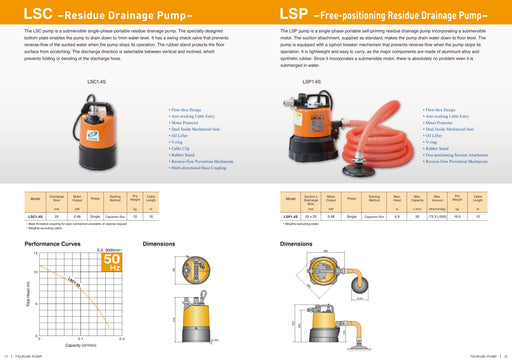
The Tsurumi LSC1.4S is a single-phase submersible portable residue drainage pump designed for ultra low-level water removal down to approximately 1...
View full detailsComplete maintenance kit for ASM D-Series diaphragm pumps, containing essential wear components to restore pump performance and reliability. Design...
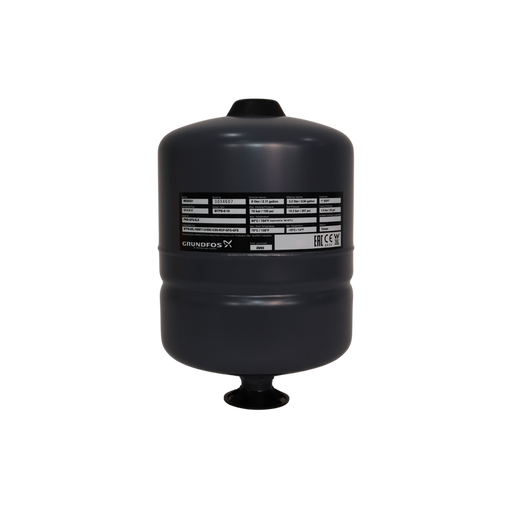
View full detailsThe Grundfos GT-H-18 PN10 G1 V is a compact steel pressure tank designed for drinking water applications. It features a non-toxic butyl rubber d...
View full detailsThe Davey Dynapond 8000 is a submersible centrifugal pond pump designed for continuous operation (24/7) in fountains, pond recirculation, wate...
View full detailsThe Tsurumi LSP1.4S is a single-phase portable self‑priming residue drainage pump incorporating a submersible motor, designed for fast removal of s...
View full details