3000+ Pumps & Parts
Pumps On Sale!
Fast Dispatch

Australian farming does not forgive weak infrastructure. Between unpredictable rainfall, long dry seasons, and rising energy costs, water management is a make or break factor for farm profitability. This is why quality irrigation pumps are not optional equipment for Aussie farms, they are core assets.
For farmers across Western Australia and regional Australia, investing in the right irrigation setup directly affects yield, water efficiency, and long term operating costs.
Australian farms operate in some of the harshest agricultural environments in the world. Extended dry periods, sandy or clay heavy soils, and extreme temperature swings put enormous pressure on irrigation systems.
Low quality pumps struggle to maintain consistent water flow, especially when paired with large sprinkler systems or long pipe runs. When irrigation becomes unreliable, crops suffer first and operating costs rise quickly.
High performance irrigation pumps are designed to handle fluctuating demand, long duty cycles, and regional water sources such as bores, dams, and rainwater storage.
Irrigation pumps are the heart of any sprinkler system. They control water pressure, flow rate, and delivery consistency across paddocks, orchards, and crop rows.
A properly sized pump ensures:
Even water distribution across all sprinklers
Stable pressure during peak irrigation cycles
Reduced wear on pipes and fittings
Efficient operation of automated sprinkler systems
Poor pump selection often leads to pressure drops, uneven coverage, and higher electricity usage.
Many farms attempt to reduce upfront costs by choosing budget pumps. This decision usually backfires.
Low quality pumps often suffer from:
Premature motor failure
Inconsistent pressure delivery
Higher maintenance frequency
Increased power consumption
Shorter service life
In contrast, quality irrigation pumps are engineered for durability, efficiency, and sustained performance under Australian conditions. Over time, they reduce downtime, maintenance costs, and energy waste.
Water is one of the most controlled and valuable resources in Australian agriculture. Efficient irrigation is no longer about convenience, it is about compliance and sustainability.
Quality irrigation pumps allow precise control over flow rates and pressure, ensuring sprinklers deliver the right amount of water without overspray or runoff. This is especially critical in WA regions where water restrictions and bore draw limits apply.
Efficient pumps also pair better with modern sprinkler systems and automated irrigation controllers, reducing water loss and labour costs.
Not all sprinkler systems have the same demands. A single pump failure can disrupt an entire irrigation schedule.
Quality pumps are selected based on:
Total sprinkler count
Required operating pressure
Pipe length and elevation
Water source depth
Duty cycle requirements
Using an underpowered pump leads to weak sprinkler performance. Overpowered pumps waste energy and damage system components. Professional pump selection eliminates both problems.
Electricity costs continue to rise across Australia, hitting regional farms hardest. Irrigation pumps often account for a significant portion of farm energy use.
High efficiency pumps reduce power consumption by:
Operating closer to optimal flow ranges
Reducing start stop cycles
Minimising friction losses
Maintaining consistent pressure without overload
For farms running daily irrigation schedules, efficiency gains translate directly into lower operating expenses.
Western Australia presents specific irrigation challenges. Long distances between water sources and fields, high mineral content in bore water, and extreme heat place additional strain on pumps.
Quality pumps designed for pumps Australia Perth conditions are built to withstand:
Abrasive water sources
High ambient temperatures
Continuous operation
Remote installation environments
Choosing the wrong pump in WA often results in costly replacements and lost irrigation time during critical growing periods.
Irrigation failures rarely happen at convenient times. Pump breakdowns during heatwaves or peak growth stages can destroy weeks of progress.
Reliable irrigation pumps ensure:
Crops receive consistent moisture
Sprinkler systems operate on schedule
Farm labour is not diverted to emergency repairs
Seasonal planning stays on track
Reliability is not a feature, it is a requirement for modern Aussie farms.
Quality irrigation pumps are not about buying the most expensive option. They are about buying the correct pump for your farm’s needs.
A proper assessment considers:
Farm size and layout
Crop water requirements
Sprinkler system design
Available power supply
Future expansion plans
Working with pump specialists ensures your irrigation system supports growth rather than limiting it.
What size irrigation pump does my farm need
Pump size depends on sprinkler system demand, pipe length, water source depth, and required pressure. A professional calculation is essential.
Are irrigation pumps suitable for bore water in WA
Yes, but the pump must be designed to handle mineral content and continuous use common in WA bore systems.
How long should a quality irrigation pump last
With correct sizing and maintenance, quality pumps can operate reliably for many years even under heavy use.
Can one pump run multiple sprinkler zones
Yes, if the pump is correctly sized and paired with proper control valves and system design.
Is it worth upgrading an old irrigation pump
In most cases yes. Modern pumps are more energy efficient and reliable, reducing running costs and downtime.
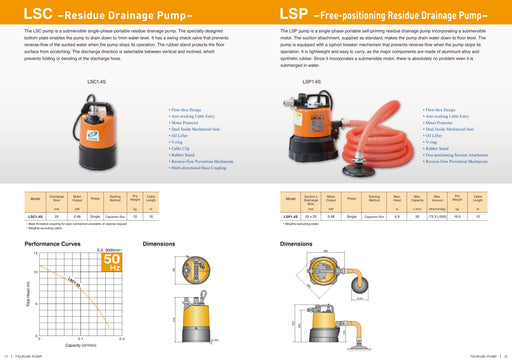
The Tsurumi LSC1.4S is a single-phase submersible portable residue drainage pump designed for ultra low-level water removal down to approximately 1...
View full detailsComplete maintenance kit for ASM D-Series diaphragm pumps, containing essential wear components to restore pump performance and reliability. Design...
View full detailsThe Tsurumi LSP1.4S is a single-phase portable self‑priming residue drainage pump incorporating a submersible motor, designed for fast removal of s...
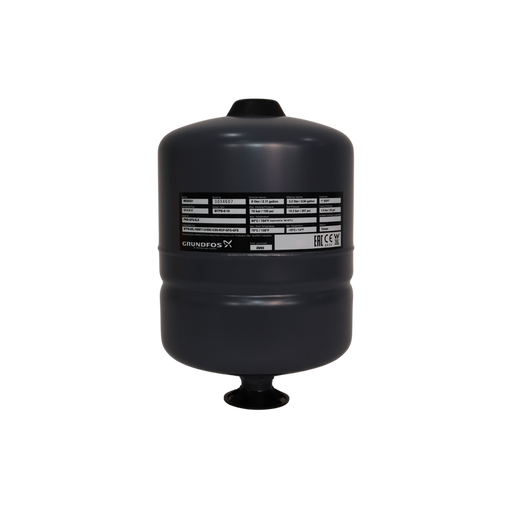
View full detailsThe Grundfos GT-H-18 PN10 G1 V is a compact steel pressure tank designed for drinking water applications. It features a non-toxic butyl rubber d...
View full detailsThe Davey Dynapond 8000 is a submersible centrifugal pond pump designed for continuous operation (24/7) in fountains, pond recirculation, wate...
View full details