3000+ Pumps & Parts
Pumps On Sale!
Fast Dispatch
A submersible pump does one job better than almost any other pump. It sits underwater and pushes water up, quietly and with no priming. That makes it the first choice for bores, sumps, tanks, ponds and flooded ground right across Western Australia. But the wrong submersible pump can burn out in a single season, spike your power bill, and leave you without water on the day you need it most. This guide shows you how to pick the right one the first time, what it should cost, and which brands hold up in tough Australian conditions.

A submersible pump is a sealed unit with the motor and the pump built into one waterproof body. You lower it into the water, and it pushes the water to the surface instead of sucking it up from above. Because it runs while fully underwater, it never loses prime and it stays cool, which is a big reason these pumps can last for years. A surface pump starts to struggle once the water sits more than about seven or eight metres below it. A submersible pump has no such limit, so it suits deep bores, wet wells and drainage pits where a suction pump simply cannot cope.
Not every submersible pump is built the same. Choosing the right type is the first step, and it comes down to what you are moving and where you are moving it.
A submersible bore pump is a long, slim unit that drops into a narrow bore casing to lift clean groundwater. These run most Perth garden bores and rural water supplies. For standard 3 inch bores, the Grundfos SQ and SQE range covers homes, tanks and irrigation. For deeper bores and farm supply, the heavy-duty Grundfos SP borehole pumps handle high flow and high head with a bigger motor.
When water pools where it should not, a sump or drainage pump clears it fast. These handle stormwater, laundry water and flooded basements, and many switch on and off by themselves using a built-in float.
For dirty water carrying solids, you need a sewage or grinder unit built to pass or cut waste without clogging. The Grundfos SEG grinder range is a common pick for homes and small sites that sit below the main sewer line.
For water features and pools, a quiet pool and pond pump keeps water moving all day without fuss. On building sites and after floods, a portable Tsurumi dewatering pump shifts muddy, gritty water so work can keep going.
Four things decide whether a submersible pump serves you well or fails early: depth, flow, power and build quality. Get these right and the rest is simple.
Depth and total head. The most common mistake is buying on bore depth alone. What really matters is total dynamic head, the full distance the water has to travel. That includes the drop down to the water, the friction inside the pipe, and the height the water must climb to reach your tank or taps. A bore that is 60 metres deep can easily need a pump rated well past 60 metres of head once you add the run to the house. Match the pump to that number, not just the metres of casing.
Flow rate. Too little flow and the pump cannot keep up with demand. Too much and it short-cycles on and off, which is what kills motors early. As a rough guide:
Power supply. Single phase at 240V suits most homes and small blocks, with no electrician upgrade needed. Three phase at 415V suits large farms and commercial sites that need serious output. In off-grid parts of WA, a solar-ready submersible pump can cut running costs to almost nothing.
Build quality. Sandy, mineral-heavy bore water is hard on gear. Look for stainless steel components rated AISI 304 or 316, plus a high sand tolerance, so the pump does not wear out before its time. If you are unsure on any of this, talk to our pump team before you buy. We spec the pump to your site. We do not just take the order.
Western Australia leans on bore water more than any other state. Across Perth and the suburbs around it, tens of thousands of homes draw from the Gnangara groundwater mound to run garden reticulation, which keeps lawns green through a long dry summer without touching scheme water. That heavy local demand is exactly why the right submersible pump matters here. A pump sized for eastern-states rainfall often struggles with WA sand, water tables that drop over summer, and the rostered watering days that push every bore on the street to run hard on the same mornings. We stock Grundfos pumps set up for WA conditions and back them with local phone advice, so your bore keeps up when the whole suburb is watering at once. Farms across the Wheatbelt, the South West and the Mid West face the same test on a bigger scale, where a reliable submersible bore pump is the line between water on tap and a dead paddock.
Brand matters because a submersible pump is buried down a bore or submerged in a pit, so replacing a cheap one is a costly and messy job. These are the names that hold up. Grundfos is the global benchmark for bore and pressure pumps, known for efficiency and long life, and our full Grundfos range covers the SQ, SQE and SP series. Davey is a trusted Australian name for home water and pond duties. Onga makes reliable, fairly priced pumps for pools and everyday water transfer. Tsurumi is the trade favourite for dewatering and drainage on tough sites. Ebara rounds it out with solid centrifugal and sump options for home and light commercial use. A quality submersible pump from any of these will usually outlast two or three budget units, which means it costs less over its life, not more.
Price depends on type, brand, depth and flow, but here is a realistic range for Australia:
A cheap submersible pump can look like a bargain on the day, then cost you a pull-out, a call-out, and a full replacement within a year or two. Buying the right pump once is almost always cheaper than buying twice.
Catching a failing pump early saves you from a full breakdown at the worst possible time. Watch for low or swinging water pressure, a pump that clicks on and off far too often, power bills that keep creeping up, less water even when the bore level is fine, and odd noises coming from the bore head. Any one of these is a sign it is time to check the pump or line up a replacement before summer hits. If your submersible pump is clearly past its best, a correctly matched new unit paired with the right pump controller will run cleaner, protect the motor, and cost less to run.
We are an Australian pump shop with more than 3,000 pumps and parts ready to ship. Every submersible pump comes with full manufacturer warranty, expert phone advice before you buy, and free shipping on orders over $100 Australia wide. We do not just quote a pump at you. We help you spec the right one for your bore depth, your flow, and your power supply. Still weighing up your options? Read our guide on submersible versus centrifugal pumps, or browse the full submersible pump range and filter by depth, flow and phase to find your match. When you are ready, our team is here Monday to Friday to help you get it right the first time.
What is a submersible pump used for?
A submersible pump lifts water from bores, wells, tanks, sumps, ponds and flooded areas. It works underwater and pushes water to the surface, which makes it ideal for deep bore water supply and for clearing water where a surface pump cannot pull hard enough.
How deep can a submersible pump go?
It depends on the model. Home bore pumps commonly work down to about 50 to 100 metres, while heavy-duty Grundfos SP borehole pumps can run in much deeper bores. What matters most is matching the pump to your total dynamic head, not just the bore depth.
How long does a submersible pump last?
A quality submersible pump that is sized and installed correctly often lasts 8 to 15 years or more. Running it dry, short-cycling, or buying an undersized cheap unit shortens that life quickly.
Can a submersible pump run dry?
Most should not. Running dry with no water to cool the motor is a leading cause of early failure. A low-water cut-out or a matched pump controller protects the pump when the bore level drops over summer.
What size submersible pump do I need for my bore?
You need to match three numbers: bore depth plus pipe run (total head), the flow you need per hour, and your power supply. Home gardens usually need 0.5 to 2 cubic metres per hour, while farms need far more. If in doubt, send us your details and we will spec it.
Is a submersible pump better than a jet or surface pump?
For deep water, yes. A submersible pump has no suction limit and stays primed, so it beats a jet or surface pump on bores over about 8 metres deep. For shallow tanks a surface pump can still be a good fit.
How much does a submersible pump cost in Australia?
A small drainage pump can start near $150, a home Grundfos SQ bore pump runs roughly $950 to $2,000, and deep-well farm SP pumps range higher again. See the price guide above for a full breakdown.
Can I install a submersible pump myself?
You can handle the mechanical side, but the electrical connection must be done by a licensed electrician, and any three-phase or bore work should follow the maker's instructions and local rules. Get the sizing right before install to avoid an early failure.
Which submersible pump is best for a Perth garden bore?
For most Perth garden bores, a Grundfos SQ submersible pump is a reliable, efficient pick that keeps up with rostered watering days. The exact model depends on your bore depth and the size of your reticulation. Call us and we will match it.
Do you deliver submersible pumps across WA and Australia?
Yes. We ship Australia wide with fast dispatch, and shipping is free on orders over $100. You get expert phone advice before you buy and full manufacturer warranty on every submersible pump.
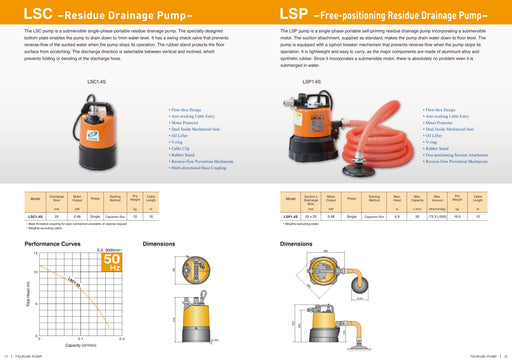
The Tsurumi LSC1.4S is a single-phase submersible portable residue drainage pump designed for ultra low-level water removal down to approximately 1...
View full detailsComplete maintenance kit for ASM D-Series diaphragm pumps, containing essential wear components to restore pump performance and reliability. Design...
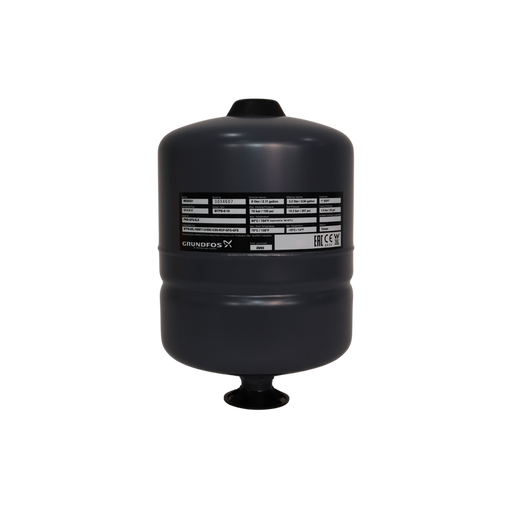
View full detailsThe Grundfos GT-H-18 PN10 G1 V is a compact steel pressure tank designed for drinking water applications. It features a non-toxic butyl rubber d...
View full detailsThe Davey Dynapond 8000 is a submersible centrifugal pond pump designed for continuous operation (24/7) in fountains, pond recirculation, wate...
View full detailsThe Tsurumi LSP1.4S is a single-phase portable self‑priming residue drainage pump incorporating a submersible motor, designed for fast removal of s...
View full details