3000+ Pumps & Parts
Pumps On Sale!
Fast Dispatch

Water management on job sites, residential builds, emergency flood events and even domestic sumps has never been more important across Australia. The shift toward higher-volume rainfall events, tighter regulations on site drainage, and cost pressures make selecting the right pump a strategic decision not just a cost item.
If you’re looking for a single phase submersible drainage pump Australia buyers trust, the model from the Japanese brand focused on durability and adaptability for Australia’s conditions is hard to ignore. The Tsurumi HS2.75S Submersible Single‑Phase Drainage Pump delivers on that front.
Based on specification information:
Manual (non-float switch) variant in the HS series: discharge 50 mm (2″), motor output 0.75 kW single-phase.
Semi-vortex impeller and built-in agitator to handle sand, silt or solids up to about 7 mm in size.
Max head 18 m (depending on model/conditions) and flow around 0.23 m³/min (≈ 230 L/min) for the HS2.75S model in local Australian context
Rugged construction, dual mechanical seals with oil lifter to protect against abrasive particles and dry-running.
Designed for “site drainage” i.e., construction, foundation works, floodwater, raw water supply and small sumps.
These features mean that when used as a portable submersible pump 240V Australia solution, the investment makes sense for contractors, builders, rental houses, municipal‐works providers and even residential customers facing heavy drainage.
In Australia, you face:
heavier rainfall or unexpected water ingress (flood risk in coastal/riverine zones)
sand or silt inclusion in drainage water (especially near construction sites, earthworks, rural applications)
the need for 240 V, single phase supply (common on many smaller sites) rather than three phase plant
need for durable operation in tough site conditions (abrasives, grit, variable operating depths)
This makes the HS2.75S model a top contender when comparing “best drainage pump for sand and solids Australia”.
Ask: how fast do you need to remove water? For example, this model delivers ~230 L/min under ideal conditions; actual site flow will depend on head height, hose/pipe diameter, sediment load and depth. So selecting a pump with realistic performance is vital. (See local reference: “Capable of pumping up to approx. 310 L/min depending on head height.”)
If the water you’re pumping contains sand, grit, sediment or small stones, choose a pump that has a semi-vortex impeller or built-in agitator rather than a standard impeller. That ensures “trash” and sediment don’t clog or degrade the pump quickly. The HS2.75S has this built-in agitator.
In many Australian sites you’ll have 240V single phase supply. Some pumps come with automatic float control; others manual. If you want always-on or remote monitoring you might choose automatic float switch variant (HSZ series). But manual versions like HS2.75S give robust control if you’re actively on site. Choose accordingly.
For heavy duty or continuous use (construction, rental, flood mitigation) you want a pump built with abrasion‐resistant materials, dual seals, protection from air-lock and wear. The HS/HSZ series emphasises this.
Check the maximum head (height water must be lifted) and required flow rate. If your site has large lift or long pipe run, head losses may reduce actual flow; therefore selecting a pump that can handle those real conditions is key. Australian purchasing advice emphasises sizing based on application.
Because Australian conditions are harsh, ensure your supplier provides local spares, technical advice and service. A cheaper pump with poor support will cost more in downtime. The market shows dewatering pump demand growing 8.7% CAGR in Australia/NZ region to 2027, underscoring seriousness of spec and support.
Site work in Australia demands compliance with local standards (e.g., AS/NZS). Pump selection must consider electrical safety (single phase, correct cable length, anti-wicking cable), and proper discharge routing (ensuring you’re not polluting onsite or violating water regulations). The HS/HSZ is noted compliant with AS/NZS 4417.1 & .2 for Australian models.
Residential basement/flood water management: For homes in flood-prone regions (Queensland, NSW coastal areas) or renovation sites, a compact single phase submersible pump is ideal.
Construction site dewatering: During foundation excavation, site works or tunnel setups you may have water ingress. A portable submersible allows efficient drainage.
Rural/agricultural uses: Draining dams, pump-out low lying paddocks, irrigation channel dewatering when sand/silt present you want a pump built for solids.
Municipal / small-scale civil works: For maintenance crews managing stormwater sumps, flood events, or drainage pits, a robust model like this ensures reliability.
Hire-rental businesses: If you’re supplying pumps for multiple sites, you need a model that can handle varied conditions and returns durability pays off in lower downtime.
Q1: Can I use this pump in my home’s basement after heavy rainfall?
Yes. Provided you have a 240 V single-phase supply nearby, and the pump is installed safely (with correct discharge hose, floating debris removed, stable power supply). It’s designed for site drainage and can handle sand/silt, making it suited for flood water removal from low lying homes.
Q2: How much flow will I get if the discharge height is 10 metres?
Actual flow depends on head, pipe diameter and sediment load. The spec sheet lists up to ~0.23 m³/min (≈230 L/min) under ideal conditions at 18 m head for this model. At 10 m head you might expect flow somewhat higher, but always factor in losses from hose/pipe. Real-world performance will be lower than ideal curve.
Q3: Will it handle sand and grit in the water?
Yes, the model features a semi-vortex impeller and agitator, designed to deal with sand/solids up to around 7 mm passage. This makes it well suited to situations where water contains sediment or grit (construction, rural, flood runoff).
Q4: What maintenance will be required in Australia?
Routine checks: ensure cable and plug are intact; inspect for wear or damage to impeller/agitator; check seals/oil lifter area; monitor vibration or unusual noise. If used in highly abrasive water (sand/silt) service intervals should be more frequent. Protective maintenance saves downtime.
Q5: Do I need an automatic float version?
That depends on your application. If you want “hands off” operation, remote monitoring or pump to start when water rises (e.g., pit sump, flood protection), you may prefer an automatic float version (HSZ variant). For manual, actively-monitored sites the HS2.75S manual version is suitable and avoids extra float mechanism complexity.
Total cost of ownership (TCO): A more durable pump (higher initial cost) may pay off due to fewer breakdowns, less maintenance and longer life.
Rental vs purchase: If you only need occasional use (flood events) consider cost per event vs frequent use (construction) where purchase likely makes sense.
Support network: Ensure that spares and technical expertise are available locally in Australia imports may delay repairs.
Future resize potential: If your jobs may scale (larger site, longer pipe runs) consider whether this model remains sufficient or whether you’ll need a higher-capacity model factor that into budget.
Safety & environment: Ensure pump discharge is properly routed; ensure power leads and electrical protection are to standard; check that pumping doesn’t contravene local water discharge rules.
Use case alignment: Match pump capacity to typical water volume and head in your jobs; oversizing wastes cost, undersizing creates bottlenecks and downtime.
If you source this pump via Tsurumi (via Australian authorised distributor) and through your platform Pumptastic, you get local product listing in Australia: the product page states exact Australian spec (0.75 kW, 220-240 V, single phase, solids passage 7 mm, cable length 32 m). Pumptastic. The combination of brand quality + local availability + suitability for Australian conditions makes it a strong option.
For any queries or technical support, you can use the Contact us link on the site, which facilitates direct connection to the supplier.
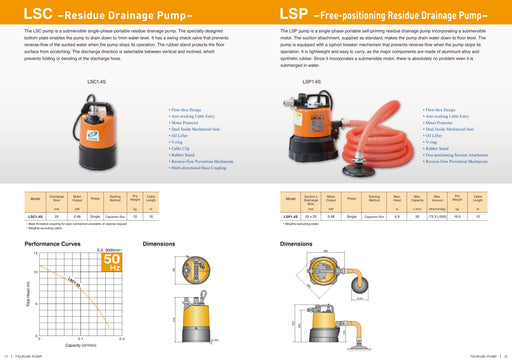
The Tsurumi LSC1.4S is a single-phase submersible portable residue drainage pump designed for ultra low-level water removal down to approximately 1...
View full detailsComplete maintenance kit for ASM D-Series diaphragm pumps, containing essential wear components to restore pump performance and reliability. Design...
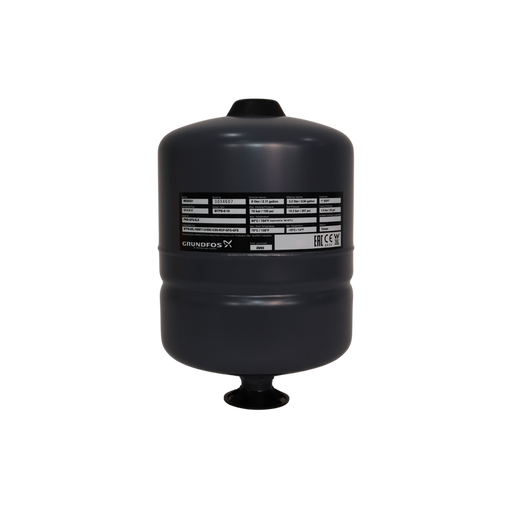
View full detailsThe Grundfos GT-H-18 PN10 G1 V is a compact steel pressure tank designed for drinking water applications. It features a non-toxic butyl rubber d...
View full detailsThe Davey Dynapond 8000 is a submersible centrifugal pond pump designed for continuous operation (24/7) in fountains, pond recirculation, wate...
View full detailsThe Tsurumi LSP1.4S is a single-phase portable self‑priming residue drainage pump incorporating a submersible motor, designed for fast removal of s...
View full details