3000+ Pumps & Parts
Pumps On Sale!
Fast Dispatch

Pump controllers are no longer basic on off switches. Modern systems used across Western Australia rely on advanced controller settings to protect equipment, improve efficiency, and handle harsh operating conditions. If these settings are misunderstood or ignored, pumps fail early and performance drops fast.
This guide explains advanced pump controller settings in plain language with real world WA use cases.
A pump controller manages how a water pump starts, stops, and responds to pressure, flow, and faults. It protects the motor, stabilises water supply, and prevents costly damage.
In WA conditions where pumps run long hours, handle bore water, and face heat and dust, controller settings are not optional. They determine whether a system lasts two years or ten.
Pump controllers are commonly used with water pump systems for homes, farms, commercial sites, and remote installations.
These are basic controllers that start the pump when pressure drops and stop it when demand ends. They are common on residential water pump installations but offer limited protection.
These adjust pump speed based on demand. They reduce power usage, prevent pressure spikes, and extend pump life. These are increasingly used with submersible pump and pressure systems in WA homes and businesses.
Used heavily with sump pump and wastewater applications. They control pumps based on water level rather than pressure.
These are paired with systems like progressive cavity pump installations for chemical dosing, sludge transfer, or mining applications where precise flow control is required.
Incorrect pressure ranges cause rapid cycling which overheats motors. In WA bore systems, pressure should be tuned to pipe length, elevation, and tank size.
Correctly set pressure ranges protect water pump motors and stabilise household or irrigation supply.
Soft start settings reduce electrical surge during startup. This is critical for submersible pump systems running on long cable lengths or generator power in regional WA.
Ignoring this setting is one of the fastest ways to damage a motor.
Dry run protection shuts the pump down if water supply is lost. This is essential for bore pumps, sump pump installations, and remote tanks where water levels fluctuate.
Advanced controllers allow time delays and restart attempts instead of instant lockouts.
These settings monitor electrical load and motor temperature. Progressive cavity pump systems especially benefit from fine tuned overload thresholds due to variable torque.
Poor configuration here leads to nuisance trips or worse complete motor burnout.
Modern controllers allow automatic restart attempts after faults. In remote WA properties, this prevents unnecessary callouts while still protecting the pump.
The key is limiting restart attempts to avoid repeated damage.
Residential and commercial water pump systems benefit from variable speed control, pressure stability, and dry run protection.
Controllers must be tuned for WA supply pressures and temperature conditions.
Progressive cavity pump systems require low speed startup, torque monitoring, and precise flow control. Incorrect settings lead to stator wear and seal failure.
Advanced controllers allow flow based control rather than pressure only logic.
Sump pump controllers rely on level sensors and time delays to prevent short cycling during heavy rain events common in parts of WA.
Backup power integration is also critical.
Submersible pump controllers must account for cable voltage drop, cooling flow, and bore recovery rates. Soft start and dry run logic are non negotiable here.
Leaving factory default settings unchanged
Disabling dry run protection to stop nuisance trips
Using pressure ranges unsuitable for long pipe runs
Ignoring temperature limits in outdoor enclosures
Failing to adjust restart logic for remote locations
These mistakes cost far more than the controller itself.
Choose based on application, not price.
Match controller capability to pump type, duty cycle, and WA environmental conditions. Cheap controllers often lack proper protection logic and fail early.
If the pump is critical to water supply, the controller should be treated as critical infrastructure.
Incorrect settings cause short cycling, overheating, and premature pump failure. This is one of the most common causes of pump damage in WA.
Not always, but variable speed controllers improve pressure stability and reduce power usage, especially in homes with multiple outlets.
Yes. Advanced controllers include dry run protection which shuts the pump down if water supply is lost.
Yes, but they must be configured with proper restart logic and fault protection to avoid unnecessary shutdowns.
Settings should be reviewed during servicing or if pump performance changes. Seasonal demand shifts in WA can require adjustment.
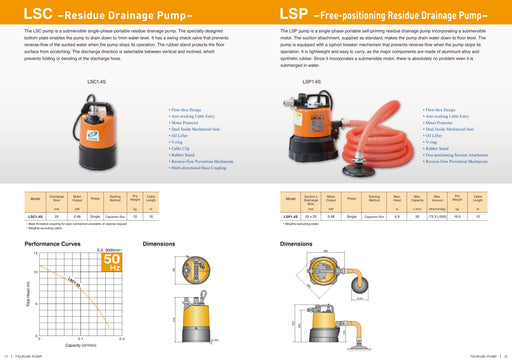
The Tsurumi LSC1.4S is a single-phase submersible portable residue drainage pump designed for ultra low-level water removal down to approximately 1...
View full detailsComplete maintenance kit for ASM D-Series diaphragm pumps, containing essential wear components to restore pump performance and reliability. Design...
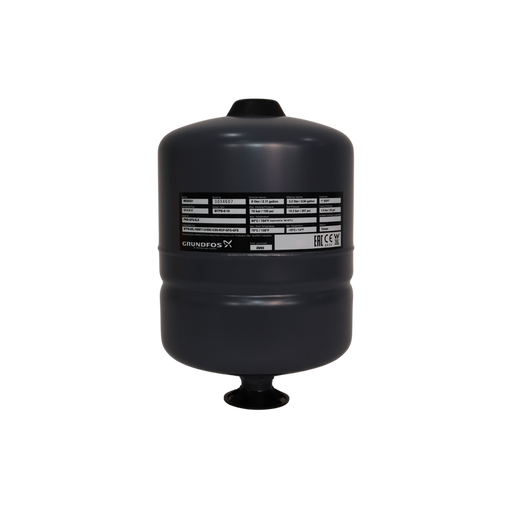
View full detailsThe Grundfos GT-H-18 PN10 G1 V is a compact steel pressure tank designed for drinking water applications. It features a non-toxic butyl rubber d...
View full detailsThe Davey Dynapond 8000 is a submersible centrifugal pond pump designed for continuous operation (24/7) in fountains, pond recirculation, wate...
View full detailsThe Tsurumi LSP1.4S is a single-phase portable self‑priming residue drainage pump incorporating a submersible motor, designed for fast removal of s...
View full details