3000+ Pumps & Parts
Pumps On Sale!
Fast Dispatch

If your water pressure is weak, buying a bigger pump is not always the answer. That is the lazy mistake that costs buyers money. The better question is: do you need a single stage centrifugal pump, or do you need a multistage pump built for higher pressure?
Both are types of centrifugal pumps, but they are not designed for the same job. A single stage centrifugal water pump uses one impeller to move water. A multistage pump uses multiple impeller stages to build higher head and stronger pressure. Grundfos explains that inline multistage pumps are used where high head is needed, with several impeller stages connected in series.
For Australian homes, farms, irrigation systems and commercial sites, this difference matters. If you only need to move water from one tank to another, a single stage pump may be enough. If you need stronger pressure across long pipe runs, multiple outlets, irrigation zones or commercial systems, a multistage pump is usually the smarter option.
Pumptastic stocks Australian water pump solutions online, including pressure pumps, submersible pumps, irrigation pumps, pool pumps and leading brands such as Grundfos, Davey and Onga.
Not sure which pump type fits your water system? Shop pump options at Pumptastic or contact the team before ordering.
A single stage centrifugal pump is better for basic water movement.
A multistage pump is better for higher pressure.
|
Pump Type |
Best For |
Pressure Strength |
|
Single stage centrifugal pump |
Tank transfer, garden watering, basic irrigation |
Low to moderate |
|
Multistage pump |
Pressure boosting, long pipe runs, commercial systems |
Moderate to high |
|
Grundfos centrifugal pump |
Premium pressure, irrigation, water treatment, commercial use |
Depends on model |
If the job is simple water transfer, do not overcomplicate it. A single stage centrifugal water pump may do the job.
If the job is pressure, height, distance or multiple outlets, do not pretend a basic pump will magically perform. You are probably looking at a multistage pump.
A single stage centrifugal pump has one impeller. The impeller spins inside the pump casing and moves water from the suction inlet to the discharge outlet.
Single stage centrifugal pumps are commonly used for:
They are usually simpler and more cost-effective than multistage pumps. But they have limits.
If your property needs higher pressure, longer pipe distance or stronger delivery across multiple outlets, one impeller may not be enough. This is where many buyers get caught. They look at flow rate only, then complain when pressure is poor.
Read More: Centrifugal Pump vs Submersible Pump: Which One Actually Fits Your Property?
A multistage pump is still a centrifugal pump, but it has more than one impeller stage. Each stage adds pressure, which makes the pump better suited for higher head applications.
Grundfos describes inline multistage pumps as suitable for water supply, water treatment and industrial solutions where high head is required.
A multistage pump is commonly used for:
|
Application |
Why Multistage Works |
|
High-pressure water systems |
Builds stronger head |
|
Long pipe runs |
Handles greater resistance |
|
Multi-storey buildings |
Pushes water higher |
|
Irrigation zones |
Supports stronger sprinkler pressure |
|
Commercial water supply |
Better for consistent pressure demand |
|
Water treatment systems |
Suits controlled pressure requirements |
This is also where a Grundfos centrifugal pump becomes relevant. Pumptastic lists multiple Grundfos CR vertical multistage centrifugal pumps with different flow and head ratings, meaning buyers can compare models based on actual system requirements instead of guessing.
If your issue is pressure, do not buy another basic pump blindly. Compare multistage pump options at Pumptastic first.
Better water pressure is not about pump size alone. You need to understand three numbers.
|
Spec |
Meaning |
Why It Matters |
|
Flow rate |
How much water moves through the system |
Important for taps, sprinklers and irrigation zones |
|
Head |
Height or resistance the pump must overcome |
Important for pressure, elevation and pipe distance |
|
PSI |
Pressure output |
Important for usable water pressure |
NSW DPI explains that pump duty is the basis of pump selection and is expressed in flow rate and total head. In plain English: the pump must match how much water you need and how much pressure the system requires.
Use this simple guide:
|
Total Head |
Approx. PSI |
|
10 m |
14.2 PSI |
|
20 m |
28.4 PSI |
|
40 m |
56.9 PSI |
|
60 m |
85.3 PSI |
|
80 m |
113.8 PSI |
A pump with good flow at low head may perform badly once pipe distance, elevation, elbows, valves and pressure demand are added.
That is why you should not buy based only on “maximum flow rate.” Maximum flow can look impressive, but it may not reflect your real property conditions.
|
Feature |
Single Stage Pump |
Multistage Pump |
|
Number of impellers |
One |
Multiple |
|
Main strength |
Simple water movement |
Higher pressure |
|
Best use |
Transfer, garden use, basic irrigation |
Pressure boosting, long pipe runs, commercial systems |
|
Pressure capability |
Lower to moderate |
Higher |
|
Cost |
Usually lower |
Usually higher |
|
Efficiency at high head |
Limited |
Better suited |
|
Complexity |
Simpler |
More advanced |
|
Best buyer |
Needs basic water transfer |
Needs stronger water pressure |
The clear answer: a multistage pump usually gives better water pressure.
But that does not mean everyone should buy one. If your job is basic water transfer, a multistage pump may be unnecessary. If your problem is weak pressure, then staying with a basic single stage pump may be the wrong move.
Here is where the difference becomes obvious.
|
Pumptastic Product Example |
Rated Flow |
Rated Head |
Max Head |
Stages |
Best Fit |
|
Grundfos CR 3-4 |
3 m³/h |
19.1 m |
26.5 m |
4 |
Lower pressure transfer or light pressure support |
|
Grundfos CR 3-11 |
3 m³/h |
47.2 m |
70 m |
11 |
Stronger pressure boosting and irrigation |
|
Grundfos CR 15-12 |
17 m³/h |
135.6 m |
169 m |
12 |
Larger commercial or high-head water systems |
Pumptastic lists the Grundfos CR 3-4 at 3 m³/h rated flow, 19.1 m rated head and 26.5 m maximum head, while the Grundfos CR 3-11 has the same rated flow but much higher rated and maximum head because it has more stages. Pumptastic also lists the Grundfos CR 15-12 as a vertical multistage centrifugal pump with 17 m³/h rated flow, 135.6 m rated head, 169 m maximum head and 12 stages.
That is the lesson. Flow rate alone does not tell the full story. Head and stages matter when pressure matters.
Need stronger pressure? Need a High-Pressure Water System? Why a Multistage Pump Is Usually the Better Investment.
A multistage pump is worth considering when your system has:
The wrong move is buying a cheaper single stage pump and hoping it performs like a multistage pump. It will not.
If your system needs pressure, buy for pressure.
If your system only needs transfer, buy for transfer.
That is the difference between a smart purchase and an expensive mistake.
|
Property Type |
Better Starting Point |
Why |
|
Small home with tank |
Single stage centrifugal water pump |
Basic transfer and garden use |
|
Large home with pressure issues |
Multistage pump |
Better pressure support |
|
Farm irrigation |
Centrifugal or multistage pump |
Depends on flow, head and zones |
|
Commercial building |
Multistage pump |
Stronger head and reliability |
|
Water treatment system |
Grundfos centrifugal pump or multistage pump |
Better controlled pressure |
|
Long-distance pipe run |
Multistage pump |
Handles higher resistance |
If your property has weak water pressure, long pipe runs or multiple outlets, compare multistage pump options at Pumptastic before buying.
More power does not automatically mean correct pressure. Pump curve, head and flow matter more.
If the pump cannot handle the required head, pressure will disappoint.
Flow is volume. Pressure is force. You need the right balance.
Cheap pumps can become expensive when they fail, underperform or need replacing.
If pressure is the main issue, a multistage pump may be the correct solution from the start.
Single stage centrifugal pumps are useful for simple water movement. Multistage pumps are built for stronger pressure and higher head.
The right choice depends on your water source, flow rate, head, PSI, pipe distance and application.
Ready to stop guessing? Shop centrifugal pumps, multistage pumps and Grundfos centrifugal pump options online at Pumptastic, or contact the team before you order.
A multistage pump usually gives better water pressure because it uses multiple impeller stages to increase head.
Yes. A multistage pump is a type of centrifugal pump with multiple impellers or stages.
Use a single stage centrifugal pump for basic water transfer, garden watering, tank movement and light irrigation.
Use a multistage pump for higher pressure, longer pipe runs, irrigation zones, multi-level buildings and commercial systems.
Yes, a Grundfos centrifugal pump can be suitable for pressure boosting if the model matches the required flow rate, head and PSI.
No. Flow rate and pressure are different. A pump can move a lot of water but still fail to deliver enough pressure at higher head.
It depends on the property and fixtures. Instead of guessing, calculate the required head and pressure demand before buying.
Yes, if the irrigation system has moderate pressure and flow requirements. Larger zones or longer pipe runs may need a multistage pump.
Usually, yes. But they can be the better investment when pressure performance matters.
Yes. If you do not know your flow rate, total head or PSI, ask before ordering. Guessing is how buyers waste money.
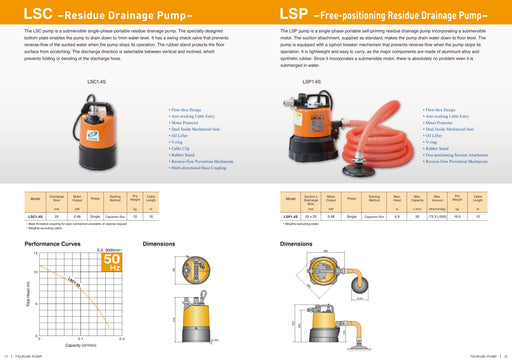
The Tsurumi LSC1.4S is a single-phase submersible portable residue drainage pump designed for ultra low-level water removal down to approximately 1...
View full detailsComplete maintenance kit for ASM D-Series diaphragm pumps, containing essential wear components to restore pump performance and reliability. Design...
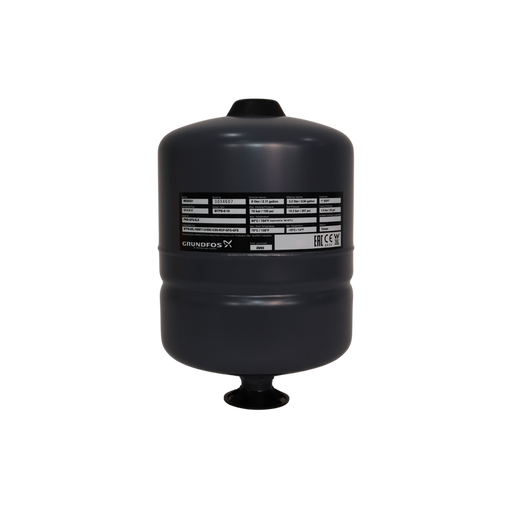
View full detailsThe Grundfos GT-H-18 PN10 G1 V is a compact steel pressure tank designed for drinking water applications. It features a non-toxic butyl rubber d...
View full detailsThe Davey Dynapond 8000 is a submersible centrifugal pond pump designed for continuous operation (24/7) in fountains, pond recirculation, wate...
View full detailsThe Tsurumi LSP1.4S is a single-phase portable self‑priming residue drainage pump incorporating a submersible motor, designed for fast removal of s...
View full details