3000+ Pumps & Parts
Pumps On Sale!
Fast Dispatch
You crank the shower in the upstairs bathroom and get a sad trickle. The dishwasher fills like it's on dial-up. The garden tap can't push water through a 25-metre hose without dribbling.
If you're on tank water, bore water, or even patchy mains in a regional pocket of Western Australia, you're not alone and the fix isn't "buy any centrifugal pump and hope." Most of the under-performing systems we see at Pumptastic come from homeowners buying a single-stage centrifugal water pump when they actually needed a multistage pump. Same pump family. Wildly different result.
Let's settle this properly with numbers, not vibes.
Centrifugal pumps move water by spinning an impeller inside a casing. The spinning blade flings water outward, kinetic energy converts to pressure, and water gets pushed through your pipes. It's the industry-standard design for domestic and light-commercial water supply across Australia.
The catch: how much pressure you get depends almost entirely on how many impellers are working in series.
Single-stage centrifugal pump = one impeller. Excellent for big flow at modest pressure.
Multistage centrifugal pump = two, three, five, even eleven impellers stacked in series. Each impeller adds another shove of pressure before water exits the pump.
Still deciding between a surface centrifugal pump and a submersible? Start with our full breakdown: Centrifugal Pump vs Submersible Pump: Which One Actually Fits Your Property? it covers suction lift limits, install location, and which one survives your water source.
This is the comparison most retailers won't put in front of you in plain numbers. Here it is:
|
Spec |
Single-Stage Centrifugal Pump |
Multistage Centrifugal Pump |
|
Impellers |
1 |
2–11+ |
|
Typical max head |
30–60 m (≈43–85 PSI) |
60–300+ m (≈85–425+ PSI) |
|
Typical max pressure |
~6 bar / 87 PSI |
Up to 10 bar / 145 PSI (domestic) |
|
Flow rate sweet spot |
High flow, lower pressure |
Moderate flow, high pressure |
|
Efficiency at high pressure |
Drops sharply above 5 bar |
Stays efficient at high head |
|
Noise level |
Often louder at full load |
Quieter load shared across stages |
|
Best for |
Pool circulation, transfer, drainage |
Pressure boost, 2-storey homes, irrigation, bores |
|
Typical AU price |
$400–$1,200 |
$900–$2,500+ |
We unpack each row of this table and the household scenarios behind them in Single Stage vs Multistage Pump: Which Gives Better Water Pressure?
Short version: if your problem is pressure, not volume, a multistage pump almost always wins.
Not sure which sits right for your setup? Send us your property details (tank size, storey count, number of outlets) and a Pumptastic pump specialist will match the unit in under 24 hours. Call +61 8 6384 5884 · Contact Pumptastic
Three reasons most pump engineers will quietly agree with:
1. Pressure efficiency. A multistage pump generates high head using smaller, lighter impellers spinning in series. A single-stage pump trying to hit the same pressure needs one huge impeller spinning at full tilt burning electricity, wearing the motor, generating noise.
2. Steadier delivery. Because each impeller only lifts water a fraction of the total head, flow and pressure stay smoother. No water hammer when the dishwasher kicks on mid-shower.
3. Lifespan. Stainless steel hydraulics on premium units like the Grundfos CMB and Grundfos CRI ranges resist corrosion from rainwater-tank acidity, bore-water minerals, and chlorinated mains. Properly sized, these pumps routinely outlast budget single-stage units by 5–10 years.
That's why the Grundfos centrifugal pump lineup particularly the CMB Booster Series dominates Australian domestic pressure systems. They pair a horizontal multistage centrifugal pump with a PM1 or PM2 Pressure Manager for automatic start/stop, dry-run protection, and anti-cycling three features cheap pumps either skip or fake.
Here's the cheat sheet our customers actually ask for:
|
Model |
Type |
Rated Flow |
Max Pressure |
Best For |
|
Grundfos CMB 1-36 PM1 |
Horizontal multistage |
~50 LPM |
~3.6 bar / 52 PSI |
Small homes, 1 bathroom |
|
Grundfos CMB 3-37 PM1 ⭐ |
Horizontal multistage |
~85 LPM (3.1 m³/h) |
~3.7 bar / 54 PSI |
All-rounder, single-storey |
|
Grundfos CMB 3-46 PM1 |
Horizontal multistage |
~85 LPM |
~4.6 bar / 67 PSI |
Single-storey, longer runs |
|
Grundfos CMB 5-46 PM2 |
Horizontal multistage |
~120 LPM (4.7 m³/h) |
~4.6 bar / 67 PSI |
Two-storey, larger family |
|
Grundfos CMBE 3-62 (VSD) |
Multistage + variable speed |
Up to 60 LPM |
~6.2 bar / 90 PSI |
Constant pressure, lowest energy use |
|
Grundfos CRI 1-11 |
Vertical multistage |
~25 LPM |
~9.8 bar / 142 PSI |
Light commercial, high-pressure boost |
Specs sourced from Grundfos product literature; always confirm Total Dynamic Head (TDH) for your specific job before purchase.
Shop the full Grundfos CMB range with free Australia-wide shipping on orders over $100. Browse Pumptastic's Grundfos Pumps
We're not going to pretend multistage is the answer to everything. Skip it if:
Three numbers decide your pump. Get these right and the rest is easy:
Hand those three numbers to the Pumptastic team and we'll spec the exact model. No guesswork. No "she'll be right." The wrong pump costs you twice once at purchase, again when it dies early.
Get a free pump match in under 24 hours. Contact Pumptastic · Call +61 8 6384 5884
If you're on tank water or weak mains, yes, typically a Grundfos CMB 3-37 size unit handles a single-storey, 2-bathroom home comfortably. If you have strong mains and one bathroom, a single-stage centrifugal pump may be enough.
Domestic multistage pumps typically deliver 3–10 bar (43–145 PSI). Industrial vertical multistage units like the Grundfos CR series go much higher up to 25+ bar.
Properly sized and installed Grundfos centrifugal pumps regularly run 10–15+ years. Cheap unbranded units often fail within 2–4 years, especially on rainwater.
Yes. The stainless steel hydraulics on Grundfos CMB and CRI ranges are designed for it. Fit a quality inlet filter to protect the impellers from grit.
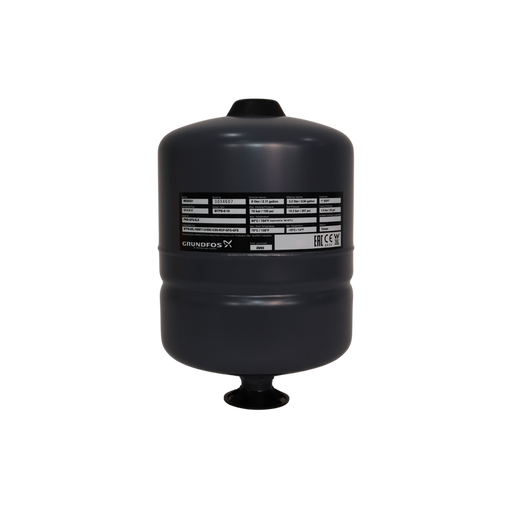
Not always. Units like the CMB with a PM1/PM2 Pressure Manager work without one. Adding a small Grundfos GT-H pressure tank reduces start/stop cycles and extends pump life recommended for higher-use households.
Usually quieter at the same output, because the load is shared across impellers. Grundfos CMBE variable-speed models are the quietest of all close to fridge-hum level.
CM is the bare multistage pump. CMB is the CM bundled with a Pressure Manager (a complete booster set). CRI is the vertical multistage version smaller footprint and higher pressure ceilings, often used in light commercial.
Plumbing and electrical work in Australia generally requires licensed tradies. Grundfos warranty depends on correct installation don't risk it.
Yes, that's exactly what a booster pump like the Grundfos CMB does. Confirm your local water utility allows pressure boosting (most do, often with a small break tank to prevent backflow).
Domestic CMB models typically sit between AUD $900–$2,500 depending on size and controller. View live pricing at Pumptastic we ship Australia-wide and price-match recognised competitors.
If you've got real pressure problems two-storey home, long pipe runs, tank or bore source, or just tired of weak showers a multistage centrifugal pump is almost always the better investment than its single-stage cousin. You pay a bit more upfront. You save it back in electricity, longevity, and the daily luxury of water that actually works.
Stop guessing. Stop overpaying for weak pressure. Browse Pumptastic's full range of Grundfos centrifugal pumps, multistage boosters, and pressure systems backed by Grundfos Australia warranty, free shipping over $100, and pump experts who actually pick up the phone.
👉 Shop Multistage Pumps at Pumptastic 📞 Call +61 8 6384 5884 talk to a real pump specialist.
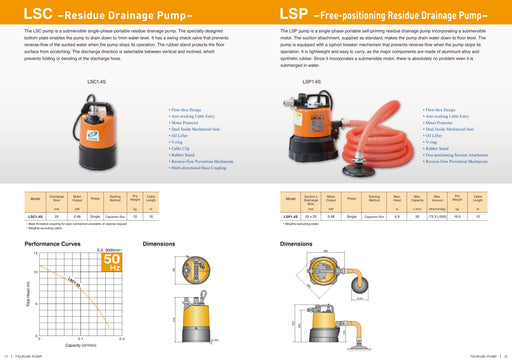
The Tsurumi LSC1.4S is a single-phase submersible portable residue drainage pump designed for ultra low-level water removal down to approximately 1...
View full detailsComplete maintenance kit for ASM D-Series diaphragm pumps, containing essential wear components to restore pump performance and reliability. Design...
View full detailsThe Grundfos GT-H-18 PN10 G1 V is a compact steel pressure tank designed for drinking water applications. It features a non-toxic butyl rubber d...
View full detailsThe Davey Dynapond 8000 is a submersible centrifugal pond pump designed for continuous operation (24/7) in fountains, pond recirculation, wate...
View full detailsThe Tsurumi LSP1.4S is a single-phase portable self‑priming residue drainage pump incorporating a submersible motor, designed for fast removal of s...
View full details