3000+ Pumps & Parts
Pumps On Sale!
Fast Dispatch
A mining bore pump sitting 120 metres down a bore in the Pilbara is the least convenient thing on a mine site to get wrong. Pull the wrong unit and you don't just lose the purchase price you lose the rig hire, the labour, the downtime, and the water your operation was relying on. Yet most undersized or oversized pumps fail for the same handful of reasons, and every one of them is preventable at the spec stage. This is the sizing checklist Australian mine sites actually work through before they buy.
If you're still mapping out your bigger water picture first, start with our companion guide on the 5 water challenges every Australian mine site faces it frames why bore selection sits at the centre of site reliability.
Sizing isn't about buying "the biggest pump you can afford." A pump that's too big cavitates, draws the bore down past its recharge rate, and chews through energy. A pump that's too small never hits the surface pressure you need and runs hot trying. The right mining bore pump is the one that lands precisely on its duty point the single combination of flow and head your bore and pipework demand. Get there, and a quality unit like the Grundfos SP range will run for years on a fraction of the power. Miss it, and you're back down the bore by next season.
Need it sized properly the first time? Talk to our pump team with your bore depth, water level and required flow we'll spec the exact model, free.
Flow rate is your starting point. In Australia it's quoted in cubic metres per hour (m³/h), litres per minute (L/min) or litres per second (L/s), and getting the units straight saves a lot of grief. Work backwards from what the site consumes: dust suppression, processing, camp supply and dewatering all add up. Then check that figure against what the bore can actually yield a bore that recharges at 5 m³/h will never feed a pump rated for 10, no matter what the badge says. Grundfos mining borehole pumps are named for their nominal flow, so an SP 14 is built around roughly 14 m³/h, an SP 5A around 5, and so on. Match the pump's nominal flow to your sustainable bore yield, not your wish list.
This is the spec people get wrong most often. Total dynamic head (TDH) is not how deep the bore is. It's the static water level plus the drawdown when the pump runs, plus friction loss in the rising main, plus the pressure you need at the surface. That surface pressure is where PSI comes in: if your delivery point needs 4 bar (about 58 PSI) to feed a tank or sprinkler line, that pressure is added to the lift before you read the pump curve. Skip drawdown and friction and you'll order a pump that looks right on paper and falls short in the field every single time.
|
Head (metres) |
Pressure (bar) |
Pressure (PSI) |
|
10 m |
0.98 bar |
14 PSI |
|
50 m |
4.9 bar |
71 PSI |
|
100 m |
9.8 bar |
142 PSI |
|
150 m |
14.7 bar |
213 PSI |
|
200 m |
19.6 bar |
284 PSI |
Not sure what your real TDH is? Send us your numbers and we'll calculate the duty point before you spend a cent contact the team here.
A pump only helps if it physically fits and then fits with room to spare. Submersible bore pumps are sized to nominal bore diameters (4", 6", 8" and up), and the pump's outside diameter must clear the casing comfortably so it can be installed, cooled and retrieved. A 6" pump rammed into a marginal 6" bore is a stuck-pump waiting to happen. Confirm your cased diameter and any deviation in the bore before you match a body size.
What's at the bore head decides half your shortlist. Single-phase 240V suits smaller duties; most serious mining bore pumps run three-phase 380–415V because larger motors simply aren't available single-phase. The Grundfos SP range pairs with MS402 and MS4000 submersible motors from 0.37 kW up past 7.5 kW, and your cable run, voltage drop and any generator or solar array all factor in. Browse the full Grundfos pumps Australia range and matching Grundfos submersible motors to see the pairings.
Buying online and want it pre-matched to motor and controller? Shop Grundfos SP submersible borehole pumps or call so we configure the set for you.
Here's the honest part most sellers skip. The Grundfos SP and most premium grundfos pumps are clean-water borehole pumps built from AISI 304 (EN 1.4301) stainless steel superb against corrosion, but sand is their enemy. Mine water often carries silt and abrasives that grind impellers and wreck seals fast. If your bore pumps sand, you either need a unit rated for it, a settling and screening stage ahead of the pump, or both. This is exactly the kind of trade-off our Mining Borehole Pump Buying Guide walks through before you commit.
Bigger is not safer. Every pump has a curve, and there's a sweet spot the best efficiency point where it moves the most water for the least energy and wear. Oversize the pump and it runs off the end of its curve, hammering the bore and the bearings. Where flow demand varies across a shift, a variable speed drive (VSD) lets one pump track the duty point instead of cycling. Size for the duty point, not the worst-case fantasy.
Submersible motors are cooled by the water flowing past them. Drop a pump into an oversized bore with slow-moving water and the motor can overheat even while "working." Grundfos specifies a minimum flow velocity past the motor; if your bore is wide, a flow sleeve restores it. It's the quietest killer on this list and the easiest to design out.
Use this to shortlist a Grundfos SP family once you know your sustainable flow and TDH. Head capability rises with the number of pump stages, so each family spans a wide pressure range.
|
Grundfos SP family |
Nominal flow |
Flow (L/min) |
Typical motor (kW) |
Head capability |
Typical mine duty |
|
SP 2A–3A |
2–3 m³/h |
33–50 |
0.37–1.1 |
Up to ~200 m |
Camp / low-yield bores |
|
SP 5A–7 |
5–7 m³/h |
83–117 |
0.55–2.2 |
Up to ~250 m |
Dust suppression top-up |
|
SP 9–11 |
9–11 m³/h |
150–183 |
1.5–5.5 |
Up to ~250 m |
General site supply |
|
SP 14–17 |
14–17 m³/h |
233–283 |
2.2–7.5 |
Deep, high-pressure bores |
Primary water supply |
|
Flow conversion |
m³/h |
L/min |
L/s |
|
Small bore |
3 |
50 |
0.83 |
|
Mid bore |
9 |
150 |
2.50 |
|
High-yield bore |
14 |
233 |
3.89 |
Found your family? See live pricing and stock on submersible bore pumps, then check delivery on our Mining Borehole Pump Buying Guide.
1. What size mining bore pump do I need?
Match the pump's nominal flow to your sustainable bore yield, then read its curve at your total dynamic head. Never size on bore depth alone drawdown, friction and surface pressure all add to the head.
2. What's the difference between a bore pump and a borehole pump?
None in practice "bore pump," "borehole pump" and "submersible bore pump" all describe a pump that sits down a drilled bore and pushes water to the surface.
3. How deep can a Grundfos SP pump go?
It's about pressure, not depth. SP models with more stages generate more head, with high-stage units reaching well over 200 metres of total dynamic head.
4. Single-phase or three-phase for a mine bore?
Smaller duties run single-phase 240V; most mining bore pumps run three-phase 380–415V because larger motors are only made in three-phase.
5. Can I run a bore pump on solar?
Yes, many sites do. Sizing must account for the array's output profile and any VSD. Send us the setup and we'll spec accordingly.
6. Why did my last bore pump burn out early?
Usually one of three things: it ran dry as the bore drew down, it pumped sand, or it overheated from low flow velocity past the motor in an oversized bore.
7. Does a bigger pump give me more water?
Only if the bore can yield it. Oversizing past the bore's recharge rate just draws it down and damages the pump.
8. Are Grundfos pumps good for mining water?
Grundfos SP pumps are premium clean-water borehole pumps in AISI 304 stainless. For sandy or abrasive water you'll need screening upstream or an abrasion-rated solution ask us first.
9. Can I buy mining bore pumps online in Australia?
Yes. You can buy the full Grundfos SP range and matching motors online, with fast dispatch Australia-wide and free shipping over $100.
10. How do I know I'm buying the right model?
Send your bore depth, static water level, required flow and delivery pressure to our team and we'll confirm the exact model before you order.
Ready to size it right and buy with confidence? Shop Grundfos SP submersible borehole pumps or talk to our pump team for a free sizing check today.
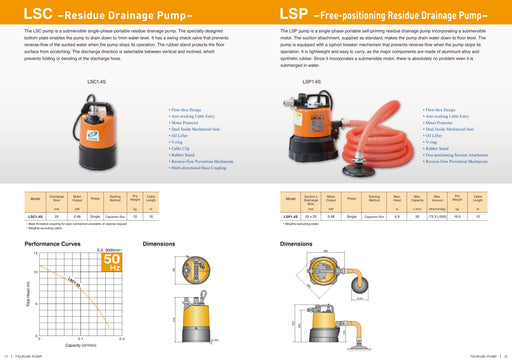
The Tsurumi LSC1.4S is a single-phase submersible portable residue drainage pump designed for ultra low-level water removal down to approximately 1...
View full detailsComplete maintenance kit for ASM D-Series diaphragm pumps, containing essential wear components to restore pump performance and reliability. Design...
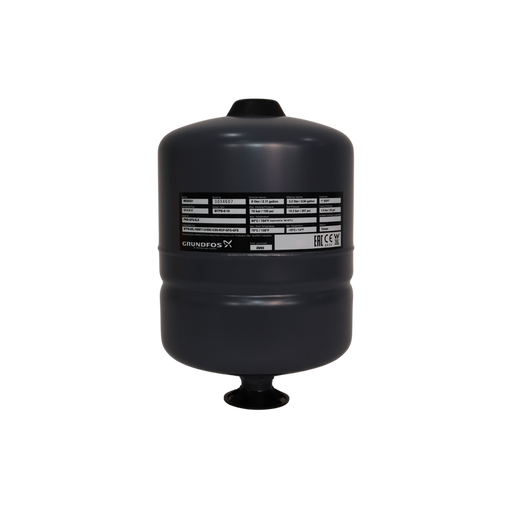
View full detailsThe Grundfos GT-H-18 PN10 G1 V is a compact steel pressure tank designed for drinking water applications. It features a non-toxic butyl rubber d...
View full detailsThe Davey Dynapond 8000 is a submersible centrifugal pond pump designed for continuous operation (24/7) in fountains, pond recirculation, wate...
View full detailsThe Tsurumi LSP1.4S is a single-phase portable self‑priming residue drainage pump incorporating a submersible motor, designed for fast removal of s...
View full details