3000+ Pumps & Parts
Pumps On Sale!
Fast Dispatch

Australia’s water headaches aren’t theoretical. One week it’s flash flooding in QLD or NSW, the next it’s a burst main or a groundwater problem on a civil site in WA. You don’t need a brochure pump you need a dependable dewatering unit you can throw in a pit or basement and trust it to kick in by itself. That’s the LB-480A: automatic start/stop, 50 mm discharge, 0.48 kW motor, 6 mm solids handling, and a compact body that slips into tight pits and trenches. It’s built for real conditions: stormwater, groundwater, wash water and sandy, abrasive slurry typical of Aussie job sites.
Civil and construction contractors needing reliable dewatering for footings, lift shafts, service trenches, and shoring.
Plumbers and drainers handling flooded basements, pits, and inspection chambers.
Facility managers solving stormwater ingress in carparks, plant rooms, or lift wells.
Emergency/council crews managing storm response and rapid water removal.
Hire companies wanting a hard-wearing, low-comeback pump for fleets.
You don’t buy pumps for pretty spec sheets. You buy them for throughput, uptime, and the ability to shrug off grit. Here’s the practical read on the LB-480A:
Motor output: 0.48 kW single-phase (240 V, 50 Hz). Easy on standard Australian power.
Discharge: 50 mm (2") with multi-directional outlet options to stop hoses kinking.
Max flow / head: Up to ~225 L/min (3.75 L/s) and 11 m head strong performance for a compact auto unit.
Solids handling: 6 mm, thanks to the semi-vortex design that resists wear and clogs.
Protection: IP68 submersible rating; built tough for continuous-duty abuse.
Automatic operation: Built-in sensor/float system set it and let it cycle.
Cabling: 10 m cable with anti-wicking block for longevity in wet work.
And the bit most people forget: for 240 V submersibles in Australia, use an RCD (≤30 mA). It’s not optional; it’s basic safety and it’s in the LB manual.
The LB-480A’s semi-vortex impeller is the quiet hero. It moves dirty water with entrained sand and fines without chewing itself to death or clogging every hour. That translates to fewer call-outs, fewer shutdowns, and better total job economics. Tsurumi’s design maintains performance even as the impeller wears exactly what you want when your pit water looks like cappuccino foam mixed with brick dust.
Versus cheap “no-name” submersibles:
The LB-480A’s materials (mechanical seals, cable anti-wicking, IP68 build) and semi-vortex design give you longer service life and fewer site disruptions. You pay once; you don’t keep paying in downtime.
Versus manual-only pumps:
If a pit can refill when nobody’s watching, auto is non-negotiable. The LB-480A’s built-in automatic control prevents flooding between checks
Versus higher-power 0.75–1.5 kW units:
If you truly need head above ~11 m or >225 L/min, step up to LB-800/1500. Otherwise you’re hauling extra weight and cost for no gain. Choose the cheapest pump that completes the task reliably.
Daily (on active jobs): Visual check, listen for seal noise, clear debris from strainer.
Weekly: Inspect cable for nicks, check automatic start/stop, flush with clean water if pumping gritty slurry.
Monthly: Check hose tails/clamps, confirm RCD test, look for weeps or leaks.
After flood deployments: Full clean, impeller inspection (semi-vortex handles wear well but it’s not magic), and store dry.
Semi-vortex design buys you time, not immortality. Pumps die from neglect more than from hard work.
1) Will the LB-480A handle sandy water from beachside sites or red dirt from the NT?
Yes, within reason. The semi-vortex impeller and 6 mm solids handling cope with gritty water well. Add pre-screening for coarse aggregate and flush after use if the water is heavy with fines.
2) Can I run it on a standard 10 A 240 V outlet?
Yes. It’s a single-phase 0.48 kW pump. Use an RCD and keep cable joins out of water.
3) How high can it pump from an underground carpark to street level?
Up to around 11 m total head (vertical lift plus friction). If your run is long or uphill, friction loss bites step up to an LB-800/1500 if you’re pushing beyond the envelope.
4) Is it small enough for narrow pits?
Yes. The LB series is slim and fits tight spaces, many 2" pumps won’t. That’s one of its hallmarks.
5) What’s the difference between LB-480 and LB-480A?
“A” = automatic. Same rugged build; the A version starts/stops by itself, so you don’t babysit the pit.
Rule of thumb: every metre of lift costs you performance. The LB-480A is excellent up to moderate lifts; if your job needs sustained flow near the top of its 11 m head, or you’re pushing through long hose runs, choose the next model up. Oversizing slightly is cheaper than flooding, but oversizing massively wastes money and adds handling weight. Keep it pragmatic.
WorkSafe and state regulators take a dim view of unsafe 240 V submersible setups. RCDs, sound cabling, and correct isolation aren’t “nice to have.” They’re the cost of doing business and the LB manual backs this up with explicit RCD guidance. Don’t run the risk; the fines and incident fallout dwarf the price of doing it right.
Lower lifetime cost: Durability + fewer clogs + simple servicing.
Hire-ready: Auto operation reduces customer error and call-backs.
Standard hose size: 50 mm keeps accessories simple across jobs.
All-rounder: From groundwater to storm response one dependable SKU covers a lot of work.
Yes, it’s versatile but don’t force it to be something it isn’t.
High solids (stringy or >6 mm): Consider a trash or cutter pump.
Chemicals or hot water (>40 °C): Use a model rated for it.
Very high head (>11 m) or long discharge runs: Step up to LB-800/1500 or a different curve.
Want to know more?
Explore our range at Pumptastic we specialise in pumps that survive Australian conditions.
Want a sizing or compliance check for your site? Contact us for no-nonsense advice.
Browse Tsurumi Pumps for related models and accessories.
Compare models and specifications: See more Tsurumi Pumps.
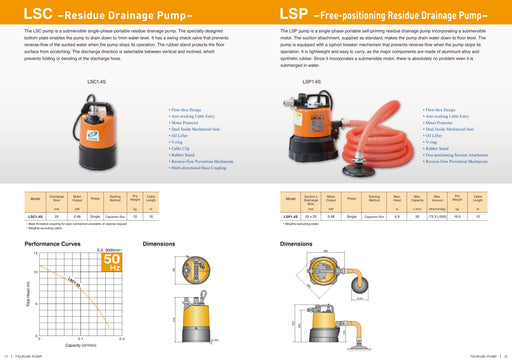
The Tsurumi LSC1.4S is a single-phase submersible portable residue drainage pump designed for ultra low-level water removal down to approximately 1...
View full detailsComplete maintenance kit for ASM D-Series diaphragm pumps, containing essential wear components to restore pump performance and reliability. Design...
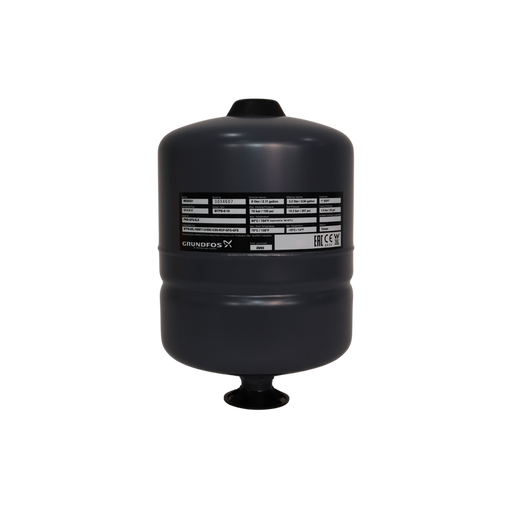
View full detailsThe Grundfos GT-H-18 PN10 G1 V is a compact steel pressure tank designed for drinking water applications. It features a non-toxic butyl rubber d...
View full detailsThe Davey Dynapond 8000 is a submersible centrifugal pond pump designed for continuous operation (24/7) in fountains, pond recirculation, wate...
View full detailsThe Tsurumi LSP1.4S is a single-phase portable self‑priming residue drainage pump incorporating a submersible motor, designed for fast removal of s...
View full details