3000+ Pumps & Parts
Pumps On Sale!
Fast Dispatch
If you own a home in Australia especially in flood-prone regions or properties with basements, cellars, or low-lying areas you already know how unforgiving water damage can be. A sump pump isn’t a glamorous piece of equipment, but it is one of the most quietly essential tools protecting your home from Australia’s unpredictable rain events, rising groundwater, and stormwater overload.
Yet most Australians don’t maintain their sump pump at all. They assume that if it turned on last year, it’ll probably be fine the next time a storm rolls in. That’s an expensive assumption. A sump pump only fails in the exact moment you need it most usually during heavy rainfall when the water level rises fast.
This 2025 sump pump maintenance checklist is designed to prevent that. It’s built for Australian conditions, Australian homes, and the types of water pump systems commonly installed across the country from submersible pump setups to progressive cavity pump systems and even water tank and pump combinations.
If you rely on equipment like Davey pumps, Grundfos pumps, or any positive displacement pump system, don’t kid yourself that you can just “set and forget.” You can’t. And if you're using a priming pump or water transfer pump as part of your drainage backup, maintenance becomes even more critical.
Let’s break down what to inspect, how often, and what Australian homeowners typically overlook.
Australia’s climate has shifted dramatically in the past decade. We’ve seen alternating cycles of drought followed by severe, sudden flooding. Even suburbs that historically stayed dry have experienced unexpected water ingress.
Here’s the inconvenient truth:
If your sump pump hasn’t been tested recently, you’re gambling with water damage, structural rot, mould growth, and insurance disputes. And insurers increasingly reject flood-adjacent claims if the homeowner can’t prove proper system maintenance.
A sump pump is not a luxury. It’s a non-negotiable risk-mitigation tool.
Don’t wait for the next storm system. Pour a bucket of water into the pit and confirm the sump pump activates, runs smoothly, and discharges water outside the property correctly.
If it hesitates before switching on, makes unusual noises, or runs weakly, address it now not after the next downpour.
Sediment accumulates quickly in Australian homes, especially in clay-heavy regions. Dirt, leaves, pet hair, and debris can jam the impeller of a submersible pump or reduce efficiency in a positive displacement pump or progressive cavity pump.
A dirty pit forces the pump to work harder and fail sooner.
Clean it quarterly.
Power outages happen frequently during major storm events.
If your sump pump relies only on mains power without any backup, you have a single point of failure.
At minimum:
Check the power cord for wear
Confirm the outlet is safe and protected
Consider adding a UPS or battery backup designed for water pump systems
If your water transfer pump or priming pump is used as a backup, test it under load not just by switching it on dry.
This part is neglected by 90% of homeowners.
Your discharge line may be:
Partially blocked
Cracked
Frozen (especially in colder southern regions)
Sloping incorrectly
Draining too close to the house
A compromised line makes even the best sump pump system useless.
Walk the entire length of the pipe every season and look for obstructions or slow flow.
If you’re using equipment from Davey pumps, Grundfos pumps, or similar high-quality manufacturers, the hardware is built to last. But no brand is immune to corrosion, especially in salty coastal regions.
Inspect:
Fasteners
Pump housing
Float switches
Mounts
Inlet screens
If you see rust, mineral buildup, or wobbling components, address them immediately.
The float switch is the brain of your sump pump system. If it sticks, your pump won't activate and that failure will always occur during a storm, not when it's dry.
Debris, friction, and poor installation can all cause sticking.
Test it manually during every quarterly inspection.
Some pumps especially progressive cavity pump systems and older positive displacement pump designs require lubrication. Many modern submersible pump models are sealed and maintenance-free, but not all.
Never assume. Check your model’s requirement.
Australians often install sump pumps that were sized for the home before renovations, extensions, or landscape changes. What used to be adequate may now be undersized.
Signs your pump may be too small:
It runs almost continuously
It struggles to keep up during moderate rainfall
The sump pit fills faster than the pump can empty it
Capacity issues are never fixed with wishful thinking only by upgrading.
Many Australian properties pair their drainage setup with a water tank and pump combination. If your sump pump helps divert stormwater or greywater into storage tanks, both systems need to work together flawlessly.
Check for:
Cross-flow blockages
Pump cycling issues
Tank overflow
Low-pressure behaviour
Clogged filters
A single failing component can overload your sump pump system.
Even if you’re disciplined, a once-per-year professional inspection is non-negotiable. Technicians can detect subtle issues with your water pump, water transfer pump, or priming pump that you won’t catch especially internal wear.
Scheduling a service before storm season is smart; waiting until after a flood is reckless.
If you want a reliable Australian provider who understands different types of pumps and sump systems in local conditions, explore Pumptastic.
Eucalyptus leaves, gum nuts, sand, clay, and native plant debris accumulate fast especially in suburban and coastal areas.
Older Australian homes often have poorly grounded power outlets or outdoor power points exposed to moisture.
Some homes use a water transfer pump or priming pump instead of a proper sump pump. These are not interchangeable.
Davey pumps and Grundfos pumps serve different strengths. Choosing based on price alone often leads to premature failure.
At least every three months. Australia’s weather volatility in 2025 means you cannot rely on annual testing anymore.
Unlikely. In real-world Australian conditions, debris and mineral buildup reduce lifespan significantly without routine maintenance.
A water transfer pump moves clean water between areas, while a sump pump removes unwanted water from drainage pits. Using the wrong one risks system failure.
Both are high-quality but suited to different applications. The right choice depends on water volume, pit size, discharge distance, and property conditions.
Only if designed properly. When integrated incorrectly, the tank system can overload your pump or cause backflow issues.
You don’t save money by skipping maintenance you multiply your future loss.
Common consequences of neglect:
Flooded basements or crawl spaces
Structural damage
Mould growth
Damaged flooring or electrical systems
Insurance claim rejections
Emergency pump replacements at peak prices
Long-term property devaluation
A sump pump is only as good as the consistency of its care.
Replace your pump if:
It runs noisily
It vibrates excessively
The motor overheats
It takes too long to empty the pit
Repairs cost more than 40% of a new unit
It’s older than 7–10 years depending on usage
Upgrading early is often cheaper than repairing too late.
If you want expert guidance on choosing the right water pump, progressive cavity pump, submersible pump, or water tank and pump system especially one matched to Australian conditions check out the team at Pumptastic.
If you need direct support or have questions, you can also reach their team through the Contact us.
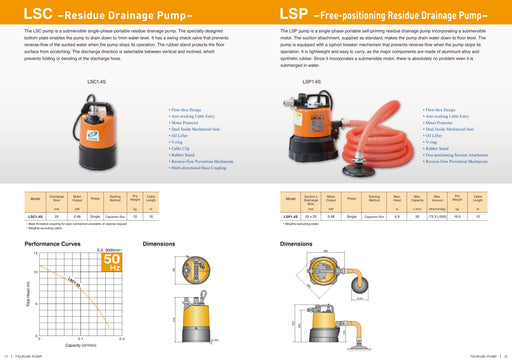
The Tsurumi LSC1.4S is a single-phase submersible portable residue drainage pump designed for ultra low-level water removal down to approximately 1...
View full detailsComplete maintenance kit for ASM D-Series diaphragm pumps, containing essential wear components to restore pump performance and reliability. Design...
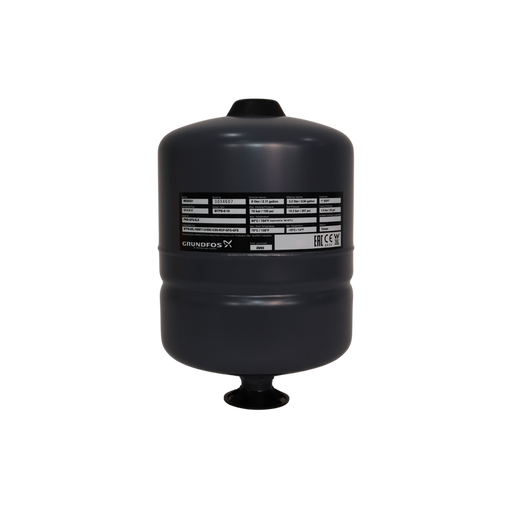
View full detailsThe Grundfos GT-H-18 PN10 G1 V is a compact steel pressure tank designed for drinking water applications. It features a non-toxic butyl rubber d...
View full detailsThe Davey Dynapond 8000 is a submersible centrifugal pond pump designed for continuous operation (24/7) in fountains, pond recirculation, wate...
View full detailsThe Tsurumi LSP1.4S is a single-phase portable self‑priming residue drainage pump incorporating a submersible motor, designed for fast removal of s...
View full details