3000+ Pumps & Parts
Pumps On Sale!
Fast Dispatch
If you own a rural property in Australia, securing a reliable water supply is mission-critical. Whether for household use, livestock, irrigation or a mix, getting the wrong bore pump can cost you thousands in wasted capital, high operating costs, premature failure and downtime. This blog gives you a strategic, step-by-step guide to choosing the right bore pump not the cheapest, not the fanciest, but the one that matches your actual conditions and future-proofs your operation. We'll also answer the common questions Australian property-owners are asking.
Many rural properties in Australia rely on groundwater rather than mains supply bores drilled into aquifers and then pumps that extract water. As one Australian guide explains, a bore pump is the key component that “pulls water out of the bore and into the irrigation system mainline” and must be matched carefully to the bore characteristics and use case.
If you pick a pump that is too small, you’ll not get enough flow for your needs. If it’s too large, you’ll waste energy, damage the bore or shorten its lifespan. Unfortunately, many property-owners skip or shortcut the analysis and end up repairing or replacing prematurely.
Start by asking: how much water do you actually need, and for what purpose? Do you need the pump for:
Household/domestic use (to house, tanks, reticulation)
Livestock (sheep, cattle, goats)
Irrigation (pasture, crops, orchards)
A combination
Quantify this usage. For example, if you run sprinklers for a 24 m diameter zone, you might need ~12 L per minute per sprinkler. Use litres per minute (LPM) or litres per hour as your baseline. Also consider peak use (when multiple demands overlap).
Key parameters:
Bore depth (how deep the hole is)
Static water level (where the water sits when idle)
Pumping water level (the draw-down when pumping)
Yield or flow rate (how much water the bore can sustainably supply)
As one Australian resource explains:
“When pumping from a bore, the head pressure is determined by the ’standing water level’. Noting this level can fall when the bore is being pumped…”
You can’t select a pump properly without this information. A test pump run or driller’s log is very helpful.
The main types:
Submersible bore pump: installed inside the bore, ideal for deeper wells.
Above-ground (surface or shallow well) pump: for shallow bores or smaller demands.
Solar powered bore pump: for remote locations or where mains power is limited.
Choose the type that matches your depth, power availability and usage model.
Flow rate = how much water per unit time (litres/min or litres/hour) you need.
Head = the vertical lift + friction losses + pressure needed at delivery.
From an Australian guide:
“Head pressure and flow rate are the two determining factors when choosing what size pump you need for a bore.”
Compute:
Height from water level to tank/outlet (vertical)
Distance of piping, size of pipe (for friction losses)
Pressure required for sprinklers, reticulation etc.
Consider: single phase vs three phase (for electric), or solar/battery systems. Rural properties may not have three-phase available. Also think about off-grid options if remote.
If your water has sand, iron, high dissolved solids or other contaminants, you’ll need materials and designs built for that. For example, stainless steel, abrasion-resistant impellers, larger diameter.
Also ensure you don’t oversize the pump relative to bore yield doing so can damage the aquifer or pump.
Even a well-matched pump will fail early if installed poorly or neglected. Australian sources say:
Proper installation is crucial (e.g., correct setting depth, even in submersibles)
Regular servicing extends lifespan (often up to 20 years in good conditions)
Maintain and monitor performance (changes in flow or pressure may signal wear or bore deterioration)
Don’t just buy the cheapest upfront. Consider operating cost (electricity/solar), maintenance cost, downtime cost, and expected lifespan. An article notes submersible units in Australia for residential might cost a few thousand dollars, and installations vary.
Your demand might increase (more irrigation, new stock, house extension). The aquifer yield might change (less water available). Consider installing a slightly higher spec pump or one with variable speed drive for flexibility. Also power changes (solar/back-up) may matter.
Here are five real-world questions you’ll want to answer for your audience:
What size bore pump do I need for a rural property in Australia?
Answer: It depends entirely on your usage (litres/min), the bore yield and depth (head). You need to calculate your flow requirement, account for head/lift, then select a pump whose performance curve meets that. Use the bore test data (static/pumping levels) plus your actual demand.
Can I use a solar bore pump on my rural property?
Yes, if your power supply is limited and you have sufficient sunlight. But solar systems often require larger upfront investment, may have lower flow or need battery/storage backup. You must match solar sizing to the pump and usage.
How deep can my bore be before I need a submersible pump?
Typically, if the bore is deep (say >20-30 metres) or you need a large volume of water, a submersible pump is the correct choice. Above-ground pumps are fine for shallow bores or light demand.
What happens if I install a pump that’s too large for my bore?
Oversizing can overload the motor, cause excessive draw-down of the bore water level (leading to sand ingress or bore collapse), increase energy costs and reduce the life span of the system. Efficient matching is key.
How much maintenance do bore pumps need on rural properties in Australia?
Pumps should be serviced annually as a minimum. Maintenance includes checking for wear, filters, wiring, vibration, correct depth setting, and verifying flow/pressure. Good installations can last up to 20 years with proper care.
Get or request your bore driller’s log: depth, static/pumping water level, yield.
Calculate your daily/peak water need in litres.
Measure/estimate the vertical lift + pipe run + desired pressure.
Choose the correct type of pump: surface for shallow/light, submersible for deep/high demand.
Choose a power option. If solar is selected, check solar panel sizing, days of autonomy etc.
Verify materials and design suits your water quality (sand, iron, mineral content).
Check local availability of parts/service for the brand you pick.
Budget not just for pump + installation but ongoing costs (electricity/solar, servicing).
Install proper control/protection: dry-run protection, motor overload, correct pipe sizing.
Maintain a log of pump performance (flow/pressure over time) and schedule periodic maintenance.
Keep future growth in mind (can you upsize easily, is system modular?).
Mis-matching a bore pump leads to: frequent breakdowns, replacement cost, bore damage, higher electricity bills, less water delivered, interruption to farm or household operations. On the flip side, a well-matched pump delivers reliably, uses less energy, lasts longer and gives you peace of mind. One Australian guide states: “Selecting the incorrect bore pump can lead to insufficient water supply, high electricity costs, or even pump failure.”
If you’re ready to move forward, our team can assist you to: assess your bore log, calculate your actual water requirement, recommend the appropriate pump (including models from trusted brands), assist installation and set you up with proper maintenance protocols. Visit our site at Pumptastic for more information.
If you’d like a tailored quote or have specific questions, feel free to Contact us.
When you want to browse top-quality submersible options, check our range of Tsurumi Pumps and for more variety see See more Tsurumi Pumps.
Your rural property in Australia deserves a bore pump system that is tailored, reliable and efficient not generic. By doing your homework (bore test results, demand needs, power options, materials), selecting wisely and maintaining proactively, you’ll avoid the common mistakes so many property owners make. Water is too critical to leave to chance. Choose the right bore pump now so you’re not scrambling later.
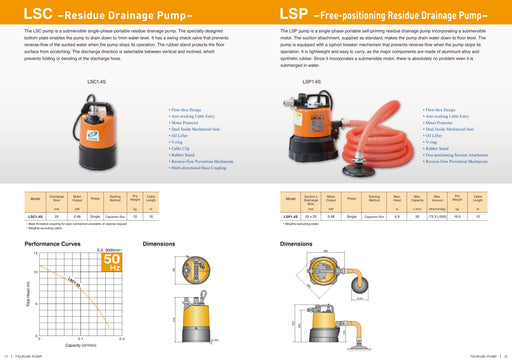
The Tsurumi LSC1.4S is a single-phase submersible portable residue drainage pump designed for ultra low-level water removal down to approximately 1...
View full detailsComplete maintenance kit for ASM D-Series diaphragm pumps, containing essential wear components to restore pump performance and reliability. Design...
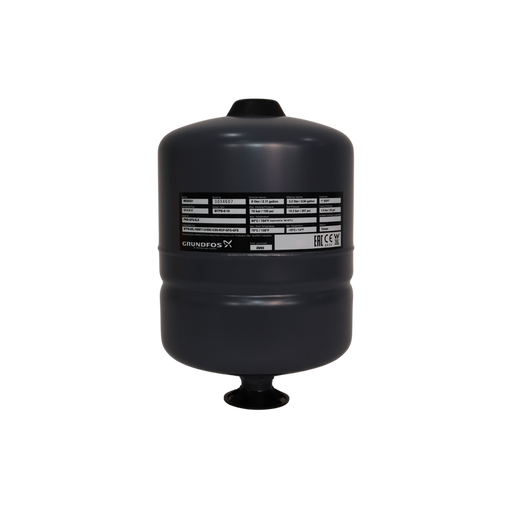
View full detailsThe Grundfos GT-H-18 PN10 G1 V is a compact steel pressure tank designed for drinking water applications. It features a non-toxic butyl rubber d...
View full detailsThe Davey Dynapond 8000 is a submersible centrifugal pond pump designed for continuous operation (24/7) in fountains, pond recirculation, wate...
View full detailsThe Tsurumi LSP1.4S is a single-phase portable self‑priming residue drainage pump incorporating a submersible motor, designed for fast removal of s...
View full details