3000+ Pumps & Parts
Pumps On Sale!
Fast Dispatch
You've drilled the bore. The geology is what it is. Now you're staring at two product categories that look almost identical on a spec sheet a standard submersible pump for around $1,500 and a mining-grade mining bore pump that starts north of $5,000. They both go in the hole. They both move water. So why the price gap, and where exactly is the line where one becomes the wrong choice?
This guide settles it. We'll line up a mining bore pump against a standard submersible across the specs that actually matter flow rate, head pressure, materials, duty cycle, and total cost of ownership and give you a decision framework you can apply today.
New to this category? Start with the basics first: What Is a Mining Bore Pump? Guide to Mine Dewatering in Australia.
A standard submersible isn't a bad pump. It's a brilliant pump in the right hole. The trouble starts when someone treats a domestic or agricultural unit as a cheap substitute for a true mining borehole pump on a continuous-duty site. Mining bore pumps and standard submersibles solve fundamentally different problems. Mining bore pumps are engineered around abrasion, salinity, continuous runtime, and remote service. Standard submersibles are optimised for clean water, intermittent duty, and economic price points.
The mistake isn't choosing the cheaper one. The mistake is choosing the wrong tool. Get the duty match right and either pump can be the correct answer for a different site.
A mining-grade borehole pump differs from a standard submersible in five engineered ways. First, the metallurgy steps up minimum AISI 304 stainless steel, often 904L or duplex stainless for hyper-saline water common across the Pilbara, Goldfields, and Eucla Basin. Second, the bearings are designed with sand-flush channels that let abrasive particles exit with the discharged water rather than grind down impeller shafts. Third, the motor includes proper cooling sleeves for hot, low-flow conditions where standard motors burn out. Fourth, dry-running protection, lip seals, and sand shields extend service life under harsh duty. Fifth, the entire pump is rated for the head pressures up to 425 metres, or roughly 605 PSI that domestic submersible units simply cannot deliver.
These are not marketing upgrades. They are the difference between a pump that lasts a decade and a pump that fails in six weeks.
Browse mining-grade Grundfos pumps Australia-wide at Pumptastic stainless construction, sand-tolerant, dispatched fast.
Here's the spec comparison that matters when you're trying to decide between the two categories.
|
Specification |
Standard Submersible |
Mining Bore Pump |
|
Construction Material |
Cast iron, composite, or basic AISI 304 SS |
AISI 304 / 904L / duplex stainless |
|
Max Head Pressure |
100 – 200 m (~140 – 285 PSI) |
250 – 425+ m (~355 – 605+ PSI) |
|
Max Flow Rate |
50 – 400 L/min |
100 – 7,500 L/min |
|
Sand Tolerance |
~50 g/m³ typical |
150 g/m³ standard, higher with sand-resist build |
|
Duty Cycle |
Intermittent (10 – 30 starts/day) |
Continuous 24/7 |
|
Salinity Tolerance |
Low to medium |
High (with correct metallurgy) |
|
Motor Cooling |
Basic |
Flow sleeve, MS / MMS submersible motor |
|
Voltage |
240V single or 415V 3-phase |
415V 3-phase or 1,000V for deep units |
|
VFD Compatible |
Sometimes |
Standard practice |
|
Typical Service Life |
3 – 7 years |
7 – 12 years (clean), 2 – 5 years (harsh) |
|
Price Range (AUD) |
$800 – $3,500 |
$5,000 – $80,000+ |
Want the brand-by-brand breakdown of mining-grade options? Jump to the showdown: Best Mining Bore Pumps for Australian Mine Sites in 2026 Grundfos SP vs Davey vs Onga Compared.
A spec sheet only matters when you map it against your actual application. Here's the decision for common Australian scenarios.
|
Scenario |
Right Choice |
Why |
|
Active dewatering bore, Pilbara iron ore site |
Mining bore pump (Grundfos SP / SP-G) |
Continuous duty, high salinity, deep head |
|
Exploration camp water supply, intermittent use |
Standard submersible (Davey or small Grundfos SP) |
Low duty cycle, clean water, lower capex |
|
Underground mine drainage feed |
Mining bore pump or dewatering submersible |
24/7 runtime, abrasive water |
|
Dust suppression top-up bore on mine periphery |
Standard submersible OK |
Intermittent runtime, shallow bore |
|
Goldfields hyper-saline bore |
Mining bore pump with 904L stainless |
Chloride attack destroys lesser metallurgy |
|
Construction site dewatering, short project |
Standard submersible or sump pump |
Short duration, cost-sensitive |
|
Tailings dam reclaim, abrasive slurry |
Slurry pump, not a bore pump |
Solids content too high for either option |
|
Remote pastoral supply, light agricultural duty |
Standard submersible |
Intermittent, clean groundwater, lower budget |
Shop the full submersible bore pump range at Pumptastic both standard and mining-grade units in stock.
A standard submersible deployed in a continuous-duty mining bore typically fails within 6 to 18 months. The visible cost is the replacement pump. The invisible costs are the ones that bite. Bore re-extraction is a $15,000 to $40,000 exercise depending on depth and access. Production downtime on an active dewatering bore can run $50,000 to $250,000 per day. Emergency mobilisation to remote Australian sites adds another layer. And the compounding damage to the bore casing and rising main, when sand-laden water has been chewing at everything for months, is rarely cheap to remedy.
Run the maths and the "cheap" option lands at three to five times the cost of the right pump installed once. Mining bore pumps are not premium-priced for marketing reasons. They are priced because the engineering sand-flush bearings, duplex stainless, MMS motors, dry-run protection, motor cooling sleeves is what keeps them running through the conditions that destroy standard units.
The first question is duty cycle. Will the pump run 24/7 or intermittently? Anything over 12 hours a day, every day, points firmly toward a mining bore pump. The second question is water chemistry. Test the bore for chloride, iron, manganese, and pH. Anything above 1,000 ppm chloride or below pH 6.5 demands upgraded metallurgy. The third question is depth and total dynamic head. If your TDH exceeds 150 metres, standard submersibles fall away fast most top out around 200 metres. The fourth question is flow demand. Above 400 L/min on a continuous basis, you are in mining bore pump territory. The fifth question is failure cost. If a pump failure halts $50,000 a day of production, the price premium of mining-grade vanishes in the first avoided breakdown.
Any two yeses out of those five and the answer is a mining bore pump. Any one yes and you should at least be talking to a pump engineer before committing.
Need help running the numbers? Call Pumptastic on +61 8 6384 5884 or browse Grundfos pumps Australia online.
A standard submersible belongs in clean, intermittent-duty applications. Residential bores, farm stock water, irrigation lines, light commercial supply, exploration camp wash-down, and short-term construction site dewatering all sit comfortably inside the standard submersible envelope. A mining bore pump belongs anywhere the duty is continuous, the water is hostile, or the failure cost is high. That includes active dewatering bores, deep production water supply for mine sites, underground drainage feeds, and any bore handling saline or sandy groundwater on a 24/7 cycle.
The grey area in between light mining-adjacent duties like exploration camps, contractor water supply, and remote infrastructure is exactly where a five-minute conversation with a pump specialist beats picking blind from a spec sheet.
Pumptastic stocks both standard and mining-grade submersibles from Grundfos, Davey, Onga, and Tsurumi. Pumps online and shipped Australia-wide, with technical sizing support from engineers who understand Australian bore conditions sand, salt, heat, depth, and remoteness. We won't sell you a $30,000 mining bore pump if a $1,500 standard submersible does the job. We also won't sell you a $1,500 standard if your site needs the real thing.
Talk to Pumptastic before you buy. Call +61 8 6384 5884 or shop Grundfos pumps Australia online. Free shipping Australia-wide on orders over $100.
For short, light, intermittent dewatering of clean water you can get away with it. For continuous-duty mine dewatering with saline or abrasive groundwater, you cannot. A standard submersible will fail within months and the bore re-extraction cost will dwarf any saving you made at purchase.
A standard submersible bore pump in Australia runs roughly $800 to $3,500. A mining-grade bore pump starts around $5,000 and scales to $80,000-plus for deep, large-diameter units. The right pump installed once is almost always cheaper than two wrong pumps installed in sequence.
Ask five questions is the duty continuous, is the water saline or abrasive, is total dynamic head above 150 metres, is flow demand above 400 L/min continuous, and is failure expensive. Any two yeses and you need a mining bore pump.
Yes. The Grundfos SP range spans both ends of the market. Smaller SP units (SP 2A, SP 3A, SP 5A) sit comfortably in the standard category for domestic and agricultural duty. Larger SP and SP-G units are full mining-grade. Both sell through Pumptastic and other Grundfos pumps Australia retailers.
Three failure modes usually combine. Continuous duty overheats motors built for intermittent runtime. Abrasive sand grinds down impellers and bearings. Saline or low-pH water corrodes lower-grade stainless. None of those are warranty-covered failures, which is what makes the wrong-pump decision so painful.
A mining bore pump in clean water typically lasts 7 to 12 years. A mining bore pump in harsh conditions lasts 2 to 5 years with planned maintenance. A standard submersible in clean residential or light agricultural duty lasts 3 to 7 years. A standard submersible deployed in mining conditions lasts 6 to 18 months on average.
Yes. Pumps online at Pumptastic ship genuine Grundfos, Davey, Onga and Tsurumi mining-grade bore pumps Australia-wide, with technical phone support, fast dispatch, and free shipping on orders over $100.
Usually not the bore casing size dictates the pump diameter, not the other way round. Mining bore pumps come in 4-inch, 6-inch, 8-inch, and 10-inch diameters to match standard Australian bore casings. What does change is the rising main, cabling, headworks specification, and surface control gear.
Strongly recommended. A Variable Frequency Drive softens motor starts and stops, reduces water hammer in the rising main, enables flow modulation across multi-pump bore fields, and meaningfully extends pump life. Standard submersibles often skip the VFD step. Mining bore pumps almost always run on one as standard practice.
Pumptastic's pump engineers will spec a unit against your bore yield, water chemistry, total dynamic head, duty cycle, and site power. Call +61 8 6384 5884 or browse the Grundfos pumps Australia collection to start the conversation.
The mining bore pump vs standard submersible decision isn't about brand loyalty, budget pressure, or what the last contractor used. It's about matching the pump to the duty. Get the five questions right duty cycle, water chemistry, head, flow, failure cost and the answer reveals itself. Get them wrong, and you pay for the same bore twice.
Settle it once. Talk to Pumptastic on +61 8 6384 5884 or browse the Grundfos pumps Australia range online today.
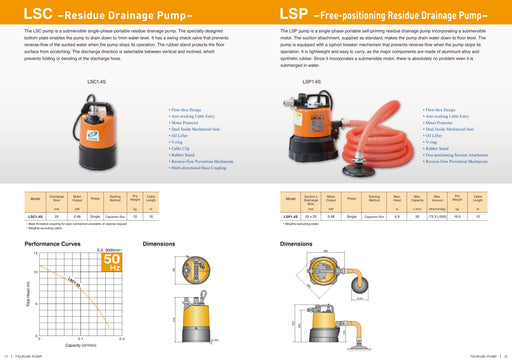
The Tsurumi LSC1.4S is a single-phase submersible portable residue drainage pump designed for ultra low-level water removal down to approximately 1...
View full detailsComplete maintenance kit for ASM D-Series diaphragm pumps, containing essential wear components to restore pump performance and reliability. Design...
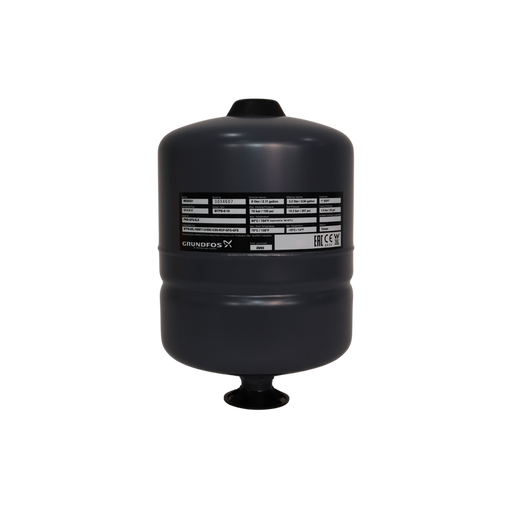
View full detailsThe Grundfos GT-H-18 PN10 G1 V is a compact steel pressure tank designed for drinking water applications. It features a non-toxic butyl rubber d...
View full detailsThe Davey Dynapond 8000 is a submersible centrifugal pond pump designed for continuous operation (24/7) in fountains, pond recirculation, wate...
View full detailsThe Tsurumi LSP1.4S is a single-phase portable self‑priming residue drainage pump incorporating a submersible motor, designed for fast removal of s...
View full details