3000+ Pumps & Parts
Pumps On Sale!
Fast Dispatch
Dig deep enough anywhere in Australia and you hit water. In the Pilbara, much of the highest-grade iron ore sits well below the natural water table, which means the moment excavation passes the phreatic surface, groundwater starts seeping into the pit from every wall and the floor. Left alone, a working open-cut mine would simply become a lake. The single technology standing between a productive pit and a flooded one is the mining bore pump and understanding how it works explains why a few thousand dollars of equipment quietly protects billions in extraction.
This is a beginner-friendly guide to how mining borehole pumps move water out of the ground, why dewatering matters, and what separates a pump that survives a Western Australian bore from one that fails in a season.
Groundwater behaves like any other fluid: it flows toward the lowest available point. When miners cut an open pit beneath the water table, that lowest point becomes the pit floor, so the surrounding aquifer constantly recharges the void. Dewatering is the practice of removing that water faster than it arrives, lowering the local water table and creating what hydrogeologists call a cone of depression around the workings. Get the dewatering right and the pit stays dry, the walls stay stable, blasting and haulage continue, and heavy machinery isn't churning through mud. Get it wrong and the consequences range from slope failures to a complete production stop.
The workhorse of that operation is the submersible borehole pump, installed deep inside purpose-drilled dewatering bores arranged around the pit perimeter. Each bore intercepts groundwater before it reaches the excavation and lifts it to the surface, where it's discharged, treated, or reused for dust suppression and processing.
Sizing a dewatering bore right now? Talk to a specialist before you buy call Pumptastic on (08) 6384 5884 and get the correct duty point first time.
A mining bore pump (also called a submersible borehole pump) is a long, narrow, multistage centrifugal pump designed to sit fully submerged at the bottom of a drilled bore, often hundreds of metres down. Its slim cylindrical shape is dictated by the bore casing it has to fit inside typically four, six or eight inches in diameter. Below the pump sits a sealed, water-filled submersible electric motor; above it sits the wet end that does the lifting. The whole assembly hangs on the rising main, the steel or poly column pipe that also carries the pumped water to the surface.
What makes these pumps different from a domestic transfer pump is the brutal duty they handle: continuous operation, high total dynamic head, abrasive and often corrosive bore water, and replacement costs measured in lost production rather than dollars. Reliability is the entire game.
The clever part is how a relatively small pump generates enough pressure to push water hundreds of metres straight up. The answer is staging. Inside the pump, water enters at the intake and meets the first impeller, a spinning disc with curved vanes driven by the motor. The impeller flings water outward by centrifugal force, converting rotational energy into velocity. That fast-moving water then passes through a stationary diffuser chamber that slows it down and converts the velocity into pressure, before feeding it into the next impeller.
Each impeller-and-diffuser pair is one stage, and a deep mining borehole pump may stack dozens of them in series. A single stage might only lift water a few metres, but forty stages stacked together can generate the hundreds of metres of head a deep Pilbara bore demands. This is why pump model numbers carry two figures, such as SP 14-23: the first describes the flow rate in cubic metres per hour, the second is the number of stages, which sets the maximum head. Once the water reaches the top stage, it's pushed up the rising main and out of the bore. The motor below, meanwhile, is cooled by the very groundwater flowing past it, which is why these pumps must never be run dry.
Want to see the full duty range in stock? Browse Grundfos SP mining borehole pumps online flow rates and stage counts for every depth, ready to ship across Australia.
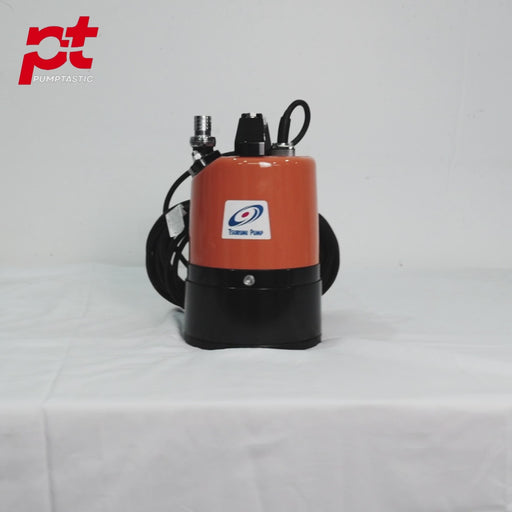
There are two ways to fight water in a pit, and serious operations use both. Surface water that pools on the pit floor rainfall, runoff and seepage is gathered in sumps and removed by rugged drainage pumps such as the Tsurumi dewatering range, which tolerate silt and solids. But sump pumping alone can't keep up with an active aquifer, because it only reacts to water that has already entered the pit.
Dewatering bores attack the problem at the source. By pulling the water table down before groundwater reaches the excavation, a ring of submersible borehole pumps keeps the working area genuinely dry rather than perpetually bailed out. The two systems work together: bores manage the aquifer, sumps manage the weather. For an honest breakdown of which pump body survives aggressive groundwater, our companion guide Stainless Steel vs Cast Iron Mining Bore Pumps compares both head-to-head against WA's corrosive bore conditions.
The reason the Grundfos SP series dominates Australian dewatering is materials and motor design. Every wetted steel component in the standard SP range is made from stainless steel (EN 1.4301 / AISI 304), which resists the chloride-laden, mineral-rich groundwater common across Western Australian goldfields and iron ore country far better than cast iron. The pumps pair with Grundfos MS402 and MS4000 submersible motors, available in single-phase 240V and three-phase 380–415V to suit everything from a remote monitoring bore to a high-volume production bore.
Manufactured by Grundfos of Bjerringbro, Denmark, the SP range spans compact one-cubic-metre-per-hour models up to large multistage units, so a single product family can cover an entire site's dewatering network. To see exactly how this translates into uptime, read our case study, How a Pilbara Mine Cut Dewatering Downtime by Upgrading to Grundfos SP Pumps real numbers from a real upgrade.
Ready to spec your bore? Shop the full Grundfos pumps Australia range or speak to our team contact Pumptastic here.
Three numbers decide which mining bore pump you need: the flow rate you must move (cubic metres per hour), the total head the pump must overcome (the pumping depth plus surface pipework losses), and your available power supply. Get those right and you avoid the two classic failures an undersized pump that can't keep the pit dry, and an oversized pump that wastes energy and wears prematurely. Bore diameter and water chemistry then narrow the field further, which is exactly where matching the right submersible bore pump to your conditions pays off.
If you're unsure, don't guess. Pumptastic stocks the full Grundfos SP line, genuine Grundfos pump parts and matching pump controllers, and our team will size the pump to your duty point before you spend a cent.
Keep your pit dry and your production moving. Buy mining bore pumps online at Pumptastic with fast dispatch Australia-wide, or call (08) 6384 5884 for expert sizing.
A mining bore pump is a multistage submersible centrifugal pump installed inside a drilled bore to lift groundwater to the surface. In mining it's used for dewatering lowering the water table around a pit so the excavation stays dry and stable.
It depends on the number of stages and the motor. Multistage submersible borehole pumps can lift water from depths well beyond 200 metres, which is why pump model numbers specify a stage count that sets the maximum head.
Dewatering bores use submersible borehole pumps around the pit perimeter to draw the water table down before groundwater enters the excavation. In-pit sumps collect surface water and seepage on the pit floor and remove it with rugged drainage pumps. Most large mines run both.
Australian bore water is often corrosive, with high chloride and mineral content. Stainless steel components, such as the AISI 304 used in the standard Grundfos SP range, resist that corrosion far longer than cast iron, extending pump life and cutting downtime. Our stainless vs cast iron comparison explains the trade-offs in detail.
The first number is the nominal flow rate in cubic metres per hour, and the second is the number of stages. More stages means more pressure and greater lift, so SP 14-23 moves around 14 m³/h across 23 stages.
Rarely. Most sites run a network of bores, each with its own pump sized to local conditions, plus sump pumps for surface water. A single product family like the Grundfos SP range can supply the whole network across different duties.
You need to match three things: required flow rate, total dynamic head (depth plus pipe losses), and power supply. Bore diameter and water chemistry refine the choice. The Pumptastic team can size it for you get in touch here.
The submersible motor relies on the pumped groundwater flowing past it for cooling. Running dry causes the motor to overheat and fail, which is why dewatering systems use level controls and protection devices.
Pumptastic stocks the full Grundfos SP submersible borehole pump range and ships Australia-wide, with expert phone support on (08) 6384 5884.
Yes. Genuine Grundfos pumps purchased through Pumptastic carry the manufacturer's warranty. Buying genuine units and matching parts and controllers also protects long-term reliability.
The Davey Dynapond 8000 is a submersible centrifugal pond pump designed for continuous operation (24/7) in fountains, pond recirculation, waterf...
View full detailsThe Tsurumi LSC1.4S is a single‑phase portable submersible residue drainage pump with a swing check valve. Its specially designed bottom plate a...
View full detailsThis multi-purpose capacitor for a variety of AC applications. It incorporates a plastic housing. Suitable for pool pump, submersible pump, bore pu...
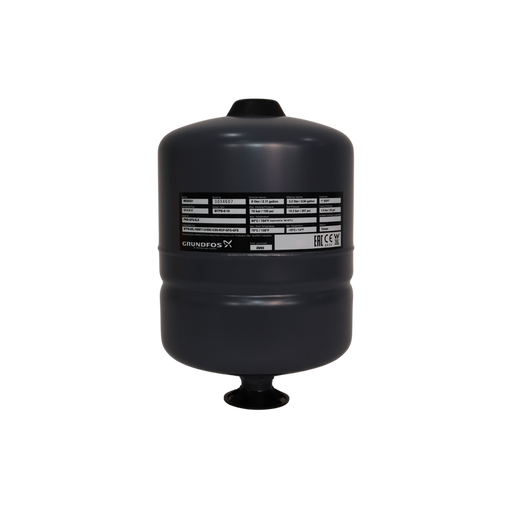
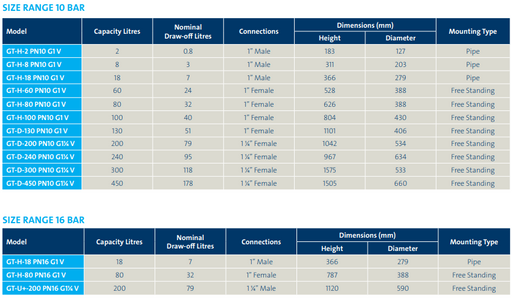
View full detailsThe Grundfos GT-H-18 PN10 G1 V is a compact steel pressure tank designed for drinking water applications. It features a non-toxic butyl rubber d...
View full detailsThe Grundfos GT-H-60 PN10 G1 V is a steel pressure tank designed for drinking water applications, featuring a non-toxic butyl rubber diaphragm and...
View full details