3000+ Pumps & Parts
Pumps On Sale!
Fast Dispatch
If you run a bore in Western Australia, your water is quietly trying to destroy your pump. That isn't marketing fear it's groundwater chemistry. The single most expensive mistake operators make is choosing a mining bore pump on upfront price, watching it corrode, and replacing it twice before they admit the cheaper unit was never built for the water it was pumping. This guide settles the stainless steel versus cast iron debate using the actual conditions found in WA boreholes, so you spec it right the first time.
If you want the engineering fundamentals first, our explainer on how mining borehole pumps work is the ideal starting point before you commit budget.
Western Australia sits on some of the most aggressive groundwater on Earth. Across the Goldfields, palaeochannel aquifers near Kalgoorlie hold hypersaline water where chloride has been concentrating for well over 100,000 years. In the Pilbara, salinity is often lower but still brackish, and as more operations drop below the water table, large-scale dewatering pulls increasingly mineral-heavy water through the pump. High chloride, dissolved metals, sand, and variable pH are the exact conditions that decide whether a pump lasts six months or sixteen years.
Corrosion isn't cosmetic. It pits impellers, thins casings, seizes bearings, and bleeds efficiency long before catastrophic failure meaning you pay in power bills before you pay in downtime.
Not sure what your water is doing to your pump? Call the Pumptastic team on (08) 6384 5884 and we'll help you read your bore water before you buy.
Cast iron earned its reputation honestly. It's robust, inexpensive, and genuinely excellent in neutral or alkaline water in high-pH conditions it actually outperforms aluminium, tolerating environments that would destroy lighter metals. That's why large, stationary mine dewatering pumps and motor end-bells have used cast iron for decades.
The problem is what cast iron does in saline, chlorinated, or acidic water. Its surface is porous and lacks any self-protecting barrier, so chloride-rich WA bore water oxidises it from the inside out. Internal surfaces roughen, efficiency drops, leaks appear, and the unit fails often faster than the warranty suggests it should. In genuinely corrosive mining borehole pumps applications, cast iron is usually a false economy dressed up as a saving.
Stainless steel survives where cast iron surrenders, and the reason is chemistry, not branding. With at least 10.5% chromium, stainless forms a thin, self-healing passive layer of chromium oxide across every wetted surface. That barrier is what shrugs off the chloride and dissolved minerals in WA groundwater, which is why stainless dominates serious borehole and dewatering duty.
Here's the nuance most suppliers skip. Not all stainless is equal. AISI 304 handles mild groundwater well and suits many regional bores. AISI 316 adds molybdenum for far better chloride resistance and is the sensible default for brackish WA water. For seawater-grade or hypersaline conditions, AISI 904L is the heavy hitter. And one honest caveat: in very high-chloride water above roughly 60°C, even 316 can suffer stress-corrosion cracking so liquid temperature and salinity, not slogans, should drive the grade you choose. The good news is most WA bore water runs cool, keeping 316 firmly in play.
This is exactly why the Grundfos SP range built in 304, 316, and 904L stainless with sand-flush channels and dry-run protection has become the benchmark mining bore pump for Australian conditions.
Ready to match the right stainless grade to your bore? Shop submersible bore pumps online or speak to a specialist before you order.
On corrosion resistance in saline or chlorinated water, stainless steel wins decisively cast iron simply has no passive layer to defend itself. On abrasion from sand and silt, stainless again leads, especially designs with dedicated sand channels. On upfront cost, cast iron is cheaper, but on total cost of ownership across a five to twenty year horizon, stainless typically wins by eliminating repeat replacements and efficiency losses. Cast iron only retains a real edge in neutral, high-pH, low-chloride water where weight and price dominate the decision conditions that describe very little of WA's mining groundwater.
For the corrosive, brackish-to-hypersaline bore water that defines most of the Goldfields and much of the Pilbara, a correctly graded stainless steel pump is almost always the right answer, and cast iron is usually a costly detour. The real skill isn't "stainless versus cast iron" it's selecting the correct stainless grade for your specific chloride load and temperature. Get that wrong and even premium metal underperforms. To see how this plays out in the field, read our Pilbara dewatering case study on cutting downtime by upgrading to Grundfos SP units.
Start with a water test chloride, TDS, pH and temperature then match the stainless grade, confirm sand tolerance, and size for flow and head against your bore depth. If that sounds like a lot to get right, that's because it is, and it's exactly where free phone advice pays for itself.
Don't gamble a $10k bore on guesswork. Browse Grundfos pumps Australia or buy pumps online with expert backup on (08) 6384 5884.
In most WA bore water, yes. The higher upfront price is usually recovered by avoiding repeat replacements, lost efficiency, and downtime caused by cast iron corroding in chloride-rich groundwater.
Cast iron is porous and has no protective passive layer, so the dissolved chloride and minerals in WA groundwater oxidise it from the surface inward, causing pitting, leaks and efficiency loss.
AISI 316 is the sensible default for brackish WA water thanks to its molybdenum content. For hypersaline or seawater-grade conditions, AISI 904L is stronger. AISI 304 suits milder groundwater.
No. In very high-chloride water above about 60°C, stainless can suffer stress-corrosion cracking. That's why water temperature and salinity should guide grade selection rather than assuming stainless is invincible.
Grundfos SP pumps are purpose-built in stainless steel for groundwater, irrigation and mining, with sand-flush channels and dry-run protection, making them a leading choice for Australian bore conditions.
Possibly. In neutral, low-chloride, high-pH water, cast iron can be cost-effective. The risk is that WA bore chemistry varies, so a water test is essential before relying on cast iron.
With correct grade selection and sizing, a quality stainless borehole pump can deliver many years of reliable service, often far outlasting cast iron alternatives in corrosive conditions.
Yes. Sand accelerates abrasion. Stainless pumps with sand-handling features tolerate it far better, but high sand content still demands correct specification and sometimes additional protection.
Ideally your water chemistry (chloride, TDS, pH, temperature), bore depth, required flow and head, and power supply. With these, the correct pump and stainless grade can be specified confidently.
You can buy stainless steel submersible and Grundfos bore pumps online at Pumptastic, with Australia-wide dispatch and expert phone support to confirm the right model for your site.
The wrong mining bore pump doesn't fail loudly it fails slowly, on your power bill, then all at once. Get it right the first time. Shop Grundfos SP borehole pumps, explore the full Grundfos pumps range, or call Pumptastic on (08) 6384 5884 for free, accurate advice before you buy.
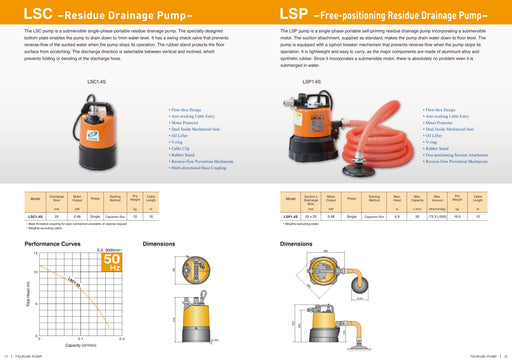
The Tsurumi LSC1.4S is a single-phase submersible portable residue drainage pump designed for ultra low-level water removal down to approximately 1...
View full detailsComplete maintenance kit for ASM D-Series diaphragm pumps, containing essential wear components to restore pump performance and reliability. Design...
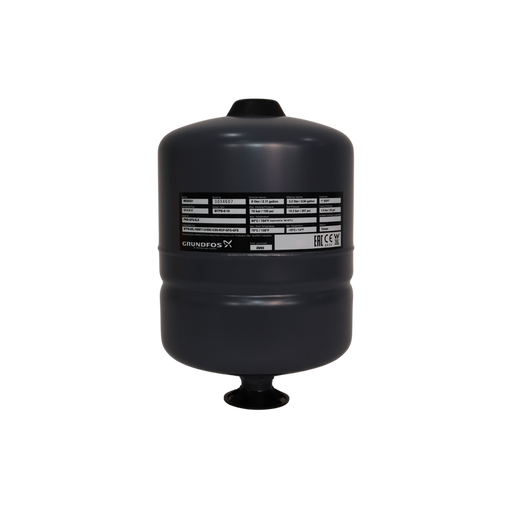
View full detailsThe Grundfos GT-H-18 PN10 G1 V is a compact steel pressure tank designed for drinking water applications. It features a non-toxic butyl rubber d...
View full detailsThe Davey Dynapond 8000 is a submersible centrifugal pond pump designed for continuous operation (24/7) in fountains, pond recirculation, wate...
View full detailsThe Tsurumi LSP1.4S is a single-phase portable self‑priming residue drainage pump incorporating a submersible motor, designed for fast removal of s...
View full details