3000+ Pumps & Parts
Pumps On Sale!
Fast Dispatch

Short answer: to size a water pressure pump, add up the litres per minute of every tap that could run at once, then add the vertical lift and pipe friction between your tank and the furthest outlet. Most Australian homes need 40 to 70 L/min at 300 to 450 kPa. Two storey homes and properties with reticulation need 70 to 90 L/min at 450 to 550 kPa.
That is the number you need. Below is how you get to it, and why the answer is different in Western Australia than it is in Sydney or Brisbane.
Most people buy the wrong water pressure pump for the same reason. They read the maximum flow rate on the box and assume that is what they will get at the shower. It is not. That figure is measured at zero pressure, which never happens in a real house. A pump advertised at 70 L/min may deliver 35 L/min once it is pushing water through 40 metres of pipe and up to a second storey bathroom. Sizing on the marketing number is how you end up with a water pressure pump that cost $900 and still gives you a weak shower.

Taps plus lift plus distance equals pump size. That is the whole method.
Count the outlets that could realistically run at the same time in your house, not the total number of taps. Allow 10 to 12 L/min for a shower, 12 to 15 L/min for a garden tap, 5 to 6 L/min for a toilet cistern and about 10 L/min for a washing machine. Add them up. That is your peak flow. Then measure two things. First, the vertical height from your pump to your highest outlet. Second, the pipe distance from the pump to the furthest tap. Every 10 metres of height costs you roughly 100 kPa, and every long or narrow pipe run bleeds pressure through friction. Now find a water pressure pump whose performance curve delivers your peak flow at your required pressure. Not its maximum flow. The point on the curve where those two numbers meet is called the duty point, and it is the only figure that matters.
| Property type | Outlets at once | Flow needed | Pressure needed | Motor size |
|---|---|---|---|---|
| Unit, cabin, granny flat | 1 to 2 | 25 to 40 L/min | 280 to 320 kPa | 0.37 to 0.55 kW |
| 3 bed single storey | 3 to 4 | 40 to 55 L/min | 300 to 350 kPa | 0.55 to 0.75 kW |
| 4 bed, 2 bathrooms | 5 to 6 | 55 to 70 L/min | 350 to 450 kPa | 0.75 to 1.1 kW |
| Two storey, or home plus retic | 6 to 8 | 70 to 90 L/min | 450 to 550 kPa | 1.1 kW and up |
| Rural home, troughs, sheds | 8 plus | 90 L/min and up | 500 to 700 kPa | 1.5 kW and up, or multi-pump |
Use this chart to put your water pressure pump in the right bracket. The three steps below fine tune it. If your property sits between two rows, size up on flow and keep pressure the same, then add a pressure tank to stop the pump short cycling.

Flow rate is the number people get wrong most often, because they size for average use instead of the worst moment of the day. Picture 7am on a school morning. Someone is in the shower at 12 L/min. The toilet refills at 5 L/min. The washing machine is filling at 10 L/min. That is 27 L/min before anyone touches a garden tap. Add a reticulation zone at 15 L/min and you are at 42 L/min, which already puts a small water pressure pump at its limit. An average family home should plan for four simultaneous outlets, which lands around 50 L/min. Homes with two or more bathrooms should plan for six, which lands around 70 L/min. If you run reticulation off the same water pressure pump, add the sprinkler zone on top rather than hoping the two never overlap. They always overlap. One warning about hoses. A 3/4 inch hose with a nozzle can pull about 40 L/min on its own, and a 1 inch hose can pull 75 L/min. If you wash down a shed, fill troughs or run a wash bay, a single hose can be a bigger load than your entire house.
Pressure is measured two ways in Australia and they convert cleanly. Ten metres of head equals roughly 100 kPa, which equals 1 bar. Australian plumbing standard AS/NZS 3500.1 sets a floor of 50 kPa at the outlet, but 50 kPa is a trickle. Most fixtures feel good at around 300 kPa, which is close to typical mains pressure. Build your figure in three parts. Start with 300 kPa as your target at the tap. Add 10 kPa for every metre of vertical lift from the pump to your highest outlet, so a second storey shower head at 5 metres adds 50 kPa. Then add for friction loss, which is where long runs punish you. As a working rule, add 10 percent to your pressure figure if the run from pump to furthest tap is over 30 metres, and 20 percent if it is over 60 metres. On a large WA block where the tank sits at the back fence and the house is at the front, that alone can be the difference between a comfortable shower and a disappointing one. A single storey house close to its tank may only need 30 metres of head. A two storey house uphill from its tank can need 50 to 55 metres before the upstairs shower feels right. Size the water pressure pump for the worst outlet, not the closest one.
Flow and head tell you how big the water pressure pump has to be. Your water source tells you what type.
For whole of house supply from a tank, a multistage water pressure pump is the quiet, efficient choice. The Grundfos CMB and CMBE range covers most domestic duties, and adding a pressure tank stops the pump firing up every time someone rinses a cup. Any tank fed water pressure pump needs run dry protection. A pump controller or pressure manager that shuts the pump down when the tank empties is not optional, because running dry destroys a mechanical seal in minutes.
If you draw from a bore, the water pressure pump usually sits in the bore rather than beside the house. A submersible bore pump sized to your bore depth and standing water level does the job, and the Grundfos SQ and SQE range suits most domestic Perth bores. Our bore pump sizing guide walks through that calculation separately, because bore sizing adds drawdown and screen depth to the maths.
If you are on scheme water and the pressure is simply low, you do not need a big water pressure pump. You need a booster that adds the shortfall. A compact pressure booster lifts what the main already gives you. Oversizing here is wasted money and can trip your meter's flow limit.
This is where most national buying guides stop being useful, because WA has rules that change the numbers.
Perth and Mandurah run a permanent two day a week sprinkler roster set by the last digit of your street number. You can water once on each rostered day, either before 9am or after 6pm, and there is a total sprinkler switch off from 1 June to 31 August. Since 1 September 2022, garden bores sit on the same two day roster as scheme water. Watering outside those windows carries a $100 on the spot fine. Here is what that means for your water pressure pump. Your entire irrigation load is compressed into two short windows a week. You cannot spread watering across five light sessions the way an east coast property can. You have to move the same volume in far less time, which means WA properties need a higher peak flow rating than the same house in Melbourne. Sizing a water pressure pump off a generic Australian chart will undersize you in Perth.
Under its Water Services Licence, Water Corporation commits to a flow of at least 20 litres per minute at the meter, with static pressure between 15 and 100 metres head in the Perth metro area and 13 to 100 metres head in country urban areas. Read that number again. Twenty litres per minute is one shower and not much else. A supply can be fully compliant with the licence and still leave you unable to run a shower and a garden tap at the same time. If your pressure is above 15 metres head, Water Corporation has met its obligation and the fix is yours to make. That is the honest reason so many Perth homes end up buying a water pressure pump, and it is a point no other pump retailer in Australia puts in writing.
Outside country urban areas, a potable supply is not guaranteed at all, and rural scheme services can be limited to a daily volume rather than a pressure. On a Wheatbelt, Great Southern, Mid West or Pilbara property, the water pressure pump is not boosting anything. It is the only source of pressure in the house, and if it is undersized you live with it every day. Two practical WA adjustments. Add friction margin generously, because block sizes in the South West, Peel and Mid West mean pipe runs that would be unusual in a metro suburb. And choose a water pressure pump with proper thermal overload protection, because a Karratha or Kalgoorlie summer is a genuinely harder duty than the same pump would see in Hobart.
A surface mounted water pressure pump does not suck water up. It creates a partial vacuum, and atmospheric pressure pushes the water in. That sets a hard physical ceiling.
At sea level the practical suction lift limit is about 6.7 metres, and it drops with altitude. It also drops as water warms, which matters in a WA summer when a black poly line has been sitting in the sun.
| Elevation | Practical suction lift |
|---|---|
| Sea level | 6.7 m |
| 500 m | 6.2 m |
| 1,000 m | 5.8 m |
| 1,500 m | 5.4 m |
If your water sits deeper than that below the pump, no amount of extra kilowatts on the water pressure pump helps. You need a jet pump with an ejector, or a submersible unit sitting in the water. This is the single most common reason a correctly sized water pressure pump still fails to prime.
Buying on maximum flow. Maximum flow happens at zero pressure. Read the water pressure pump performance curve at your actual duty point instead.
Oversizing on purpose. A water pressure pump that is too big cycles on and off constantly, which wears the seal and switch, raises your power bill and makes noise. Correct sizing plus a pressure tank beats brute force every time.
Skipping run dry protection. On any tank or bore system, a dry run wrecks the seal fast. A pressure control component or controller costs a fraction of a new water pressure pump.
Forgetting friction loss. This is the usual culprit when a properly sized water pressure pump feels weak at the far end of a big block. Pipe diameter matters as much as pump size.
Ignoring the pressure tank pre-charge. A tank with the wrong air charge behaves as if it is not there. Check it against the pump's cut in pressure at install and once a year after.
For a unit, cabin or granny flat, a compact self priming water pressure pump in the 0.37 to 0.55 kW class handles one or two outlets comfortably. Look at the Grundfos JP range with a PM pressure manager for automatic start and stop. For a standard three bedroom home, a 0.55 to 0.75 kW water pressure pump hitting 50 L/min at 300 kPa is the sweet spot. A Grundfos JP with pressure switch and tank, or an equivalent Davey or Onga system, covers this bracket well. For a large or two storey home, step up to a 1.1 kW multistage water pressure pump and pair it with an 18 to 60 litre pressure tank for smooth, quiet operation. Browse the full pressure pump range to compare curves side by side.
For anything above that, or where pressure has to stay rock steady across many outlets, a multi pump booster set with built in control and a standby pump is the right answer.
The water pressure pump sizing method does not change for commercial work, but the inputs do. Instead of counting taps you count fixture units and apply a diversity factor, because a 40 unit apartment block never runs 40 showers at once. Three things separate a commercial water pressure pump specification from a domestic one. You need duty and standby capacity so a failure does not shut the site down. You usually want variable speed control, so the pump holds a constant pressure across a wide flow range instead of hunting between cut in and cut out. And you need to check NPSH available against NPSH required at the duty point, or you will get cavitation that eats impellers. For irrigation, wash down bays, mine camps and process water, the numbers move into vertical multistage territory. Our Grundfos SP borehole range covers higher flow rural and commercial bore duties, and the Pilbara mine dewatering case study shows how that sizing works on a real site. If you can give us flow, head, water source and power supply, we can specify the duty point and issue a compliant quote. Send those four numbers to our team and skip the guesswork.
A chart gets your water pressure pump close. Your property decides the rest. Tell us your water source, your furthest tap, your highest outlet and how many people live there, and our team will name the exact model in a few minutes. We are based in Greenfields, Western Australia, we ship Australia wide with free shipping on orders over $100, and we dispatch to regional addresses fast. Call (08) 6384 5884, contact us online, or browse the full water pressure pump range and compare performance curves yourself.
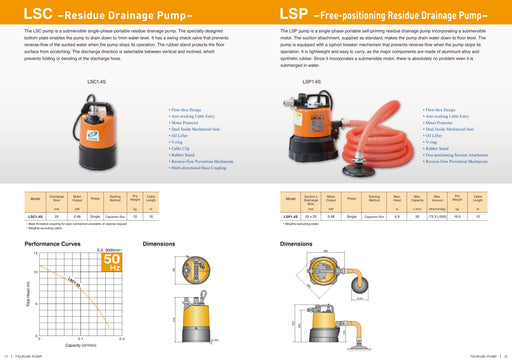
The Tsurumi LSC1.4S is a single-phase submersible portable residue drainage pump designed for ultra low-level water removal down to approximately 1...
View full detailsComplete maintenance kit for ASM D-Series diaphragm pumps, containing essential wear components to restore pump performance and reliability. Design...
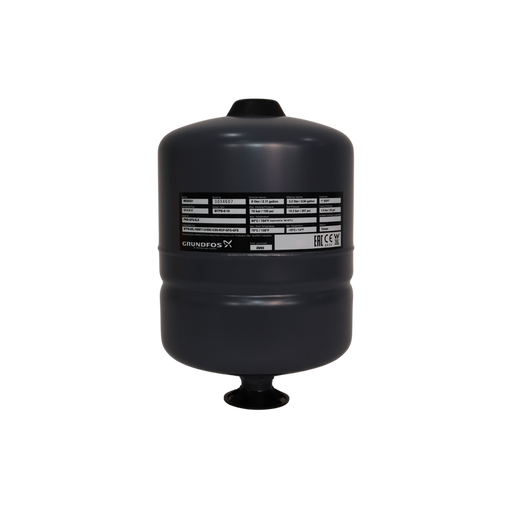
View full detailsThe Grundfos GT-H-18 PN10 G1 V is a compact steel pressure tank designed for drinking water applications. It features a non-toxic butyl rubber d...
View full detailsThe Davey Dynapond 8000 is a submersible centrifugal pond pump designed for continuous operation (24/7) in fountains, pond recirculation, wate...
View full detailsThe Tsurumi LSP1.4S is a single-phase portable self‑priming residue drainage pump incorporating a submersible motor, designed for fast removal of s...
View full details